The Heart of Good Coaching

The Heart of Good Coaching

by Sandi Nypaver, Higher Running Co-Founder

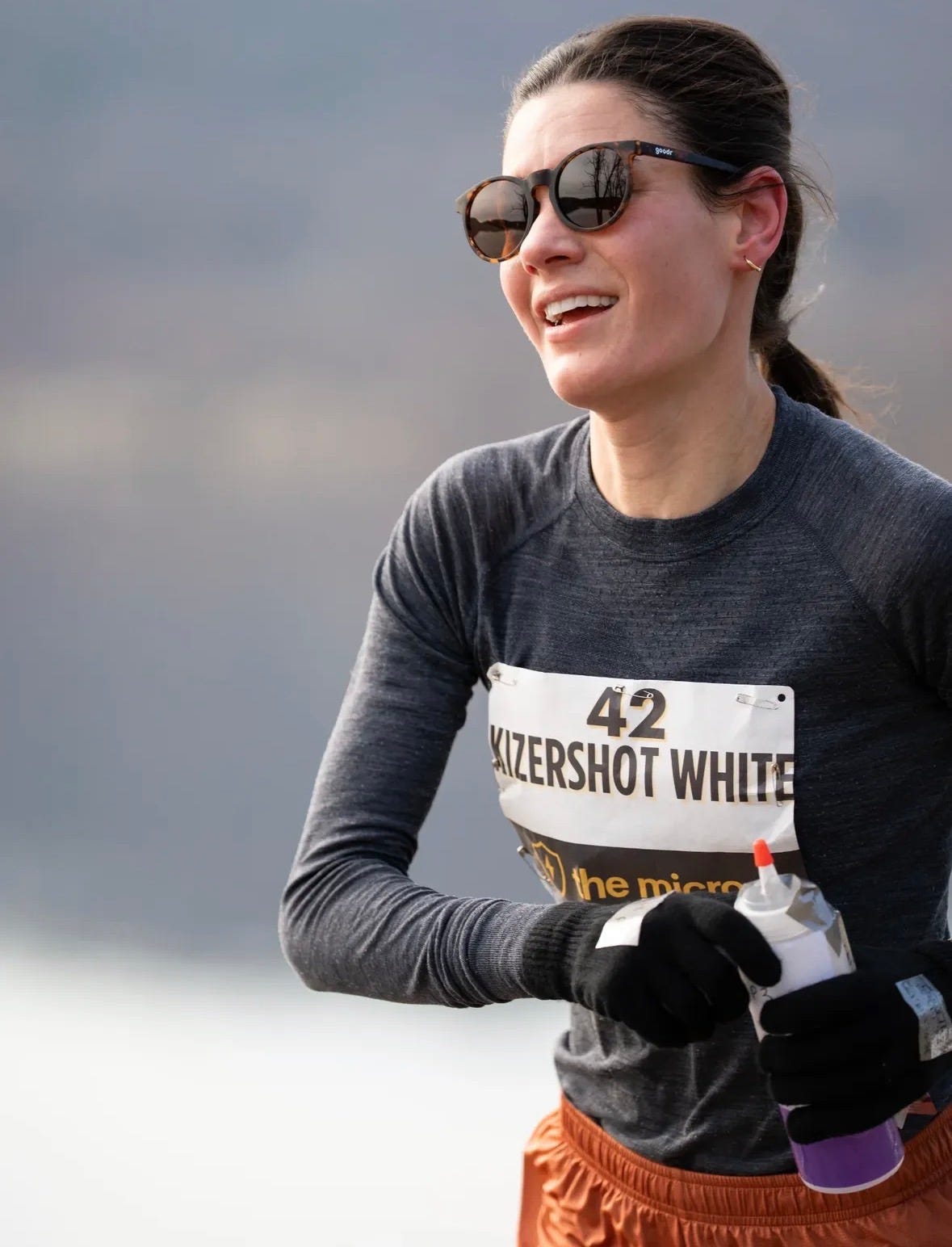
Photo: Luke Webster


Good coaching isn’t just about having a lot of running knowledge. It’s about the ability to use all your knowledge and figure out how to apply it just right for each individual you are coaching. And most importantly, great coaching is about having genuine care for your athletes and their total well-being, not just their running results. That’s really the heart of it. If a coach is driven by a flexible job, rushing through work so they can do other things, a big audience/ego, and trying to make “easy money”, they’re going to be a crappy coach. And some will get away with it. But if genuine care is at the heart of everything a coach does, it’s going to make for some damn good coaching. Not only will athletes keep growing year after year, they’ll be able to honestly say that the coaching relationship had a positive, meaningful impact on their entire lives.

I started coaching all the way back in 2014. There have been a few instances in my life where I felt all I had to do was take a step forward and a path would magically appear. To me, it’s been a sign that I’m doing exactly what I’m supposed to be doing at that moment. That’s precisely how getting into coaching played out. I had a wonderful woman ask me to help her train for the Leadville 100 mile trail run and I knew coaching was what I was meant to do.

Learning about all things running, from physiology to mental performance to all kinds of training philosophies, is both a passion and an obsession. Even after taking numerous courses and reading hundreds of books, I still start most days by drinking coffee, eating breakfast, and reading about running. While I’m not always learning anything new material-wise, I often appreciate the refresher, a different way of saying something, and the opportunity to think analytically and creatively. Then there are also many days where I listen to a running podcast or go to bed reading about running, though at times I need a break to gain clarity about my own thoughts.

In today’s world, anyone can have knowledge. Not everyone knows what to do with it. When I consider everything I know about running, my mind often goes to the training principles that have stood the test of time. Gradual progression, lots of easy running, recovery to allow for adaptations, different training intensities throughout the year, the importance of a certain volume to be able to better withstand higher intensities, etc. But there are still countless ways to apply these things. While often I use the “least specific to most specific” approach for well-trained athletes (they’ve already developed a good aerobic base), even when people are training for the same races and aiming for around the same time, their training could look very different. And knowing how to adjust training and manipulate workouts for individual needs is still something that is often lacking in running books.

What I’m about to say may seem like an abrupt change and a little controversial to some, but bear with me, I’ll tie it back together. I genuinely love my athletes. Not the same way I love my family, and yes, they are paying me, but I love them. Some of my athletes I’ve been coaching for over a decade. I know what their kids are up to, I’ve seen a few go through tragic losses, they’ve trusted me with worries, and I’ve gotten to see them through their most joyous moments of running and life as well. I don’t take any of that lightly and my athletes know it. And I truly believe that when an athlete knows they’re cared for and that I genuinely care about their health, well-being and happiness, they are in a position to train and perform to the best of their abilities in whatever stage of life they are in.

Everything I’ve shared above is something I know every Higher Running coach can relate to. I’ll be the first to admit I have high standards when it comes to coaching, but because every single coach here genuinely cares about people and has a true passion for coaching, they appreciate the standard of coaching we expect here at Higher Running. Each coach also has a small athlete roster, so that level of care can always be maintained. And I believe that’s why all of our coaches have many athletes they’ve worked with for years and why we often fill up, even in an era where there are hundreds of run coaches and companies to choose from. Higher Running was founded on passion for running and genuine care for people, and that will forever be our compass.

You’re within 5 minutes of a sub-3 hour marathon.

What’s actually holding you back from sub-3?

For some runners, more volume can be very beneficial. For others, the main limiter is threshold fitness or raw speed. It comes down to knowing what’s holding you back. If your 5k-10k PRs are better than your marathon PR (i.e. you’re an 18 min 5k runner or faster) things that might help are more long runs with marathon paced work, a mileage increase, and/or more threshold runs.

Here are some threshold workout examples:

  • 2 x 3 miles (2-3 min easy) at threshold pace (~6:42-6:34 min/mile, 4:10-4:05min/km)

  • 10-12 x 3 min (1 min easy) at ~4-8s faster than threshold pace

  • 2miles -2 miles -2 miles -1 mile (2-3 min easy) at threshold pace, or do a progression starting a little over threshold pace and ending the mile a little under.

However, before you start marathon training or in the first phase of training for a marathon, you’ll want to focus on faster, shorter workouts. This could be everything from 12 second to 1 minute hill reps, to 200s, and 3-4 min intervals at VO2 max pace. Then even as you get more into marathon specific training, you can still add in more touches of speed without running yourself into the ground.

These are some specific ideas:

  • 8 x 30s (1 min easy) or 5-6 x 1 min fast (1 min easy) after the end of a threshold run

  • 10 x 800m (1-1.5 min easy) at ~10k pace

But what if you’re already in your final 8 weeks of marathon training?

If you’re in your final 8 weeks, the goal shifts. You’re not trying to close the gap, you’re building fitness and getting comfortable at sub-3 pace.This could look like 4 x 3-4 miles at current marathon fitness pace builds the endurance and strength to hold your pace on race day. Or, 10 x 1 mile at 6:52/mi (4:16/km) gets you touches of sub-3 pace in your long runs without overdoing it, while still supporting your current marathon fitness.

Training Considerations for Mountain Trail Races

Training Considerations for Mountain Trail Races

By Higher Running Coach, Jake Head

Spring is approaching. The weather is getting warmer, the trails are opening up, and the trail-prone among us are scouring UltraSignup for our next mountain adventure. If you are anything like me, the steep, rugged, and remote events always seem the most appealing. If you find yourself on the entry list for one of these races, this article is for you!

Know Your Course

The first thing I have athletes do when preparing for a steep race is calculate the vertical gain per mile. This is simply the total vertical gain divided by the race distance.

For example, a 50k with 8,000 feet of vert averages about 250 feet of climbing per mile.

This number gives you a useful target when structuring your long runs. As you get closer to race day, your long runs should begin to approach the vertical density of your race. This helps your legs adapt not just to running long, but to climbing long.

It’s also important to look at how the climbing is distributed. 8,000 feet of vert spread across constant rolling terrain feels very different than the same vert concentrated into a few sustained climbs. Being familiar with the elevation plot of your race can be extremely valuable, not just for knowing where the hills are on race day, but also for knowing what kind of hills to look for in training to best mimic the race course.

Understanding your course helps you prepare specifically and feel confident on race day.

Run or Hike?

Many runners, especially those coming from road backgrounds, resist hiking. It can feel like giving up. But in steep trail races, hiking is often the most efficient option.

At steeper grades, the energy cost of running increases dramatically while providing very little speed advantage. For most runners, a 15–20% incline (roughly 800–1000 feet of elevation gain per mile) is where hiking is going to be a better choice. A strong, purposeful power hike can often match running speed while costing significantly less energy.

For reference, a sustainable running pace for me at a 15% grade is about a 14:00-minute-per-mile pace. I can power hike that same grade at roughly a 15-minute-per-mile pace, and it is significantly less taxing to do so. Unless your race’s climbs are very long, the time loss from swapping to a hike is often negligible, and you get to save your legs for downhill and flat sections.

Even elite trail runners hike steep climbs. This allows them to conserve energy and maintain steadier output over long races. But the key is making sure your hiking is intentional. A strong power hike (driving through the glutes, maintaining an upright posture, and moving efficiently) can make a massive difference over the course of a long climb.

If you know your race includes steep climbs, practice hiking during your training (contrary to popular belief, the Strava police won’t come for you if you hike during your “Morning Trail Run”).

How Much Vert Should You Be Doing?

A mistake I often see is runners either avoiding vert entirely or doing steep climbing every single day. Neither is ideal.

Your long runs and key workouts should include vert that reflects the demands of your race. Using our earlier example of 250 feet per mile, a 15-mile long run might include roughly 3,500 to 4,000 feet of climbing.

This doesn’t need to be exact. The goal is to gradually expose your legs to the demands of sustained climbing so race day doesn’t come as a shock.

At the same time, it’s important that your easier days remain easy. Steep climbing places significant stress on your calves, quads, and glutes, and it can be very difficult to climb at a true recovery heart rate. Including flatter runs allows your climbing muscles to rest and helps maintain good biomechanics. While running uphill builds strength and power that can help improve biomechanics, it can lead to an “ultra shuffle” type of running form if you never run flatter terrain and allow your stride to open up.

When planning your run routes, keep in mind the intention of the run and whether the route is conducive to the goal of that specific training session.

What If You Can’t Hit the Trails?

The treadmill is your friend! Cranking the incline up can be an extremely effective way to prepare for a mountainous race, especially if weather, schedule, or other factors prevent you from getting out on the trails.

A session I like to do is to look at the elevation plot of my race and try to recreate those climbs on the treadmill. For example, my goal race this year, Teanaway Country 100, has a 6-mile uphill on a forest service road at the start of the course, gaining about 2,000 feet. I can hop on the treadmill and do 6 miles at a 6–7% incline to create my own indoor version of that specific climb and get a good idea of how it feels.

Most treadmills max out at a 12–15% incline, don’t usually have the ability to decline, and are not going to test your balance like real trails do, so getting out on actual hills is still ideal when possible.

Don’t Neglect the Downhills

While climbs get most of the attention and are what runners often worry about the most, descents are often what determine how well you perform late in a race.

Downhill running places high eccentric loads on the quadriceps. This type of loading causes more muscular damage than climbing and is often what leads to the heavy, unresponsive legs many runners experience late in races.

The solution isn’t bombing every downhill in training, but gradually building tolerance.

One of my favorite workouts is pairing hard uphill efforts with controlled, faster descents. After a hard climb, running downhill at a steady but purposeful effort teaches your legs to handle the exact demands you’ll encounter in racing.

It doesn’t take much of this type of training to see significant benefits. Even a small amount of intentional downhill exposure can dramatically improve durability. This sort of training can also be risky and only needs to be done a couple of times in a training block to fully reap the benefits. Coach Sandi and Coach Sage wrote a whole article about it here: https://higherrunning.com/2025/10/

Trekking Poles

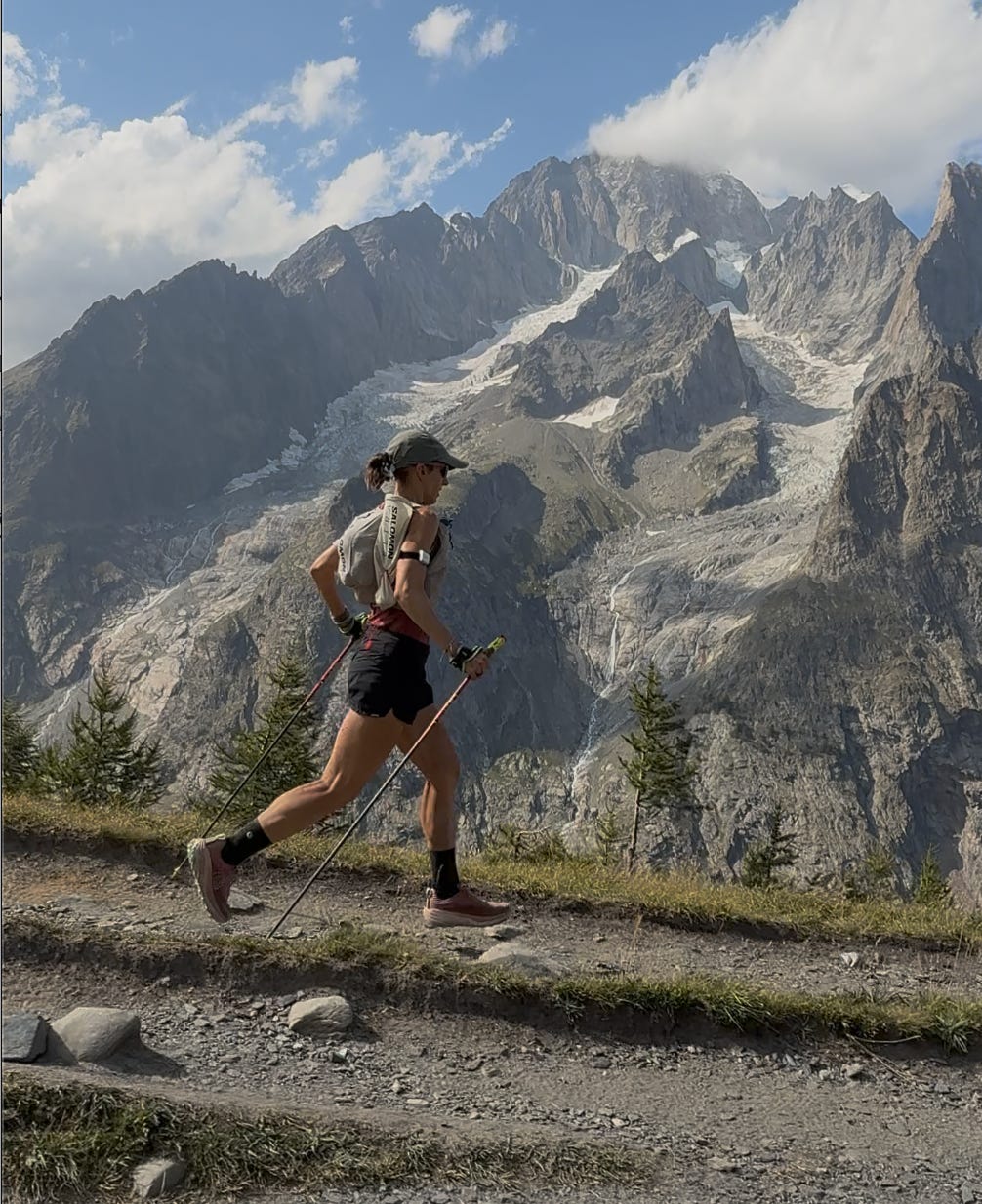
For races with sustained steep climbs, trekking poles can be incredibly helpful (check your race’s rules to make sure they are allowed, though!).

They allow you to distribute some of the workload to your upper body, reducing the strain on your legs and helping you maintain efficiency during long climbs.

If you plan to use poles on race day, it’s important to train with them beforehand. A common mistake I see runners make is not engaging their lats (the big muscles of the back) when using poles. Think about performing a lat-dominant movement like a chin-up or row. Your lats should be doing most of the heavy-lifting, and your arm muscles are just assisting. This goes for poles as well. If your lats are not engaged, it’s very easy to fatigue the muscles in your arms, as they are relatively small and weak compared to your lats. I have seen runners in steep races burn out their arms from improper pole technique, and it’s not pretty!

When choosing poles, make sure to get a light carbon-fiber Z-fold style specifically for running. Regular hiking poles are much heavier and are not quickly deployed or stored. Leki and Black Diamond both make excellent lightweight trekking poles specifically for running. Make sure you pick a pair that is fitted for your height!

Final Thoughts

Preparing for a steep mountain race can feel daunting, but with specific and intentional training, your body will adapt to what you need it to do. Do your homework on your race course, prepare intentionally, and you’ll be ready not just to survive your event, but to fully enjoy all the trail magic you’ll experience along the way.

Happy trails!

Coach Jake Head

You’re probably misunderstanding Zone 2

You’re probably misunderstanding Zone 2

Zone 2 training has become one of the most discussed concepts in endurance running, and for good reason. Easy aerobic running is foundational.

But when runners say, “I trained in Zone 2 for a year and didn’t improve,” the issue is rarely a lack of patience or discipline. It’s usually a misunderstanding of how Zone 2 fits into the larger training picture.

Easy running supports aerobic development and plays an important role in building tissue resilience and durability. It allows adaptations to accumulate through repeatable, recoverable training.

For many runners, “Zone 2” aligns with easy, conversational running. But for higher-level athletes, spending too much time near the top of that range can quietly turn easy days into moderate ones and interfere with recovery.

What easy running does not do particularly well on its own is prepare you for the demands of racing.

Race performance depends on more than aerobic capacity. It requires efficiency at faster speeds, tolerance for higher metabolic stress, and the ability to coordinate force under fatigue. Those qualities are trained through targeted exposure to higher intensities.

That doesn’t mean hard workouts year round. It means that at some point in a training cycle, most runners benefit from introducing small, intentional doses of faster running. This can include strides, tempo or threshold work, and occasional VO₂max efforts. Each serves a different purpose, and together they complement the foundation built by easy mileage.

Easy miles make harder training possible.

Harder training makes fitness specific.

Where easy running matters most is when you’re building the ability to train.

If you’re newer to running, returning from time off, or rebuilding mileage, keeping most runs easy while gradually increasing volume is exactly the right focus. At this stage, easy running strengthens muscles and connective tissue, improves coordination, and raises tolerance for frequency and consistency.

But when weekly mileage is very low, easy running alone may not provide enough total stimulus to drive meaningful performance improvements, particularly for longer events like the half marathon and above. In those cases, progress often comes from a combination of consistency, gradual volume increases, and complementary stress such as short intensity work, strength training, or cross training.

The goal isn’t to rush fitness. It’s to expand what your body can handle sustainably.

The real value of Zone 2 isn’t that it’s a special or optimal pace. It’s that it allows you to train more, more often, without breaking down. By keeping mechanical, metabolic, and nervous system stress low, easy running makes recovery and repeatability possible.

That consistency is where long term fitness compounds.

As weekly volume becomes more sustainable, easy mileage creates room for quality work to actually do its job. Zone 2 isn’t about chasing a number or a philosophy. It’s about building training you can repeat week after week.

This Method of Setting Goals Can Work Wonders

This Method of Setting Goals Can Work Wonders

by Coach Ray Nypaver

High-level performance isn’t just about pushing harder, but rather it’s about making better decisions under stress. The runners who improve year after year are the ones who can regulate effort, recover well, and adjust intelligently when training or life doesn’t go exactly as planned. Goals rooted in clarity rather than pressure lead to better consistency, lower injury risk, and more effective adaptation over time.

The framework below is designed to support both results and longevity. It keeps outcome goals in view while prioritizing the systems such as habits, mindset, recovery, and self-awareness that actually determine performance on race day. Whether you’re chasing a PR or aiming to stay strong and motivated for the long haul, this approach helps you explore what you’re capable of without burning out.

As we start 2026, and soon the year of the (fire) horse, Coach Ray Nypaver wants to make sure we’re setting ourselves up for success in the best way possible and using some scientifically backed research.

First and foremost, it’s important we revisit some of recent our pawsitivity posts:

(Shared on Instagram and Strava)

1) Love makes you brave: When our foundation is unconditional love, we have more willingness to both take risks AND no one it’s time to step back. We know when a goal that scares us a bit is a goal born through inspiration vs. a goal of the ego (I’m not enough as I am/ I need to prove myself). And no matter what, we know we’ll be okay, whether we succeed or fail (make a mistake to learn from)…which also settles our nervous system. And a relaxed nervous system actually helps us be our best selves.

2) Your job is NOT to reach your potential. Your job IS to explore the possibilities of your potential. For some of us, that will mean reaching what we are physically capable of. For others of us, it will mean we learn how to work with our negative thoughts and beliefs and turn towards compassion, which IS reaching our highest self.

Okay, now we can start goal setting:

*If you did each week of the Steps to Adventure plan with me, you’ll realize this is a summary of that, especially the Peak Goal Setting model in Step 5 (attached).

Why/(Big) Intention: Yes, we still want to have an understanding of why your goals are important to you, why they matter. While they don’t have to be profound, they should be deep enough to touch the heart.

It might be something like “I want to experience more joy in my life because I know the more joy I allow myself to feel, the more others in my life will give themselves permission to experience more joy too. And doesn’t the world need more joy?” Or more simply, “I want to experience more joy in my life, because I know I am worthy of it.” (If you do want to go profound, we could talk about the rates of depression in the world and how that is keeping good people from stepping up into their power and ability to influence with voices and hearts.)

The why comes from your heart.

Values: Know what you care about in life! Know your priorities! These will help ground you, especially if the mind/ego gets caught up in a goal. The paradox is, of course, that the more grounded we are the higher we can fly. Becoming attached to our goals puts us into a fear state. Shooting towards them with a loose grip and knowing what matters most in life keeps us inspired but relaxed. A relaxed nervous system means we have more energy to run and create.

Outcome goals: These are your race goals, PR goals, etc. Yes, these are important and we should absolutely set them… but truly, these goals are secondary. They are what inspire us to explore our potential, our energy, and what we can do with our energy in physical form. For those of you who have Instagram, Coach Sandi recently shared this: https://www.instagram.com/p/DTWC05-kQ6T/

 Outcome goals are mainly of the mind, but should be influenced by the heart.

Action Goal: These are daily and weekly habits or actions. (On a slightly bigger scale, these might be B races leading up to your A race). It could be running 3-5x each week, but for more of you, it’s more like getting in mobility 3-5x each week, asking yourself each morning before you run: What does my body need today? Or, I’m going to pat myself on the back each time I take 1 minute to practice diaphragmatic breathing during the day. (Little rewards, like acknowledging yourself, activate the reward center of your brain making it more likely that you’ll repeat the activity and increase self-esteem. Contrary to what we like to believe, self-judgment often has the opposite effect.)

Daily Intention: We have this reminder in one of our “Getting Started” boxes in Final Surge, and it’s a great way to make sure you’re not just going through the motions, keeping your love for running, and continuing to improve- even if it’s making sure your easy days are truly easy! It might be running based: I want to work on my form today, or technical trail practice, or a little more personal: I want to practice mindfulness and presence today, so when my mind wanders back to work, I’ll come back to my breath or surroundings. YOU CAN ALSO look back at your values and why, and integrate those more deeply. (From the therapy side of my job, I know I can write down and say all the things I’ve learned all I want, I know self-compassion is one of the best healing tools we have and I know negative beliefs can be composted and rewritten, but it doesn’t mean anything unless I actively integrate these lessons and practice them in my daily life.)

Obstacles: What obstacles do you see getting in your way on your path towards your goal, or potential? Is it a busy life? Work stress? Or knowing you have a tendency to push through fatigue and injury? We want to plan these out, but not without…

Plan How You Want to Work Through Obstacles: If you know you have a busy week coming up, you can coordinate with me/your coach, to have that be a recovery week in running. If you know you’re good at pushing through, maybe set a reminder on your phone that: Rest results in future growth and recovery allows for strength. We need the Yin and the Yang.

Of course, we can’t plan everything…but we can plan how we want to treat ourselves when things are hard and know who our support team is. At Higher Running, we hope you know that we care about each one of our athletes as people first, runners second.

Last, here’s a helpful, 7 minute meditation to get your goal setting started for the year:

Motivating Self-Compassion Break

(I’ve written enough for this email, but research now shows that self-compassion is beneficial to/can improve performance.)

Wishing everyone a beautiful, magical, and successful (how you choose to define it) 2026!