From 3:27 to 2:39 in Three Years

From 3:27 to 2:39 in Three Years

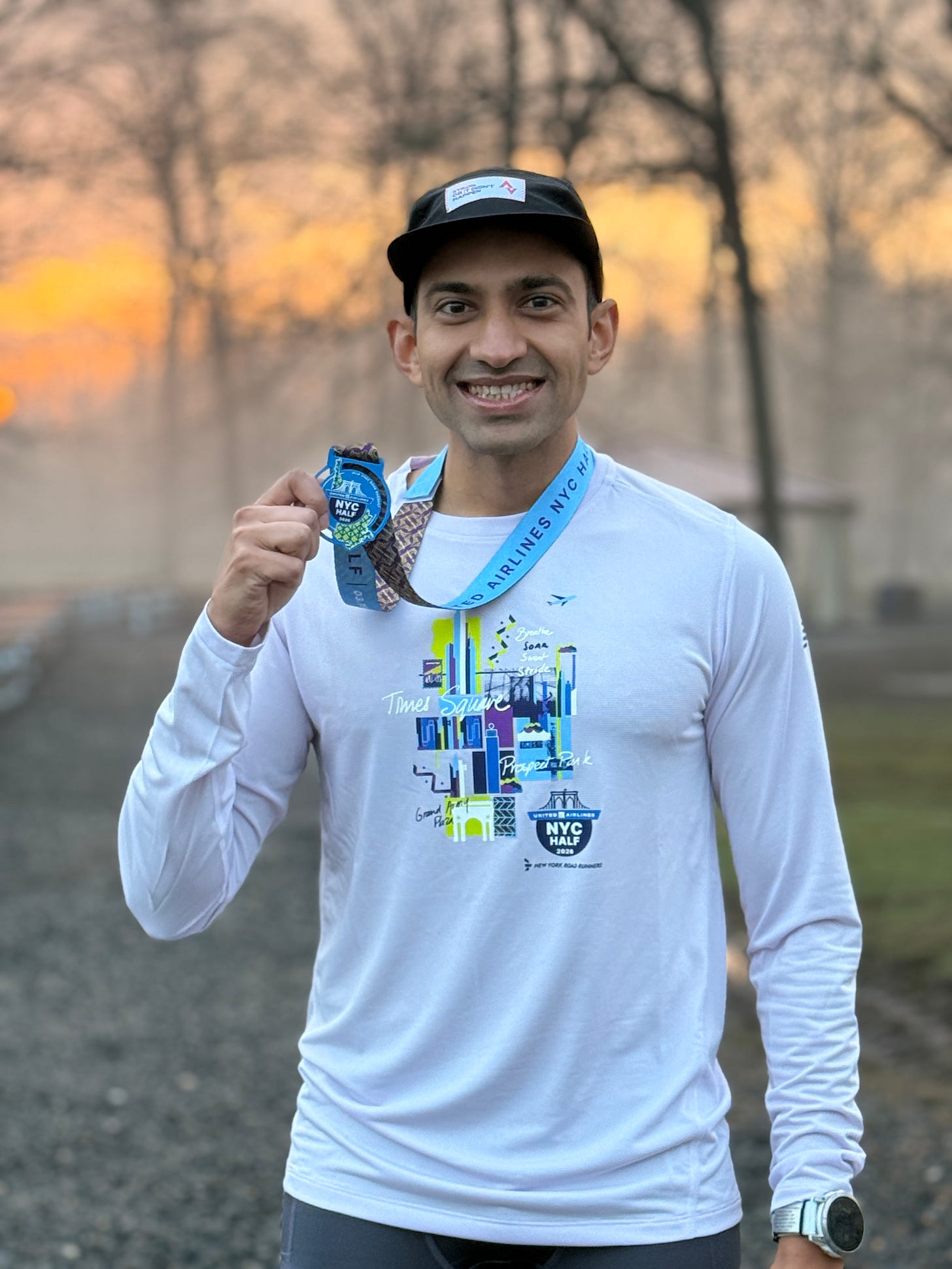
When Michaela and I first started working together in January 2023, she just wanted to BQ again. Now we’re looking at an OTQ.

                                                             Photo: @jameswilsonshoots


Michaela came to me after 9 years of running and 13 marathons with a PR of 3:27. She was dedicated, she loved the sport, and she was ready to really believe in and invest in herself.

When I looked at the data from previous half marathons, speed workouts and the long runs she was doing for her past marathons, I quickly realized she already had the speed to run way faster than 3:27. Speed wasn’t the problem. The problem was that she couldn’t utilize the speed she had for a full marathon yet.

Often the instinct when you want to get faster is to keep doing faster intervals. More time at faster paces. But for Michaela, that would have been a waste of time. She didn’t need more of that short distance speed yet. She needed to learn how to sustain the speed she already had.

So while we did touch on some of that 5k-10k type speed, we made her threshold and marathon paced runs the priority. We made some of the threshold runs longer and I also gave her a variety of threshold workouts instead of doing the same one every week. We put a big emphasis on long runs with a lot of miles around what I thought her marathon pace should be based on some of her past interval and threshold runs.

There were never any big jumps in the length of those workouts. Just a gradual progression over a couple of months. But if you look at where she started versus where she finished, those small steps led to a huge change in the amount of work she could handle. By the end of that first cycle, she could handle a 15 mile progression run, broken up, starting above marathon pace and ending the last mile a touch faster, without feeling destroyed after. During these runs practicing exact race day fueling was also super important, not just for finishing the long run strong, but also for feeling better afterwards.

She went into her first Boston that April hoping to run around 3:19. She ran just under 3:02.

                                                              Photo: @jameswilsonshoots


She’s not running sub-2:40 now because we just kept doing the same thing that worked for that Boston build. If you’re reading this thinking, I already focused on my threshold and my long runs and it stopped working, that’s because you have to know when to change things up.

Over time we’ve changed what Michaela’s focus needed to be. There have been periods where we built her mileage. Periods where she focused on hills. Periods where she did 5k and 10k type training. Each block addressed something different because what she needed kept evolving as she got better.

That’s what long term development actually looks like. It’s not one magic training cycle. It’s a smart, evolving plan that keeps identifying the next thing to work on and then actually doing that thing instead of just doing more of everything.

If you’re reading this and something about Michaela’s story sounds familiar, like you feel that you have way more in you but aren’t sure what you need to change, it might be that you’re not focusing on the right type of speed workouts for you.

That’s something we address from day one in the Breakthrough Lab. The program comes with four training plans. Two are built for runners who have the stamina but need more speed. Two are built for runners who have the speed but need more stamina, which is exactly where Michaela was. From there, the course walks you through how to adjust the plan further based on your specific needs, and both Sage and I are in the community chat every week to help you figure things out. There’s also a monthly live call where you can bring your questions and your training data directly to us.

If you want to learn more, you can check out the Breakthrough Lab here or reach out to me directly at sandi.higherrunning@gmail.com. I’m happy to answer any questions.

-coach Sandi Nypaver

He’s Been Chasing a Sub-3 Marathon Since 2018. Here’s why it’s now within reach.

He’s Been Chasing a Sub-3 Marathon Since 2018. Here’s why it’s now within reach.

More mileage? More speed work? A different training approach altogether? Or do I just need to trust the process and keep going? When you feel like you’re doing everything right but you’re feeling stuck, what do you do next? Those are all the questions my athlete, Harsh, had when we started working together. He has been running marathons since 2017. He’s now done 19 of them and got himself to a PR of 3:07 by his own research and dedication to the process.

3:07 is a fantastic time, but he knew he had more in him. He’d been chasing a Boston Qualifier, which for him means sub-3, since he crossed the finish line of his very first NYC Marathon back in 2018 and thought, “I want to come back and do this faster.”

Harsh had been running 45-55 miles a week, doing workouts like 10 x 800m and 6 x 10 minutes at threshold during the week and long runs ending with 6 miles at marathon pace on weekends. On paper, he was doing a lot of things right. Yet he was questioning whether his training and running knowledge could get him to his goal of running a sub-3 marathon.

When I started looking at Harsh’s past training, I noticed the mileage wasn’t sustainable with the intensity he was doing when he was deep in marathon training, so it could only be held for a few weeks before the fatigue would force him to slow down. Until the body is truly comfortable handling more volume, adding more intensity creates more fatigue, not more fitness.

So that’s where we started.

Last summer, instead of loading up on speed work, we spent a lot of time building his mileage into the sixties. Some hill work here and there, but nothing aggressive. The workouts were light on purpose. The goal was simple – get Harsh comfortable handling more mileage while feeling good doing it. When he kept telling me how strong he was feeling, I knew the plan was working.

This year, Harsh has already PR’d at three races in a row.

A hilly half marathon. A four-mile race, which was 70 seconds faster than his previous time at that same course. And then another hilly half marathon, where he ran 1:28:16 and crushed his sub-90-minute goal by nearly two full minutes.

His half marathon PR a year ago was 1:31:27. He dropped it by over three minutes.


When that finish line came, Harsh wasn’t surprised. We both knew from his training that he was ready. His workouts had already told us. On our pre-race call we both acknowledged we knew he was in sub 1:30 shape, the race was just making it official.

What made the difference wasn’t one magic workout. It was a lot of small things done consistently and done right.

Harsh didn’t just tolerate the training. He found a way to enjoy it, to stay curious about it, to trust that the work was adding up even when he couldn’t see it yet. At the end of the half marathon block, he told me he hasn’t felt this confident going into a race in a long time.

Harsh is still chasing his sub-3, but it’s no longer a question of if he’ll get there, it’s when.

We’re going to keep making sure nothing is forced. It’s all just the next logical step up. We know it’s working. He’s in the best shape of his running life and closer than ever to that goal.

If you’re reading this and something about Harsh’s story sounds familiar, like you’re putting in the consistency and smart training but feel like you should be running faster than you are, one of the most valuable things you can learn is how to look at your own training data and know whether you’re making the same kind of mistake he was.

That’s one of the core things we teach in the Breakthrough Lab. How to analyze your training so you can identify exactly what’s working, what isn’t, and what needs to change. And if you’re not sure what you’re seeing in your data, that’s what our monthly live coaching call is for. You can submit your training data directly and get real feedback from both Sage and me on what it’s telling you.

If you want to learn more, you can check out the Breakthrough Lab here or reach out to me directly at sandi.higherrunning@gmail.com. I’m happy to answer any questions.

— coach Sandi Nypaver

The Heart of Good Coaching

The Heart of Good Coaching

by Sandi Nypaver, Higher Running Co-Founder

Photo: Luke Webster


Good coaching isn’t just about having a lot of running knowledge. It’s about the ability to use all your knowledge and figure out how to apply it just right for each individual you are coaching. And most importantly, great coaching is about having genuine care for your athletes and their total well-being, not just their running results. That’s really the heart of it. If a coach is driven by a flexible job, rushing through work so they can do other things, a big audience/ego, and trying to make “easy money”, they’re going to be a crappy coach. And some will get away with it. But if genuine care is at the heart of everything a coach does, it’s going to make for some damn good coaching. Not only will athletes keep growing year after year, they’ll be able to honestly say that the coaching relationship had a positive, meaningful impact on their entire lives.

I started coaching all the way back in 2014. There have been a few instances in my life where I felt all I had to do was take a step forward and a path would magically appear. To me, it’s been a sign that I’m doing exactly what I’m supposed to be doing at that moment. That’s precisely how getting into coaching played out. I had a wonderful woman ask me to help her train for the Leadville 100 mile trail run and I knew coaching was what I was meant to do.

Learning about all things running, from physiology to mental performance to all kinds of training philosophies, is both a passion and an obsession. Even after taking numerous courses and reading hundreds of books, I still start most days by drinking coffee, eating breakfast, and reading about running. While I’m not always learning anything new material-wise, I often appreciate the refresher, a different way of saying something, and the opportunity to think analytically and creatively. Then there are also many days where I listen to a running podcast or go to bed reading about running, though at times I need a break to gain clarity about my own thoughts.

In today’s world, anyone can have knowledge. Not everyone knows what to do with it. When I consider everything I know about running, my mind often goes to the training principles that have stood the test of time. Gradual progression, lots of easy running, recovery to allow for adaptations, different training intensities throughout the year, the importance of a certain volume to be able to better withstand higher intensities, etc. But there are still countless ways to apply these things. While often I use the “least specific to most specific” approach for well-trained athletes (they’ve already developed a good aerobic base), even when people are training for the same races and aiming for around the same time, their training could look very different. And knowing how to adjust training and manipulate workouts for individual needs is still something that is often lacking in running books.

What I’m about to say may seem like an abrupt change and a little controversial to some, but bear with me, I’ll tie it back together. I genuinely love my athletes. Not the same way I love my family, and yes, they are paying me, but I love them. Some of my athletes I’ve been coaching for over a decade. I know what their kids are up to, I’ve seen a few go through tragic losses, they’ve trusted me with worries, and I’ve gotten to see them through their most joyous moments of running and life as well. I don’t take any of that lightly and my athletes know it. And I truly believe that when an athlete knows they’re cared for and that I genuinely care about their health, well-being and happiness, they are in a position to train and perform to the best of their abilities in whatever stage of life they are in.

Everything I’ve shared above is something I know every Higher Running coach can relate to. I’ll be the first to admit I have high standards when it comes to coaching, but because every single coach here genuinely cares about people and has a true passion for coaching, they appreciate the standard of coaching we expect here at Higher Running. Each coach also has a small athlete roster, so that level of care can always be maintained. And I believe that’s why all of our coaches have many athletes they’ve worked with for years and why we often fill up, even in an era where there are hundreds of run coaches and companies to choose from. Higher Running was founded on passion for running and genuine care for people, and that will forever be our compass.

You’re within 5 minutes of a sub-3 hour marathon.

What’s actually holding you back from sub-3?

For some runners, more volume can be very beneficial. For others, the main limiter is threshold fitness or raw speed. It comes down to knowing what’s holding you back. If your 5k-10k PRs are better than your marathon PR (i.e. you’re an 18 min 5k runner or faster) things that might help are more long runs with marathon paced work, a mileage increase, and/or more threshold runs.

Here are some threshold workout examples:

  • 2 x 3 miles (2-3 min easy) at threshold pace (~6:42-6:34 min/mile, 4:10-4:05min/km)

  • 10-12 x 3 min (1 min easy) at ~4-8s faster than threshold pace

  • 2miles -2 miles -2 miles -1 mile (2-3 min easy) at threshold pace, or do a progression starting a little over threshold pace and ending the mile a little under.

However, before you start marathon training or in the first phase of training for a marathon, you’ll want to focus on faster, shorter workouts. This could be everything from 12 second to 1 minute hill reps, to 200s, and 3-4 min intervals at VO2 max pace. Then even as you get more into marathon specific training, you can still add in more touches of speed without running yourself into the ground.

These are some specific ideas:

  • 8 x 30s (1 min easy) or 5-6 x 1 min fast (1 min easy) after the end of a threshold run

  • 10 x 800m (1-1.5 min easy) at ~10k pace

But what if you’re already in your final 8 weeks of marathon training?

If you’re in your final 8 weeks, the goal shifts. You’re not trying to close the gap, you’re building fitness and getting comfortable at sub-3 pace.This could look like 4 x 3-4 miles at current marathon fitness pace builds the endurance and strength to hold your pace on race day. Or, 10 x 1 mile at 6:52/mi (4:16/km) gets you touches of sub-3 pace in your long runs without overdoing it, while still supporting your current marathon fitness.

You’re probably misunderstanding Zone 2

You’re probably misunderstanding Zone 2

Zone 2 training has become one of the most discussed concepts in endurance running, and for good reason. Easy aerobic running is foundational.

But when runners say, “I trained in Zone 2 for a year and didn’t improve,” the issue is rarely a lack of patience or discipline. It’s usually a misunderstanding of how Zone 2 fits into the larger training picture.

Easy running supports aerobic development and plays an important role in building tissue resilience and durability. It allows adaptations to accumulate through repeatable, recoverable training.

For many runners, “Zone 2” aligns with easy, conversational running. But for higher-level athletes, spending too much time near the top of that range can quietly turn easy days into moderate ones and interfere with recovery.

What easy running does not do particularly well on its own is prepare you for the demands of racing.

Race performance depends on more than aerobic capacity. It requires efficiency at faster speeds, tolerance for higher metabolic stress, and the ability to coordinate force under fatigue. Those qualities are trained through targeted exposure to higher intensities.

That doesn’t mean hard workouts year round. It means that at some point in a training cycle, most runners benefit from introducing small, intentional doses of faster running. This can include strides, tempo or threshold work, and occasional VO₂max efforts. Each serves a different purpose, and together they complement the foundation built by easy mileage.

Easy miles make harder training possible.

Harder training makes fitness specific.

Where easy running matters most is when you’re building the ability to train.

If you’re newer to running, returning from time off, or rebuilding mileage, keeping most runs easy while gradually increasing volume is exactly the right focus. At this stage, easy running strengthens muscles and connective tissue, improves coordination, and raises tolerance for frequency and consistency.

But when weekly mileage is very low, easy running alone may not provide enough total stimulus to drive meaningful performance improvements, particularly for longer events like the half marathon and above. In those cases, progress often comes from a combination of consistency, gradual volume increases, and complementary stress such as short intensity work, strength training, or cross training.

The goal isn’t to rush fitness. It’s to expand what your body can handle sustainably.

The real value of Zone 2 isn’t that it’s a special or optimal pace. It’s that it allows you to train more, more often, without breaking down. By keeping mechanical, metabolic, and nervous system stress low, easy running makes recovery and repeatability possible.

That consistency is where long term fitness compounds.

As weekly volume becomes more sustainable, easy mileage creates room for quality work to actually do its job. Zone 2 isn’t about chasing a number or a philosophy. It’s about building training you can repeat week after week.