Difficult workouts can be scary, but they don’t have to be.
Workouts that push us out of our comfort zones can often feel intimidating, especially when they involve endurance and speed. These types of workouts—long efforts mixed with speed—are often the ones that stir up the most fear among runners. The distance, the pacing, the uncertainty of how your body will respond can be daunting!
Today, Coach Sandi Nypaver gives you a few things to think about if you get too worked up before key workout or interval session.
The Root Issue:
When I talk to a lot of the athletes I coach, the conversation often turns to why certain workouts feel so daunting. Often, it’s because they’re worrying about things that are out of their control or they’re fixated on how much it’s going to hurt. It’s easy to get stuck in that mindset—focusing on the negatives.
But in my opinion, what it really comes down to is shifting that focus. Instead of thinking about the discomfort or the fear, frame it in a way where you instead recognize that this type of workout is exactly what’s going to propel you toward your goals. These sessions aren’t just tough physically; they build mental resilience, too.
It’s about seeing each challenge as a step forward, not just something to endure.
Take long run workouts as an example—they demand a lot of mental focus and require you to have confidence in your ability to stay strong as the workout progresses. That’s what I remind my athletes when we approach these longer sessions!
Mindset Matters:
It’s important to remember that you can feel strong during the workout, and when you do, it feels incredible. But so many people fixate on how bad they might feel, rather than focusing on how great they can feel when everything clicks. When you start to feel yourself slip into these thought patterns, it becomes even more important to focus on something good.
And if the workout doesn’t go as planned, that’s perfectly okay. One of the things I always tell my athletes is that failure isn’t a big deal—it’s part of the process. In fact, it’s expected. Every setback is an opportunity to learn and come back stronger.
Failing a Workout:
I’ll take the thought of failing one step further! If you’re not failing, you’re probably not pushing yourself hard enough or setting goals that truly challenge you. In my book, failing a workout is no big deal. It’s just part of the process when you’re trying to perform at your best. When a workout doesn’t go well, instead of dwelling on it, reflect on why. Were you too tired? Did something feel off physically? Or maybe you mentally sold yourself short before even starting?
All of these factors play a role, and when a workout doesn’t go as planned, you take what you can from it. Learn from the experience, and then move on. It’s part of the journey, and better workouts are always ahead. Over the years as a runner, I’ve experienced ups and downs, with plenty of failed workouts along the way. But that’s just part of the game. Each failure is a steppingstone toward the next success.
My challenge for you for, then, when facing a tough workout and not quite feeling up to it, is to shift your mindset. Instead of focusing on the pressure or the potential struggle, tell yourself, “I’m just going to give it a shot and do my best today.” By approaching it this way, you take off some of the mental burden. And who knows? If it goes well, it could end up being a huge boost for both your progress and confidence. Just giving it a try could be all you need to turn things around.
Coach Sage Canaday teaches you what it takes to run a sub 45-minute 10k!
A few weeks back, Coach Sage Canaday gave his advice on what to do in order to crack a sub 22-minute 5km. Now, he’ll take it one step further if you’re looking to run a fast 10k! These are tried-and-true training methods and workouts that can be adapted, whether you’re slightly faster or slower than these target times.
Let’s Start Off With The Math
To achieve a sub 45-minute 10K, you’ll need to maintain a pace of approximately 7:15 per mile or 4:30 per kilometer. Ideally, you should be able to run a 5K under 22 minutes—closer to 21:30 would be even better. If you haven’t yet reached that level, it will be challenging to sustain two back-to-back 22:30 5Ks, which is necessary for a sub 45-minute 10K.
Getting Started
So if you’re not quite there yet, focus on racing some 5Ks first to build up your speed and fitness. Once you’ve achieved a solid 5K time, you can then move up to the 10K distance and work on lowering your time there as well. The key is to develop your baseline speed for the 5K and then apply it to the 10K. About 80% of your baseline or “easy” pace should be about 8:45 per mile or 5:30 per km. If you’re in sub 45-minute 10km fitness, this is the easy pace that you’d be shooting for.
Since a 10K is twice as long as a 5K, it’s crucial to have extra endurance and stamina. But once you’ve built a strong mileage base and are consistent in your training, you can start incorporating quality workouts. These harder sessions include speed and interval workouts, similar to those in 5K training. For the 10K, it’s better to focus on longer repeats, such as mile repeats or 1600-meter intervals.
Advanced Workouts for 10K Training
To train effectively for a 10K, it’s crucial to include workouts that challenge both your speed and endurance.
Workout #1: Tempo Runs
Before starting the interval workouts, it’s beneficial to build up your stamina with tempo runs. Begin with a 20 to 25-minute tempo run at a pace slightly slower than your goal 10K pace, around 7:25 per mile or 4:35 per kilometer. This steady-state effort, at about 80 to 85% of your maximum, is controlled and sustainable, helping you develop the stamina needed for longer periods of sustained effort. Incorporate this workout once a week as part of your training routine to enhance your endurance and to get your legs and breathing accustomed to a near 10K pace.
Workout #2: Vo2 Max Workout
The next key workout is mile repeats. Aim for 4 to 5 repeats of 1 mile or 1600 meters each, targeting a pace of around 7:00 to 6:55 per mile. You can perform these on a track or a flat, measured path. Between each repeat, take a controlled rest break of 3 to 4 minutes. During this rest, you can walk or jog lightly, but your heart rate should not fully return to its resting state. This will keep you slightly fatigued, building specific strength and endurance for sustaining a high-effort pace over the 10K distance.
These intervals will elevate your heart rate to over 90% of your maximum and get your legs accustomed to running significantly faster than your 10K goal pace. This makes your goal pace feel more comfortable on race day!
Workout #3: 400-Meter Repeats
Similar to the 5K training, include 400-meter repeats at a pace faster than your 5K race pace. Aim for 8 to 10 repeats at 1:38-1:40 each on a track with a two-minute rest between each rep. This workout helps develop your top-end speed, which can be useful for a strong finishing kick in a 10K race. However, this is not as crucial for 10K training as it is for 5Ks. Consider doing this workout once every two weeks.
Workout #4: 2-Mile or 3200-Meter Repeats
The final key workout I’ll give you for today is 2-mile repeats or 3200-meter repeats. Perform these at your current 10K race pace, with the goal of gradually working down to your target 10K pace. For example, you might aim to complete each 2-mile repeat in around 14.5 minutes if targeting a sub-45-minute 10K. Try to do 3 sets of these repeats with a short, 5-minute rest in between. This workout covers approximately 6 miles of running at or near race pace, which is about the same distance as a 10K.
This type of workout is essential for building strength and stamina specific to 10K racing. It targets your 10K pace and is a staple for preparing your body to maintain that speed over the race distance. You only need to do this workout about once every two weeks.
The Five-Pace Theory
Think of your 10K pace as being in the middle of a five-pace spectrum. There are two paces slightly faster and two paces slightly slower than your 10K race pace. Training across this range ensures a balanced approach to developing both speed and endurance.
Let’s put it all together:
Structuring Your 10K Training Plan
In your training plan, it’s essential to include a variety of paces to maximize your 10K fitness. Here’s a quick breakdown of the key paces and workouts:
1. Easy Pace:Base mileage runs at a relaxed, conversational pace.
2. Tempo Runs:Sustained efforts at a slightly slower pace than your 10K goal pace.
3. 10K Pace: Longer intervals like 2-mile repeats performed at your current or goal 10K race pace.
5. 400-Meter Repeats and Strides: Shorter, high-speed intervals to develop top-end speed and running economy.
Mixing these workouts in a cohesive plan is crucial for achieving your best 10K performance. Proper timing and progression of these workouts are important, so be sure to build your base mileage first before adding in the harder sessions.
I hope this is helpful – happy running and have a great week!
For today’s newsletter, Coach Sandi Nypaver gives you a few of her favorite active release techniques!
Ideally, these active release techniques should be the first part of your warm-up; whether you’re headed out for a run, about to do a strength session, or even just before you do some mobility or static stretching. If you jump right into mobility or stretching, you may not actually release your tight muscles. Doing active release first will loosen up your muscles so you can then fully benefit from mobility exercises and get the range of motion you need for your best running form!
I know this may just seem like another thing you should do but don’t really want to do. My advice is to make it a goal to do this for only a month and see if it helps! Notice if you feel better on your runs, especially that first mile. Sometimes one tight muscle can screw up your entire stride.
Also, know that a little is better than nothing. I think a longer, fully body active release session once a week is a good idea, but most days a couple of minutes is more than enough. Personally, I feel that listening to upbeat music and doing the active release is a great way to get both my mind and body ready for my run. Finally, for each exercise, there’s no “right” amount of time, but I usually find myself doing 30 seconds per exercise, per side. If you feel like you need to do a longer amount of time on a certain side or muscle, go for it. However, you shouldn’t go longer than a minute. If the muscle doesn’t release in a minute’s time, it probably won’t release today.
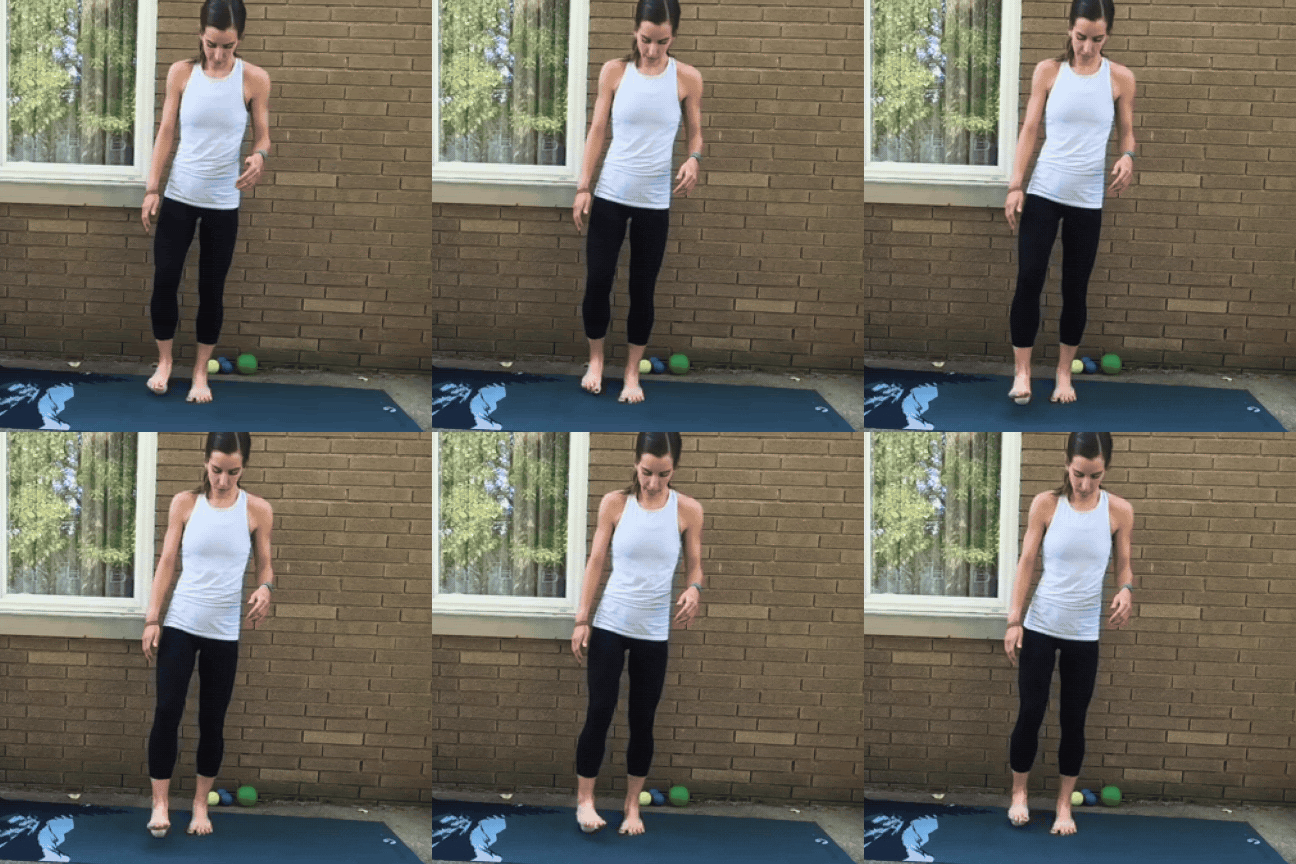
Before we start off, you’ll want to have on you a lacrosse ball, a tennis ball, and a chair. Or, you can also use a foam roller for any of these exercises. Alright, so here are a few of my favorite exercises:
Exercise #1: Feet Active Release
I start by rolling around to check for any tight spots. If I find one, whether it be in the arch of my foot or near my big toe, I’ll focus on that area. The goal is to activate the muscles on the way up, then fully relax as I bring my foot back down. I’m just rolling gently here. You can use a tennis ball or lacrosse ball, or you could even use a golf ball if you prefer. Just remember to do both sides!
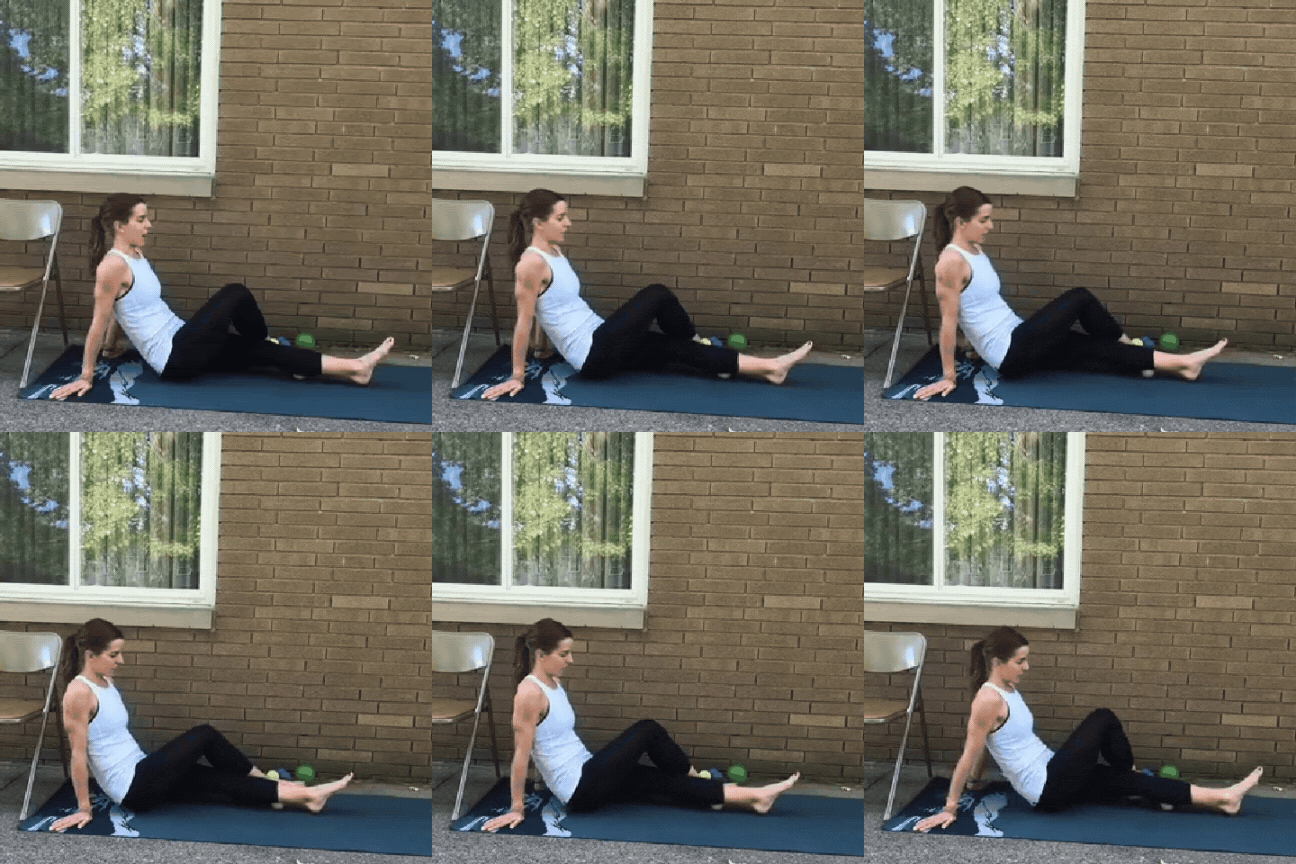
Exercise #2: Calf Active Release
When I focus on my calves, staying in one place and breathing through it might be enough, or you can move to the side-to-side to find another spot. You may feel tighter on the inside of your calf. The key is to make sure you can fully relax your muscle. If you’re using a lacrosse ball but can’t relax, try switching to a tennis ball.
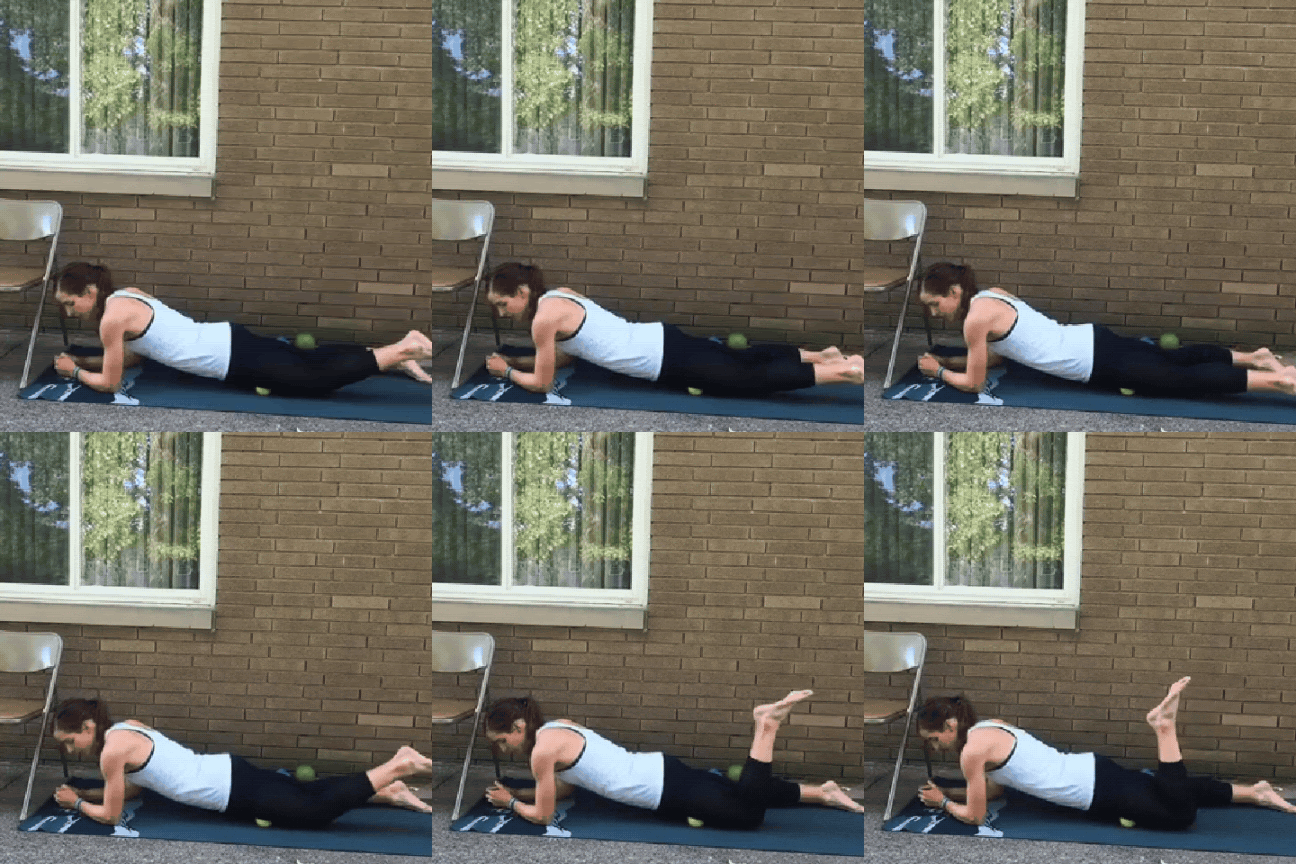
Exercise #3: Quadricep Active Release
This is a big one for a lot of runners — the quads. I’m starting right in the middle of my quad. You can move up, to the side, or to the inside if that’s where you feel tightness. Remember to take deep breaths and relax.
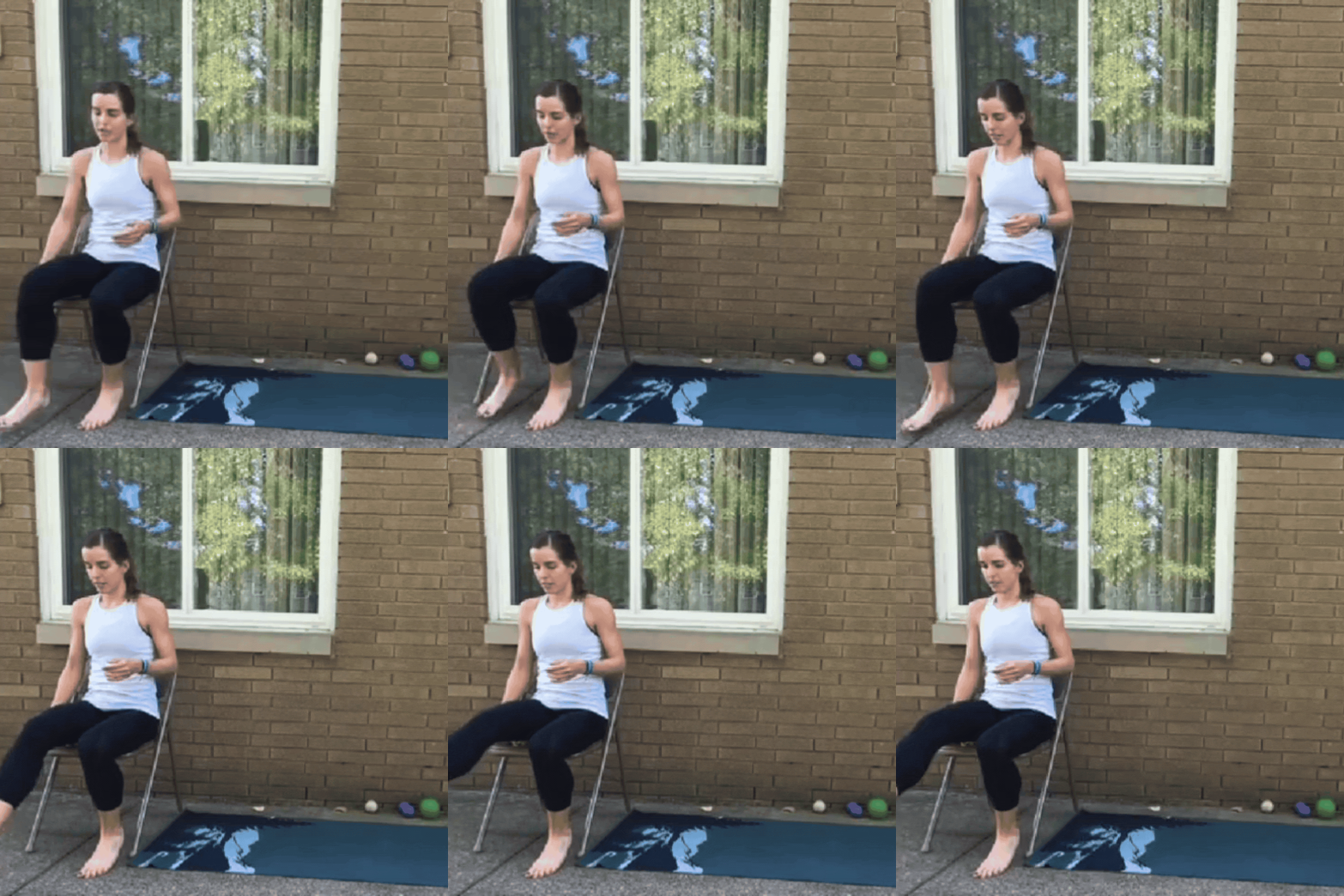
Exercise #4: Hamstring Active Release
For this exercise, you’ll need a chair. I take a tennis ball and sandwich it in between the seat of the chair and my hamstring. This might be too intense for some people, so you may want to start with a foam roller on the ground and ease into it. I don’t typically have tight hamstrings, so I can handle this, but for others, it might be a bit painful — and that’s not what we’re aiming for.
I hope this gives you a few ideas on ways to work on some tight muscles. There’s even more muscle groups and exercises I didn’t get into today, but starting with just a few of these is a great start!
In today’s newsletter, Coach Sage Canaday gives you everything you need to know to successfully incorporate hill workouts into your own training plan.
Let’s go!
This is one of my favorite type of workouts to give to my athletes. Why? Flat track runners, road marathoners, half marathoners, and ultra mountain trail runners should all incorporate hill repeats, because they build efficiency at every distance.
What I Look For In a Hill 🏔️
Let’s start from the beginning. When looking for a hill to complete a workout on, what should you be looking for? I try to find a hill that averages a 5 to 10 percent grade, as this tends to work well for a variety of hill workouts. If you can find something even steeper, that’s great depending on what you have available and your target race. For example, I prefer to steeper grades when preparing for a mountain ultra race whereas road runners may aim for 5 to 8 percent.
When I start an athlete on a training block, I typically have them start with shorter hill repeats, such as 30 to 60-second sprints, and then gradually build up over weeks and months to longer repeats—two, three, even four or five minutes in duration. If you’re having trouble finding a hill in your area that would meet these parameters, I usually suggest completing them on a treadmill or a bridge (if possible).
Why Hill Workouts WORK ✅
Hill workouts are unique in the sense you’re able to engage your calves, quads, hamstring, and other key muscles like hip flexors, abdominals, and even arms due to the exaggerated arm swing experienced while running uphill. Not only are there key muscular adaptions, but outstanding cardiovascular benefits as well. Your heart rate gets significantly elevated so you’re breathing hard and gaining substantial aerobic benefits.
How to Get the Most Out of Your Hill Workouts 📈
The idea is to maintain good form and avoid a hunched posture. Instead, focus on driving the legs with an exaggerated knee drive, knee lift, and arm swing, working out any kinks in your form and mechanics as you ascend the hill. Hill repeats are never easy, but that’s why they lead to big gains. Understandably, your body is going to get tired and lead to your form breaking down. It’s up to you to be cognizant of this and self-correct!
If you’re interested in reading more on proper uphill running form, I’ve written on that previously which you can check out here.
What Hill Workouts Should Look Like 🔍
Often, I’ll prescribe my athletes to run hard for 1 to 3 minutes at a certain number of reps while focusing on good form and getting their heart rate up. After each intense effort, take a long rest, slowly jogging back down to recover (and possibly walking around at the bottom).
As a rule of thumb, you want the rest period to be longer than the high intensity run time. For example, if you’re running hard for one minute up the hill, you’ll jog down and rest for three minutes between each rep. Why? This helps prevent excessive lactate buildup, allowing you to maintain good form and complete all repetitions, thereby building neuromuscular coordination, efficiency, and running form.
Workout Example ⚡️
Here’s an example workout I’d give to my athletes and use myself: 10 x 1 minute ‘hard’ uphill with a 3-minute jog rest between each. Note: depending on where your fitness is at, it’s important to. modify the number of reps or minutes you run up a hill to prevent overtraining and/or injury!
That’s it for this week! I hope you found this helpful in covering the basics for your own hill workouts.
Coach Sandi Nypaver gives you a few of the different ways to approach setting goals.
As we head into the fall season of running, these could be some great tips for you to consider. Coach Sandi will also discuss a few ways she helps avoid the comparison trap.
Let’s dive in.
I was once approached by an athlete that was willing to open up about their low self-esteem, stating that they often struggle with setting personal goals and end up comparing their achievements to others in search of validation. “If sights are set too low, I might belittle my wins, but if they’re set too high, I convince myself that I can never reach them. Is it straightforward to know that a great outcome equates to winning a race?”
There’s a lot to unpack here, so I’ll start with each part of this question.
How I Set Goals Depending on the Race:
My goals change depending on the race. There are races where I may be targeting a certain time or certain pacing strategy. There are also races like Hard Rock, UTMB, or Western States, that I have been dreaming about, the training had gone well, and I had poured my heart and soul into everything. For those races, I might have a goal just to finish! For everyone I coach, including myself, we usually set A, B, and C goals.
Sometimes there’s an A-plus goal, which is really challenging but still achievable. Then there’s the B goal, the C goal, and finally, the ‘if everything goes wrong’ goal. This last one is about maintaining a positive mental attitude no matter the outcome. Staying positive when everything goes wrong is a great challenge in itself; that’s a goal I always set for all my athletes going into every race.
How To Work on Self-Esteem
But I really want to address other parts of this question, especially regarding self-esteem. If you’re a runner that struggles with low self-esteem, why not make it a goal right now to work on improving your self-esteem, even before prioritizing race goals?
I know it’s easy to think that your self-esteem can’t change, but it can. You need to start by finding a better way to talk to yourself. I often take a step back and ask myself, ‘If I were talking to a loved one in my situation, how would I talk to them?’
That could be a good starting point for you. Consider how you can develop a more positive mindset about yourself. And why are you comparing yourself to others in the first place? Just by signing up for a race, you’re already doing so much more than if you were just sitting on the couch watching TV and not signing up at all.
Running & Comparison
I know running is a sport where it’s easy to compare yourself to others, but there’s beauty in using others to help you reach your goals and in wanting to see success for others without necessarily comparing yourself. Even though comparison will inevitably slip in, when it does, take a step back and remind yourself that you don’t need to compare yourself to that person.
Instead, compare yourself to the version of you who made less healthy decisions, who didn’t sign up for the race, or who didn’t make it to the start line. You don’t need a race to validate yourself. Running isn’t meant to validate you. Simply showing up is something you can use to validate yourself.
Final Thoughts:
If you don’t meet your goals, at least you tried. That’s so much better than not trying at all, right? You’re going to surprise yourself. It might not happen when you want or how you expect, but if you set big goals for yourself and work toward them, you’ll get so much farther than if you didn’t set those goals at all. Even if things don’t work out, you’ve improved, and you know you tried, which is so much better than not trying and selling yourself short.
This mindset applies to all aspects of your life! Do the mental training, talk yourself through it, and find better thoughts. You can do this. I know it’s hard, but I promise you it’s worth your time!