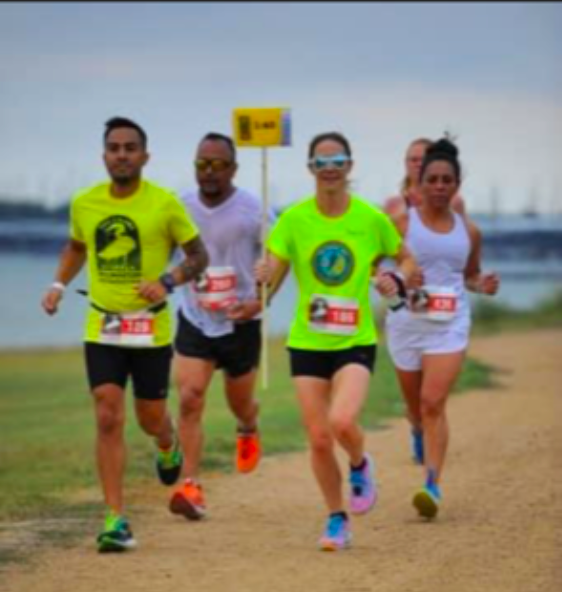
Today, Coach Sandi Nypaver will give you some tips to train a high-performance mindset to help you achieve your 2024 goals. The concepts in this newsletter have made a huge difference for her as well as the athletes that she coaches who have fully committed to them! Thanks to neuroplasticity anyone can develop a high-performance mindset with the right focus:
Hope you’re all kicking off the year on the right foot! It’s Coach Sandi here, and I’m excited to share these eight tips to help you on your running journey.
1. Stay Present, Embrace Today: I’ve learned that focusing on the present moment is the key to reaching those distant goals. Sure, I might have a race in mind, but making the most of today is how I build towards success. Find joy in each run, even in the cold and snowy days!
2. Write It Down, Make It Visible: I’ve got a little trick for boosting goal achievement – write it down and keep it in your line of sight. Make your goal your phone wallpaper or put it on your computer desktop. Seeing it every day is a powerful reminder to stay committed.
3. Uncover Your “Why”: When setting goals, ask yourself why it matters. It doesn’t always have to be a profound answer. For me, it often boils down to the simple joys and the feeling of accomplishment. Knowing your “why” keeps you motivated through thick and thin.
4. Harness Positive Self-Talk: Positive self-talk has been a game-changer for me. I still mess up on camera sometimes, but embracing positivity has kept me going. It’s not about perfection; it’s about progress. Try it out, and you might be surprised at the difference it makes.
5. Audible and Visual Fuel: As someone who learns both audibly and visually, I surround myself with motivating podcasts, music, and visual reminders. Find what speaks to you and keeps your mind in sync with your goals.
6. Seek Pleasure in Challenges: Change your mindset from dreading hard workouts to embracing the pleasure they bring. It’s all about perspective. Challenge yourself to redefine what you consider “hard,” and you’ll find yourself enjoying the journey more.
7. Prioritize Your Feelings: Here’s a bit of unconventional advice – care about how you feel. Your emotions are powerful indicators of what serves you. If something doesn’t make you feel good, recognize it and make choices aligned with your well-being.
8. Your Surroundings Matter: Everything around you, from the TV shows you watch to the music you listen to, can impact your mood. Choose elements that uplift and energize you during your runs and in your daily life.
Let’s make 2024 a year of strides, joy, and mindful running!
“Today, I want to share a story that takes us back to the Canyons 100k, an event that unfolded about two years ago, where things didn’t quite go as planned.
At the time, I was really excited for the Canyons 100k, with the allure of a mostly uphill course, starting at 1,000 feet and reaching 5,000 feet. It was a challenge I was ready to tackle head-on. But, as life often teaches us, plans can take unexpected turns.
The decision not to participate in Canyons 100k was a tough one. Despite my excitement, a nagging feeling told me I wasn’t at my optimal performance level. A recent revelation about my ferritin levels being lower than usual served as a crucial insight into my physical condition.
I believe there were two factors contributing to this decline: my recent move to 7,000 feet in altitude and an oversight in adjusting my iron supplement regimen. Altitude has a known impact on ferritin levels, and a delayed blood test only compounded the issue. Lesson learned, albeit the hard way. I’ve known from past experiences that high altitudes pose challenges.
The second reason was a bit of a facepalm moment – I switched to an iron supplement that wasn’t as potent as my previous one. Silly mistake, but it happens.
Now, let’s rewind a bit further to my journey in refining my running form. About three years ago, during the Black Canyon 100K series, I opened up about reshaping my motor patterns after dealing with a chronic Achilles injury. Those childhood patterns of being pigeon-toed and walking on my toes haunted me and probably contributed to my Achilles issues.
While most days my form felt on point, bad days still snuck in. A race a month before Canyons 100k left me feeling off-kilter. Entering a 100k without 100% confidence in my body just didn’t sit right with me.
Reflecting on this journey from two years ago, setbacks happen, even to the most seasoned runners. What matters is how we respond. Here are a few timeless takeaways:
1. Prioritize Health : No race is worth compromising your well-being. Regular check-ups and listening your body’s signals should be non-negotiable.
2. Altitude Awareness : Living and training at high altitudes comes with challenges. Stay informed, consult professionals, and keep tabs on your health.
3. Embrace Adaptability : My journey post-injury highlights the importance of adapting. Embrace change, refine techniques, and be patient with progress.
As I reflect on Canyons 100k from two years ago, I’m grateful for the running community’s support. We’re bound by resilience and a shared love for the sport. Here’s to the journey!”
He share’s his thoughts on managing illnesses, mitigating the risks of injuries, and maintaining a balanced approach to training.
“As we head into the thick of the season where sniffles and flu bugs abound, I thought it pertinent to share some insights on how to navigate the tricky terrain of marathon training (or really any other distance) when you find yourself under the weather.
Firstly, let me acknowledge that illness is no stranger to the running community, especially during the winter months. Now, I’m not a doctor, so it’s crucial to consult with a medical professional for personalized advice. However, I’d like to share some wisdom gleaned from my nearly 25 year running career.
Imagine this scenario: you’re a month away from trying to achieve a sub-three-hour marathon, and a nasty bug decides to sneak up on you. What’s a runner to do? The answer isn’t one-size-fits-all, as it depends on various factors, such as the severity of your illness, the type of infection (bacterial or viral), and your individual immune system response.
Let’s break it down. If you’re dealing with a minor cold—sniffles, a mild sore throat, maybe a headache, but no fever—you might be able to continue activity, albeit with some adjustments. Dial back the intensity, skip the hard VO2 Max workouts, and opt for at least two days of easy jogging. Keep an eye on symptom progression and adjust your training accordingly.
Now, if it’s a more serious infection with high body temperature, fever, severe coughing, and body aches, hitting the pause button becomes imperative. Take at least one or two days off entirely, allowing your body the rest it needs. Gradually ease back into training with light jogging, paying close attention to how your body responds.
Drawing from personal experience, I recall preparing for the North Face 50-mile endurance challenge when the flu decided to crash the party. A solid five days of complete rest were in order, and let me tell you, it’s better to be overly conservative during these times. Rushing back into training can set you back more than you’d think.
Now, let’s talk about cardiovascular fitness. The fear of losing gains during a few days off can be daunting, but rest assured, a short break won’t send you spiraling. It’s better to take a few days off and return almost 100 percent than to risk exacerbating an illness.
Moving on to injuries, it’s essential to differentiate between manageable muscle soreness and more serious issues. Ice, easy days, and cautious running may suffice for mild tendonitis, but a stress reaction or a full-blown muscle tear demands attention. Listen to your body, consult a specialist, and don’t play hero when it comes to injuries.
In summary, navigating illness and injury during marathon training requires a delicate approach of listening to your body, seeking professional advice, and embracing a conservative approach. Remember, it’s okay to hit the pause button; your long-term success is worth it.”
This is also known as lactate threshold or anaerobic threshold (it has various names, which can cause some confusion). He’ll define the pace intensity, specifically the pace you would run on a flat road or track in good conditions. Additionally, he’ll discuss the perceived effort or percentage of maximum heart rate associated with it, along with providing sample workouts:
“Understanding the Tempo Run
Let’s kick things off with a clear definition. When I say “tempo run,” I’m referring to a pace that you can maintain for around 60 minutes in a race scenario. Picture it as the sweet spot between your 10k and half marathon race paces. For more elite runners, this might even brush against half marathon pace. It’s not an all-out sprint, but it’s definitely more than a casual jog in the park.
Decoding Pace and Intensity
The magic of a tempo run lies in finding that perfect pace—fast enough to challenge you, but sustainable for the long haul. Consider this: if you can complete a 10k in 50 minutes, your tempo pace would be a bit slower than that, but definitely quicker than your easy or marathon pace. Think of it as an 8/10 intensity. It’s a delicate balance that demands effort but promises endurance.
Adapting to Varied Conditions
Now, let’s address the reality check. Trail runners and those battling unpredictable weather conditions, this is for you. Pacing strategies might need a tweak. In such cases, relying on perceived effort or using a heart rate monitor can be beneficial. Tempo runs are about pushing your limits without going full throttle into an all-out sprint.
Let’s Dive into Sample Workouts
Enough theory—let’s talk practicality. One classic workout is the 20-minute tempo run. Start with an easy jog, throw in some strides, hit a 20-minute tempo pace, and cool down with another easy jog. It’s about maintaining a challenging yet controlled effort. But the variations are endless—hill repeats, kilometer/mile repeats, and even 10k repeats with short rests.
The Heart of the Matter: Heart Rate and Perceived Effort
Ever wondered why tempo runs can feel uncomfortable? I often find that the perceived effort, typically around 85% of your maximum heart rate, serves as a reliable indicator of the right intensity. It’s important to note that solely using a heart rate monitor can be tricky to gauge effort. A lot of people don’t know their “true” maximum heart rate, or heart rate monitors are prone to trip errors!
A Notch Below: Enter “Up Tempo”
Let’s introduce a concept called “up tempo.” I don’t want to get too into it and potentially confuse you, but it’s a slightly less intense pace, closer to marathon pace. Think longer runs at a brisk pace, emphasizing progression and acceleration. These are also great workouts to incorporate in your training.
Progression Over Time
Tempo runs aren’t about pushing to the limit every time. They’re about progress over time. If you find yourself improving your tempo pace by a few seconds per mile or kilometer, that’s a sign of growth in both fitness and efficiency.
The Importance of Consistency
Building up gradually and maintaining consistency in incorporating tempo runs into your training plan is crucial. These workouts, approached wisely, enhance aerobic capacity and muscular efficiency without risking burnout.
So, there you have it—a glimpse into the intricate world of tempo runs. Stay tuned for more insights and happy running!”
Below you’ll see this year’s season review questions. Together, Coaches Ray, Rachel, and Sandi put together these questions for their athletes, and we thought it could be helpful for our followers as well!
A little reflection can have a significant impact on continued progress in the future. Writing things down is always helpful because we can look back on things later and just the act of writing things down can leave a lasting impression.
What are some of the most important things you’ve learned this year? What were some of the main contributing factors in reaching or not reaching your goals?
Did you enjoy the training and are you relatively happy with the goals you chose this past season?
Is there any area that you feel you need to focus more on and if so, why? This could be a type of speed workout, technical trail running, strength training, or mindset training.
Have you been comfortable with your training volume? Do you feel like you can do more or do you need to cut back on training time? (Consider life stress, physical health, and mental health.)
Do you have any pain, discomfort, or imbalances that you need to create more time to address?
Which mindset skills have worked well for you? Is there any part of your mindset that you’d like to improve? (Example: I became better at shifting and controlling my focus as I was running. I still need to work on knowing that my self-worth does not come from my running.)
What brought you the most joy in your running this past season?
What are your goals and intentions for next season? (Goal Example: PR in my next 50k. Intentions Example: I’d like to build more confidence in myself and enjoy more runs instead of feeling rushed to get them done.)