
The 3 Key Ingredients to a Proper Warm Up
| Engaging your muscles fully and preventing constant tightness is essential to maximize your performance and reduce the risk of injury. Coach Sandi Nypaver will be sharing her expertise on the three key ingredients to an effective warm-up routine that will not only prepare your body for exercise but also improve your overall mobility and flexibility. So, whether you’re a seasoned athlete or just starting out, keep reading to learn how you can take your warm-up routine to the next level! Step #1: Active Release and Foam Rolling |
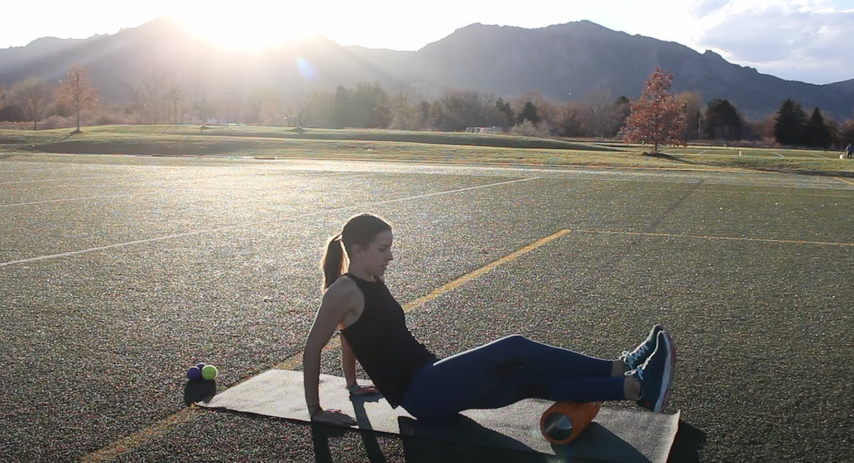 |
| The first step to a proper warmup routine is foam rolling or doing some type of active release. This is often something athletes think they should do post-run, or just remember they can fit it in, but the benefits may be short-lived when done alone. Current research has shown people can get lasting benefits if they foam roll right before mobility exercise. Think of it this way: if there’s a knot in a rope, you can pull the rope all you want, but it’s not going to reach its full length until the knot is removed. Foam rolling and active release aids in getting rid of the tight muscles and promotes good fascial movement so that you can get a better range of motion during your mobility exercises. To be realistic, if you’re short on time and nothing feels tight, then I do believe it’s sometimes okay to jump right into mobility. However, I strongly believe in the benefits of consistent foam rolling and active release sessions to keep runners mobile and healthy. Many runners have no idea how tight certain muscles are until issues arise. Step #2: Mobility |
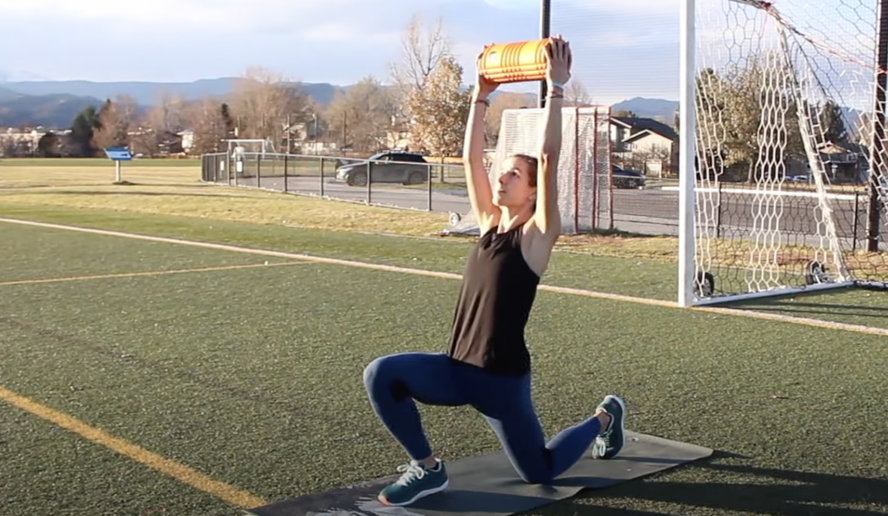 |
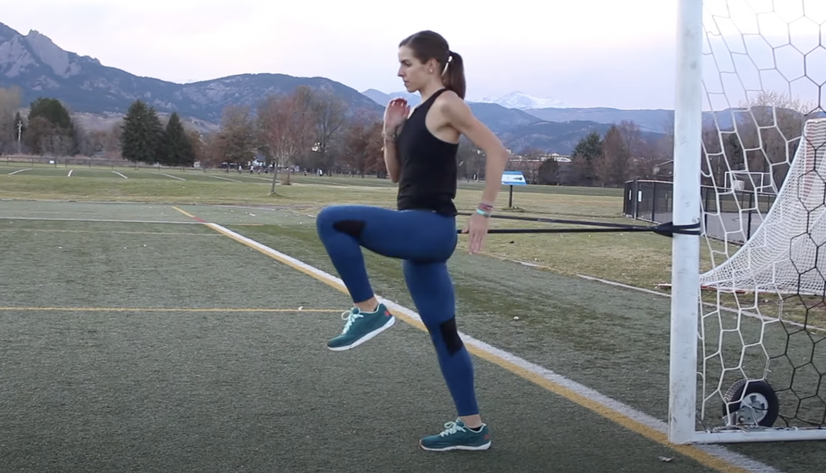
| Let’s move on to the second key ingredient, mobility. Mobility is the joint’s ability to move through a range of motion. In other words, doing mobility before a strength session or a run reminds your body to move through its full range of motion instead of staying in a shortened state. Think of it this way, if you just sat at a desk all day, your hip flexors are used to being in a shortened state and your glutes are used to being turned off. Doing hip mobility would remind your hip flexors on how to lengthen while waking up your glutes. The same goes for sitting in a hunched position for long hours. Doing a little thoracic mobility can open up your chest and allow for a proper counter rotation to your lower body as you run. When runners lose thoracic mobility, they may try to get the counter rotation from their low backs instead. Proper mobility as you run can help you better absorb impact forces while simultaneously allowing you to create more force or allowing you to get more power from your muscles. Step #3: Activation |
|
| Now let’s tie an active release and mobility with a third key ingredient: activation. Since you took a couple of minutes of foam roll and did some mobility exercises, you can now get the full benefits of your activation exercises because you can fully access the muscles you’re targeting. In turn, this can help prevent chronic tightness. For example, if your hip flexors are chronically tight, when your glutes are engaged, your hip flexors will lengthen as you move. So, your hip flexors are no longer in a chronically shortened state which caused the chronic tight. The crucial factor with any activation exercise is to make sure you are using the muscles you’re supposed to be using. That mind body connection is essential, especially as you start your run or strength workout. It is entirely possible to look like you’re doing a glute bridge, but not feel your glutes working at all. That’s not what you want. If you can’t feel the right muscles working, you may need to do a little more active release and then start off with simpler exercises in smaller movements. Different people need to work on different things. But with my experiences as a running coach, my practical advice would be to spend the first couple minutes of your warmup routine, aiming to create good fascial movement and relax the tight muscles. Next, do a hip thoracic spine and ankle mobility exercise. Lastly, pick a couple of activation exercises to target your different gluteal and hip muscles. Yes, there are exercises that double as both mobility and activation exercises, like a lunge with a side rotation.In conclusion, a proper warmup routine that includes foam rolling or active release, mobility exercises, and targeted muscle activation is critical for preventing injury and optimizing performance. By investing just a few minutes in a comprehensive warmup, you can effectively prepare your body for the physical demands of your workout or competition. So, take the time to engage your muscles fully, relax any tight areas, and prime your body for success. Incorporating these three key warmup ingredients into your routine can help you become a stronger and faster athlete. |

 to use when faced with a problem like the following:



 I look at mindset as “everything.” Mindset is what informs us of what we can and can’t do as athletes. In terms of creativity, I recognize that my athletes are all dynamic and unique individuals. They all have different things going on in their life, their bodies adapt differently, they respond uniquely to various stimuli, so I’m constantly trying to figure out what’s the best thing for them at that specific time. What this means for other people reading this is that you have to recognize that mindset will be the determining factor of how you approach a certain training situation. What do you need in this current situation you’re in? Your mindset will help determine this.
 You may find yourself not being able to travel to the race early enough to get a true sense of the terrain. Or, it’s not feasible to take a separate trip out to scope the route. Something like Transvulcania is on an exotic island, so you may only have race day to really take in the actual landscape. Don’t sweat it! These days, there are plenty of information available on online forums, videos, and websites for almost every ultramarathon out there, with a few exceptions (looking at you, Barkley Marathon…). We encourage our athletes to try to get a sense of the terrain by Youtubing videos of other people doing the race. Add the location of the race to your weather app weeks in advance so you can try to see what could possibly happen throughout the course of the race. Use an app like Strava so you can look at people who have done the course before. This way, you can see the gradients some of the hills are.
 I’m sure this isn’t the answer you were looking for, but the treadmill can be an amazing tool for those needing to practice gaining some serious vertical. By no means am I saying that you need to run every run on this, but even if you can get a key workout in here and there on the treadmill and incorporate workouts with an incline that would mimic your race terrain, you’ll have a tremendous benefit from it. Even if you just use the treadmill to do an all uphill “power hike,” it will help you out tremendouslyNote: If you’re unsure how much vertical you should add to your training plan, or what good workouts are for ultra marathons, we explain our thoughts in detail in our Training Guide (included with all training plan purchases). Our Ultra Marathon Training Plan will give you even MORE tips and tricks for uphill and downhill efforts.
 Yes, I realize this newsletter is for people who are not able to access hilly and mountainous terrain. But, I encourage you to try and find a hill or two somewhere that you could make work. Again, even if you can only get to it one day a week for a key workout, this will really help your climbing abilities. A staircase or bleachers can also substitute vertical gain. Once you’ve found your coveted hill, do hill repeats at an easy to moderate pace. On the flip side of this all, doing this will also help prepare your quads for the downhill. We often find that people underestimate the amount of stress your quads take on the downhill, and you don’t want them to give out halfway through the race!