Running is Life Long! In today’s article we will go over the training considerations for “master age” runners, but for the younger folks, this article is also useful to help prepare you for the next chapter in your running adventure. Something we should touch on now before diving into detail is the typical life stressors folks between the ages of 40-60s can face. Often, we longingly reflect on our ability to simply sleep off a minor injury or a hard training session from our teens or 20s. Something we may not consider is raising families, providing elder care, rent/mortgage. The list goes on and on. Simply point, your body isn’t failing you, there is most likely a lot on your plate that requires extra recovery considerations.
Control the Variables! Obviously, these will apply to all runners, but the needs do magnify a bit as we get older. We must prioritize sleep the best we can. Even an extra 30 min a few nights a week is impactful. Quality food to help bolster recovery and ward off micronutrient deficiencies is also critical. The same goes to regular blood work to keep on top of things.
As we enter our middle-aged years, we may need to find a good OBYGYN and/or Endocrinologist to support our hormonal changes. We won’t dive too much into Hormonal Replacement Therapy (HRT) in this article. This is best discussed with a medical provider.
Keep your shoe rotation fresh and make friends with a few simple recovery tools, like afoam roller. These little things do add up and assist in keeping us injury free.
Strength Training! Yes, we are starting with this because there are a few key exercises we can program into our training plans to help mitigate age-related tendon degradation and muscle loss. The biggest thing that we lose as we get older is tendon stiffness and strength, particularly the Achilles tendon. Knowing this ahead of time, we can focus a bit on safely doing heavy lifts to load the tendons and some basic plyometric exercises. We focus so much on glute power (as we should), but a lot of our stride length is dictated by calf strength and Achilles stiffness. As we age, we compensate with a little bit of a higher cadence but shorter stride. Protecting stride length protects our ability to maintain higher paces. One thing to note about Achilles stiffness: this means the tendon should be like a coil. A strong coil is stiff and can transfer energy. This doesn’t mean we should be running with tight ankles. We want those to be mobile.
Key things to incorporate into your strength plan: heavy single leg calf raises and bent calf raises. Isometric calf raise holds (hard for 30sec at a time). In general, lift heavy (but safely)..Bulgarian split squats are a great exercise to include. You can try 3–4 sets of 5–7 reps for strength, or 2–4 sets of 12–15 reps for muscle endurance. Start with bodyweight to dial in good form before adding load. For plyometrics, double leg bunny hops are a great start and then progress to single leg bunny hops. To continue the progression, jump squats with a medicine ball and jump down from a box into a half squat and then immediately into a squat jump will do wonders for both bone and tendon strength. Lastly, see if you can set up a camera/phone to record your lifts or have a friend film you. Take note of left/right asymmetries. If lifting is new for you, a journal of things you notice while lifting is good. For example, if you feel less coordinated at the bottom portion of a Bulgarian split squat, and your back is not as engaged, one of the glutes may not have the same power as the other side. Another sneaky one is a stronger foot. Watch for your ankle/foot to roll a bit outward or inward at the top of a calf raise. Big toe mobility is huge with this one. Your ankle will do a lot to compensate and spread the load elsewhere if the big toe cannot bend properly.
Training Considerations! Hills are your friend. Short hill strides 1-2x a week help with power development and running form. They are also a continuation of the tendon strength we want to preserve as we age. Now the good news: our endurance ability does not really decline but our power and threshold can. This is great news because when it comes to intensity, a little bit goes a long way. Simply the hill strides and some shorter intervals on the track really can ward off age related decline. Of course we want to maintain endurance. As we age, we may need to spread out intense sessions just a bit more than in our 20s or 30s but we can hop on a bike or an elliptical to maintain our endurance. Our heart and lungs do not know the difference. It is ok to be creative and substitute a run day with a cross-training day. Particularly, if it allows you to have a very good speed or threshold session. Sacrificing a little bit of general running to preserve a workout is almost always worth it.
Another tip that comes from my cycling days is “big gear work.” I found I could help with late ride fatigue and build functional power by doing intervals that involve pushing a big gear at a low pedaling cadence (requires more torque from the legs). This could be perfect for a runner, returning from injury, who is ready to workout but is not 100% ready to return to running. It is ok to adapt workouts and do them on a bike or an elliptical. Thriving as a Master Runner
Nutrition and Supplements! Fuel is important! Simple as that. We must, regardless of age, give our body the fuel it needs to participate in the activity we ask it to do. Protein right after a workout can be helpful, but research shows what matters most is getting enough throughout the entire day. https://pmc.ncbi.nlm.nih.gov/articles/PMC7400240/ A lot of athletes have been exploring creatine to help with maintaining muscle strength, hydration status, and cognitive function. Creatine has been around and used by body builders for decades, but a resurgence and diversification of its uses has been prevalent this past year. Women seem to come up with a bonus and respond positively to creatine supplementation. This may be because they have lower creatine stores in their muscle tissue. This is a supplement, not a requirement of course. If you’d like to try creatine, it is always safest to consult your medical provider and if you choose to try it: 3-5g per day is a safe starting point for most people.
Philosophy and the Mental Game! With a bit of planning and staying informed, we can run rather close to our abilities from our 20s and 30s. Having said that, we should also note peak performance will change over time when we enter our golden years. A decline in our relative speed and ability to cover distance is, perhaps, more technically correct, but our running is simply evolving to the phase of life in which we enter. Comparison to one another is the thief of joy and can hamper our own journeys. The same can be said of comparisons to a different version of ourselves. Don’t forget to enjoy this sport for what it can before us: health, travel, closeness with nature, companionship, decompression, and the list goes on! We should always be grateful for our mobility and our sport. Live in the moment. Control what you can control and try not to stress the rest of it.
For runners, improving performance isn’t just about logging miles—it’s also about building strength in smart, strategic ways. One often-overlooked aspect of strength training is the type of muscle contractions we’re using. Incorporating different types of muscle contractions—concentric, eccentric, and isometric—can play a major role in boosting efficiency, reducing injury risk, and helping you feel stronger through every stride.
Let’s break down what each of these contraction types is, and how they benefit runners.
Concentric Contractions: Building Power and Propulsion
Concentric contractions happen when a muscle shortens while generating force. In running, this occurs when you push off the ground or drive your knee forward during a stride.
Why it matters for runners: These contractions help develop explosive strength and forward propulsion. Training concentrically can improve your speed, sprint ability, and uphill running power. Exercises like lunges, squats, and step-ups with an emphasis on the lifting phase are great examples.
Eccentric Contractions: Controlling Movement and Absorbing Impact
Eccentric contractions occur when a muscle lengthens under tension—like when you control your descent on a downhill or absorb the landing from a jump.
Why it matters for runners: Eccentric training improves your ability to absorb force and decelerate safely, which is especially important for preventing overuse injuries such as runner’s knee or hamstring strains. It also strengthens connective tissues and improves muscle resilience. Think slow, controlled lowering in strength exercises, downhill running drills, and Nordic hamstring curls.
Isometric Contractions: Stabilizing and Supporting
Isometric contractions involve generating force without changing the length of the muscle—like when holding a plank, balancing on one leg, or stabilizing yourself on uneven terrain.
Why it matters for runners: Isometric strength helps improve joint stability, posture control, and form during fatigue. This is especially critical for core, hip, and ankle stability on technical trails or during long efforts. Isometric holds, wall sits, and single-leg balance work are great additions to your routine.
Putting It All Together
Each contraction type plays a unique and essential role in running performance:
Concentric: Power and propulsion
Eccentric: Control and injury resistance
Isometric: Stability and posture
By intentionally training all three, runners can create a more balanced and durable body—one that’s more efficient, injury-resistant, and capable of handling the demands of both the road and the trail.
Coach Sage discusses how to lengthen your stride to build speed and efficiency!
A common question I get is how someone can run a marathon at a pace of 5:12 per mile (or 3:12 per kilometer) without looking like they’re sprinting. The difference often comes down to stride length. For example, some runners might have a stride of 1.5 meters, while others take a 2-meter stride. At the starting line of the Boston Marathon, I’ve seen top international runners running at 4:40 per mile (or 2:55 per kilometer) with a long stride and a high cadence—often around 180 and up to 190 steps per minute. This combination of stride length and cadence makes their speed look effortless.
The key to running faster is opening up your stride. There’s a lot of misinformation online about how to do this effectively, so I want to share a few essential biomechanical tips to increase your stride length:
TIP 🥇
First, you need to get comfortable with running at high speeds. As a distance runner, whether for a 5K, 10K, marathon, or even an ultramarathon, you might not be used to doing explosive sprints. While exercises like bounding can help, they aren’t essential. Instead, try doing strides: after an easy run, once you’re warmed up, perform four sets of 80-100 meters (or 15-20 seconds each) at a fast pace—around 90-95% of your top speed.
During these strides, you’ll likely hit over 200 steps per minute in cadence, with a high knee drive and strong back kick. This activates your fast-twitch muscle fibers and helps improve neuromuscular coordination, which can correct form flaws and make your running more efficient. Sprinting with good form is essential, and that form should carry over to your 5K, 10K, and marathon paces, making slower paces more efficient. It’s about training movement patterns at the neuromuscular level and building the muscle power and stride length to enhance efficiency across all distances.
A key point about strides is that they shouldn’t be intense anaerobic efforts. Between each 80-100 meter stride, take time to catch your breath and return to a relaxed, fast running pace. This approach will improve your speed, along with other speed workouts.
Ultimately, it’s about efficiency—getting comfortable with fast running while staying as relaxed as possible. We’ll also discuss the cardiovascular strength needed to support this speed at the end of the video.
TIP 🥈
Another key to increasing your stride length is developing specific biomechanical patterns, which can be achieved through drills and strides, focusing particularly on a high knee drive. The height of your knee lift largely determines your stride length. As your speed increases, think about raising your knee higher to open up more height and power in your stride.
TIP 🥉
Another essential aspect of increasing stride length is opening up the hips, particularly through hip flexion on the backswing. Rather than focusing too much on the backswing itself, emphasize lifting your heel and aiming for a high back kick. With greater speed, your back kick naturally becomes higher, helping to open up the hip flexion angle and extend your stride.
Exercises like lunges are excellent for building strength and hip mobility, along with basic hip stretches. Stretching the hip flexors, for example, helps you feel the extension at the back of the hips. Improved hip mobility is crucial for increasing stride length.
THE CAVEAT! 🚨
One important caveat: you can practice these drills and focus on form, but without strong cardiovascular fitness, it will be challenging to sustain the increased effort in a long-distance race like a half marathon or marathon.
Building cardiovascular fitness—developing heart, lung capacity, and blood flow—is essential for supporting this workload. Elite marathoners spend years building a high aerobic base to sustain a powerful, long stride over extended distances. Running with a large stride and high power output is hard to maintain beyond a few minutes without this endurance foundation.
In short, there’s no quick fix to running fast, but implementing these drills can help you run more efficiently and enjoy the process. With practice, you can make incremental improvements in your form and performance.
To run faster, you’re going to want to hone in on your single-leg squat form. A few weeks ago, Coach Sandi Nypaver wrote about some of her favorite strength assessment tests for runners. Today, she discusses in depth the single-leg squat — an exercise most people struggle to do incorrectly! This newsletter will cover: The common mistakes people make while doing the single-leg squat and other single-leg exercises. How to correct your single leg form. How to apply the strength and technique exercises to your weekly routine. Read for more!
As you run, you’re constantly in a single-leg squat position. This is why the single leg squat is one of the exercises in the movement assessment I give the athletes I coach. If someone is struggling with the single-leg squat exercises, I almost always see the same problem when they’re in the single-leg stance position as they’re running. This usually correlates to pain or tightness around the knee, low back, hips, and even the lower leg.
All of my athletes go through a strength and movement assessment, and there’s one exercise where many runners tend to struggle. Unsurprisingly, it’s also the movement most specific to running. The exercise inthe movement assessment that challenges many people is the single-leg squat, which is what I’ll be focusing on in today’s newsletter. Runners are frequently in a single-leg squat position while running, which is why training the correct movement pattern is so essential! So, what are the common mistakes I see when people perform a single-leg squat?
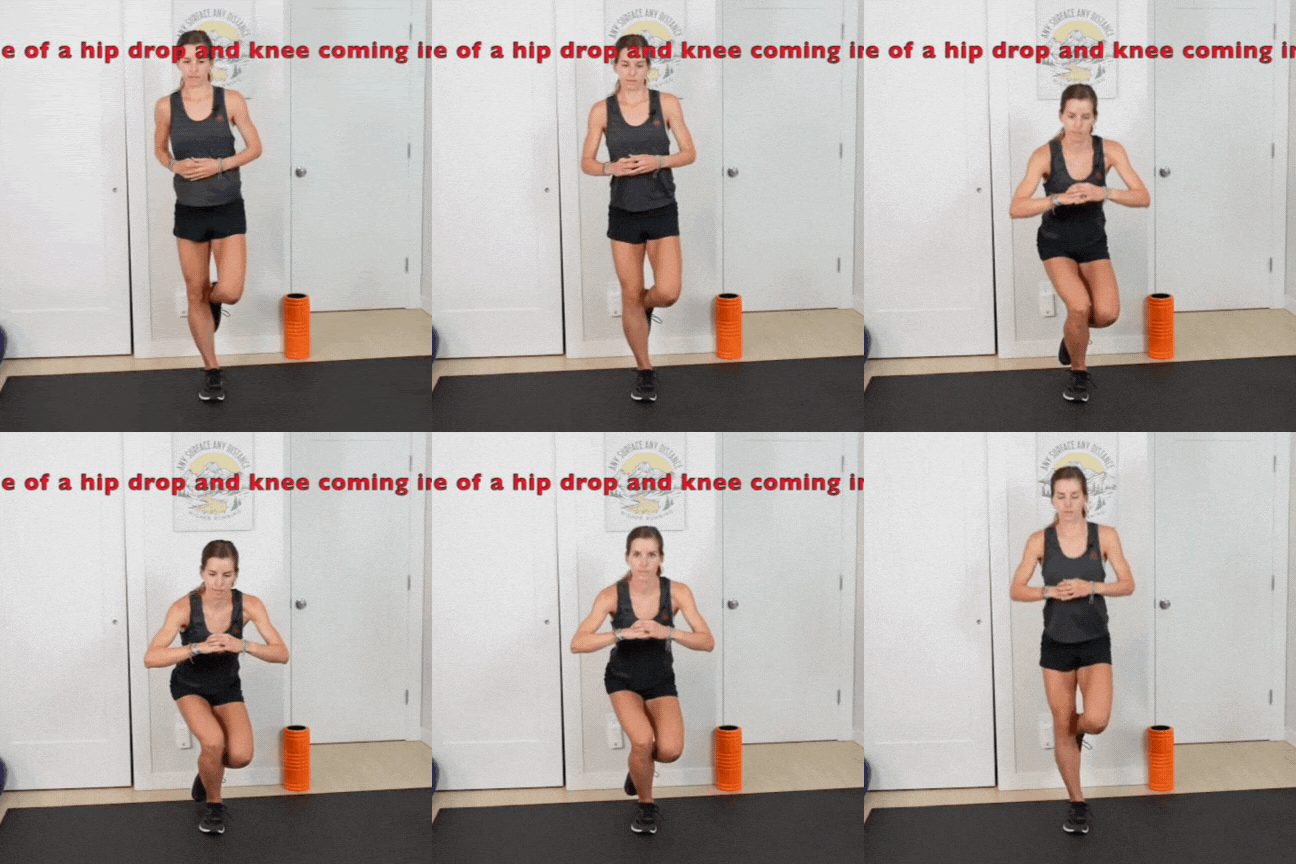
Mistake #1 A common mistake I see is when the hip drops down and the knee moves toward or even past the big toe.
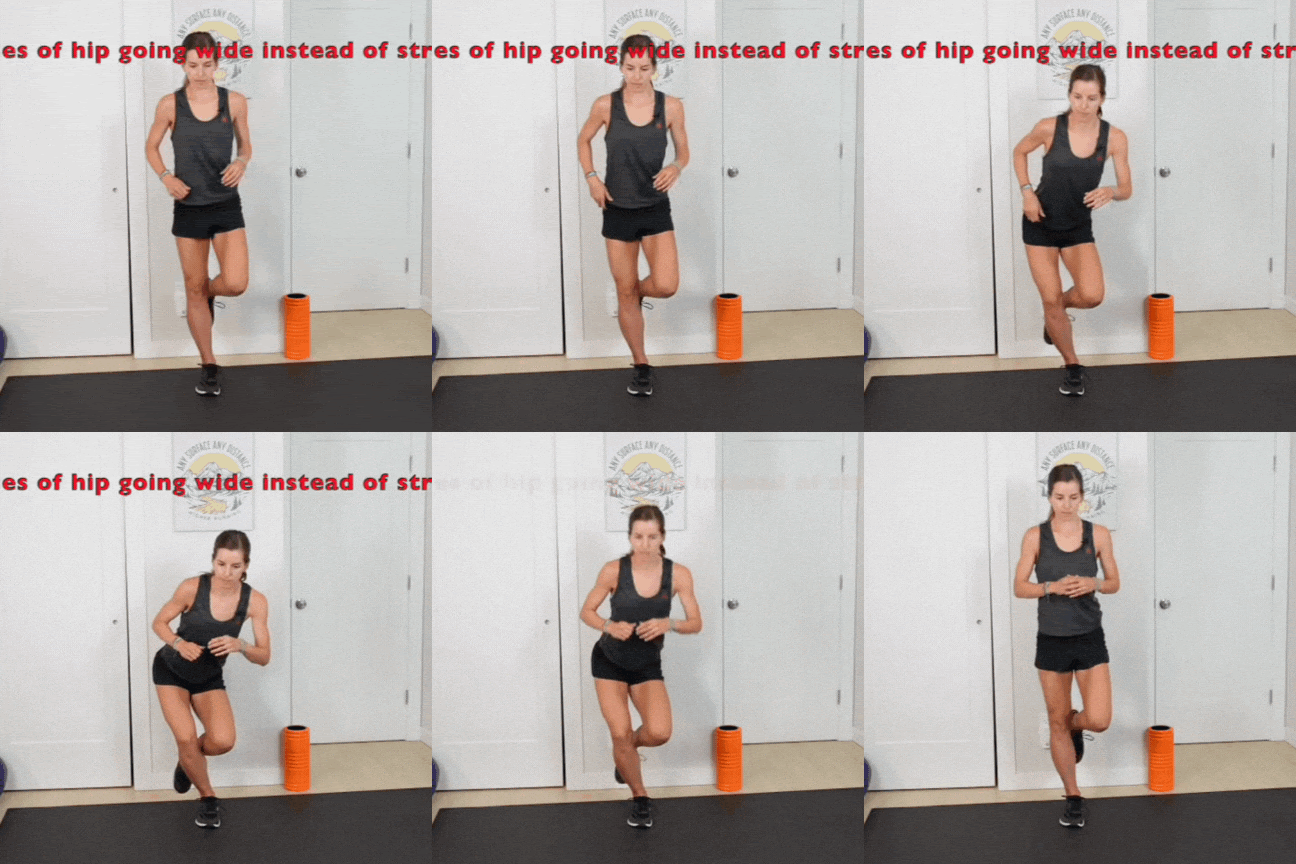
Mistake #2 Another mistake is swinging the hip out wide instead of simply bringing the glutes back.
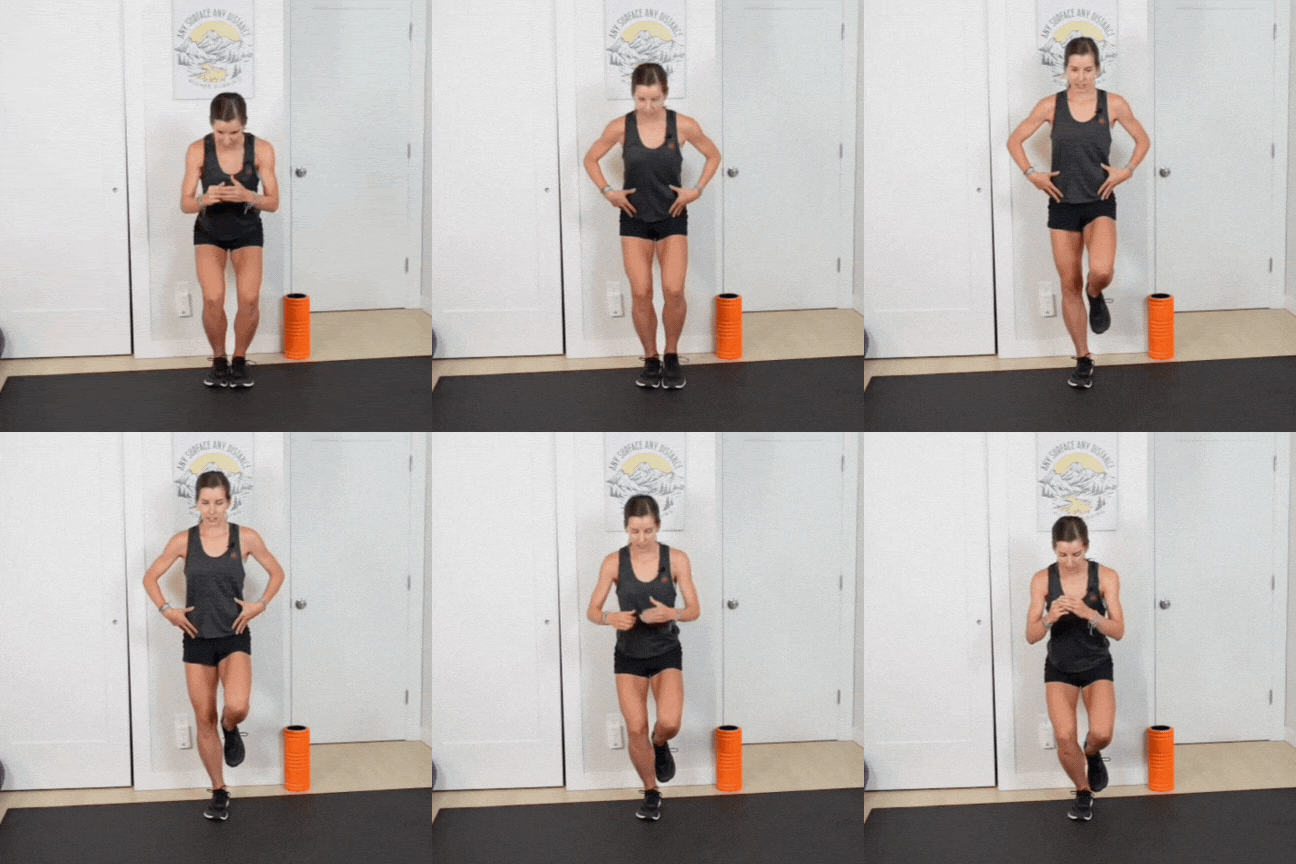
Before moving on, remember it’s okay if you’ve been making these mistakes, even for a long time. Don’t dwell on it—the power to improve is in the present! Focus on what you can control now, and get excited about the potential improvements this can bring to your future performance. Now that you know what not to do, let’s work on correcting your single-leg squat form. I prefer to focus on solutions, so let’s dive into making your single-leg squat and running form stronger. Here are some key points to remember, which apply to all single-leg exercises: 1. Keep your hips as level as possible.2. When you bend your knee, direct it toward your second or third toe. Avoid letting the knee move inward or toward the big toe.
To help with this, try using a mirror while practicing single-leg exercises. For some people, just maintaining level hips and proper knee alignment (toward the second toe) will be enough. But if this isn’t quite working for you, don’t worry—I have more tips ahead. Here’s a setup technique that works well for those who tend to swing their hip out or experience hip drop during a single-leg squat. I developed this approach for some of my athletes, and it’s been effective:
TIP #1 Start in a chair pose, squatting with both legs and going only as deep as you can while maintaining good form. Look in the mirror, keep your hips level, and ensure your knees point in the right direction. Once set, lift one leg and perform a single-leg squat, using the lifted leg briefly if you need to reset. Many people struggle with single-leg squats simply because they go too low, causing the hip to kick out or the knee to fall inward. Instead, work within your current range to maintain good form. As you get stronger, you’ll be able to go lower with control. Here’s what I mean:
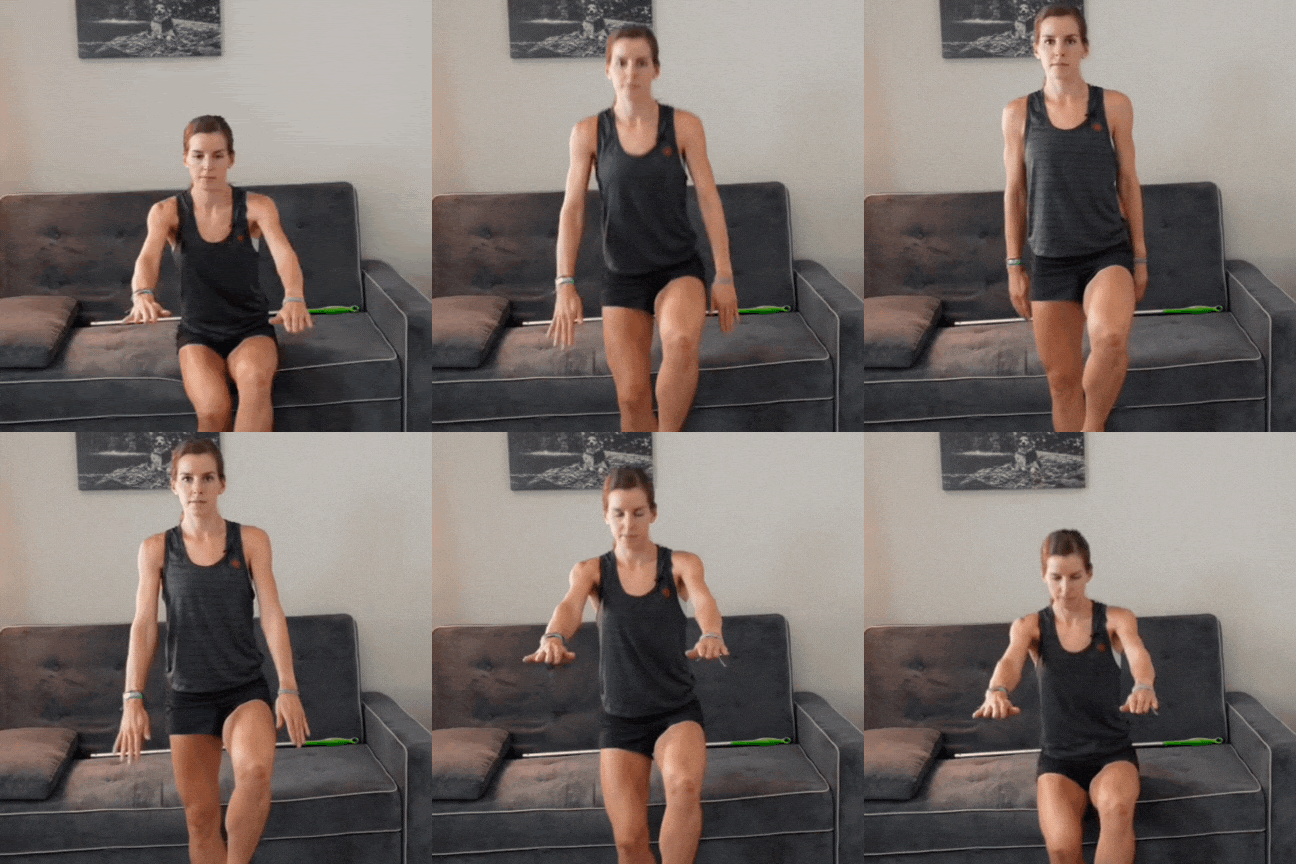
TIP #2 Another exercise I often do that can help with a single leg squat is a squat onto a couch—similar to sitting back until your glutes just touch the couch, then standing back up.
TIP #3 Another quick tip I have is for you to consider your footwear—or going barefoot—for single-leg squats. Thick shoes can increase instability, so if you’re comfortable and in a suitable space, try barefoot for better control.
Apply This Let’s put what you’ve learned into action. If you’re strength training with weights, aim to do these exercises two to three times per week, with 48 to 72 hours between leg sessions. This recovery time helps your muscles rebuild and prevents fatigue from holding back your progress.
For daily practice, try technique drills and activation exercises before runs. These will help you apply your strength gains to your running form, leading to improvements in form and pace over time. Remember, a slight hip drop during running can be normal. It’s the excessive drop—when the hip goes too far out and the knee turns inward—that we want to avoid. To catch and correct these patterns, do this movement assessment regularly.
This is just one of the exercises in my strength and movement assessment for athletes. For the full program, including tools and strategies to coach yourself, check out the Ultimate Running Course: Learn to Coach Yourself.
I hope this helps you in your running. Happy running! Coach Sandi
Today, Coach Sandi Nypaver is going to guide you through some strength tests that you can do at home to check whether your body is evenly balanced or if there’s anything you need to work on. Many of these tests are similar to what a physical therapist might have you do, but she’ll help you learn how to perform them yourself and understand what to look for.
At home, self-performed strength tests help to see if there’s anything you need to work on to keep your body functioning optimally. As a runner it’s important both sides of your body show up equally and this newsletter will help you do that. If you’re in pain it’s always good to go see a doctor and/or specialist, preferably one who is well trusted by runners. If there is something you need to work on (I certainly have a lot to work on!) don’t view it as a bad thing. It’s a good challenge and the process can be rewarding when you notice improvements.
Let’s get started:
🥇: The Bridge Test Alright, the first exercise is a simple glute bridge. Make sure your back is flat on the floor and keep your pelvis stable in this position. Raise your arms so they don’t assist you, and then lift your hips straight up.
What you’re checking for is whether you can maintain proper alignment of your pelvis. If you feel your pelvis drop, take note. Also, pay attention to where you feel the effort. Are you feeling it in your glutes or your hamstrings, or both? Ideally, you should feel it in your glutes, and even a little in your hamstrings. That’s a good sign.
a. Test Questions: What muscles do you feel working the most? Does your pelvis drop or can you keep it stable? Does one side feel different than the other? Do you need to work on strength and/or activation?
b. Goals: Work towards keeping your pelvis stable and having your glutes take on most of the load. It’s okay if you feel your hamstring working a little, but your hamstring should not take on more work than your glutes.
Bonus Tip: Keep your spine stable. You should not be feeling this in your lower back.
🥈: The Squat Test Now, let’s do a squat test. And note that I’m using a hiking pole here – you’ll want something similar. First, make sure your spine is neutral, and align your toes with the bar of the chair. From there, try to squat down.
What you’re checking for is whether your knees want to move forward, preventing you from going lower. If that happens, it’s a sign you’re relying too much on your quads. What you want is to get your butt back while keeping a neutral spine and maintaining a good hip hinge.
If you’re using your quads more than your glutes, you’ll struggle to go down. Instead, aim to engage your glutes and keep that hip hinge, which is important when you’re running as well.
a. Test Questions: If you place a chair or box in front of your toes, do you find it hard to squat/does it feel unnatural? What muscles do you feel working the most, your quads or glutes?
b. Goals: Get that booty back and working! You may feel your quads working, but you want to aim for a glute dominant squat. Get the hip-hinge pattern right, keeping the spine stable.
Bonus Tip: Our bodies like the neuromuscular patterns we already have formed. Some of you will be able to do this exercise without being able to apply to your running right away. Keep working at it. You’ll get there!
🥉: The Single Leg Squat This is a typical single-leg squat. The key here is to compare how each leg moves.
Now, what you want to avoid is your knee collapsing inward or moving too far out to the side. Try to keep everything aligned, engaging your glutes and even a bit of your knee as you come up.
Focus on your knee position and check if you’re using both legs in the same way. Again, you don’t want your knee to collapse inward as you squat down. Keep your legs straight and make sure you’re engaging your glutes on both the way up and down.
a. Test Questions: What muscles do you feel working the most? Does your foot/ankle feel stable (can you balance here)? Does your knee want to collapse in? Is there a difference between sides?
b. Goals:
i. You want good lateral hip stability, so your knee should aim in the direction of your toes, not inward. This motion is controlled by your hips.
ii. Feel stable in your feet and ankles, keeping your weight even distributed in your foot tripod. It should not feel like all your weight is in your heel or forefoot.
These are just a few simple strength tests you can do right at home, either with the help of a friend or family member watching you, or by videotaping yourself to see how you’re moving. As you do these exercises, make sure to pay attention to which muscles you’re engaging!
I hope these tests help you gauge your strengths and weaknesses. Happy running!

 The common mistakes people make while doing the single-leg squat and other single-leg exercises.