To run faster, you’re going to want to hone in on your single-leg squat form. A few weeks ago, Coach Sandi Nypaver wrote about some of her favorite strength assessment tests for runners. Today, she discusses in depth the single-leg squat — an exercise most people struggle to do incorrectly! This newsletter will cover: The common mistakes people make while doing the single-leg squat and other single-leg exercises. How to correct your single leg form. How to apply the strength and technique exercises to your weekly routine. Read for more!
As you run, you’re constantly in a single-leg squat position. This is why the single leg squat is one of the exercises in the movement assessment I give the athletes I coach. If someone is struggling with the single-leg squat exercises, I almost always see the same problem when they’re in the single-leg stance position as they’re running. This usually correlates to pain or tightness around the knee, low back, hips, and even the lower leg.
All of my athletes go through a strength and movement assessment, and there’s one exercise where many runners tend to struggle. Unsurprisingly, it’s also the movement most specific to running. The exercise inthe movement assessment that challenges many people is the single-leg squat, which is what I’ll be focusing on in today’s newsletter. Runners are frequently in a single-leg squat position while running, which is why training the correct movement pattern is so essential! So, what are the common mistakes I see when people perform a single-leg squat?
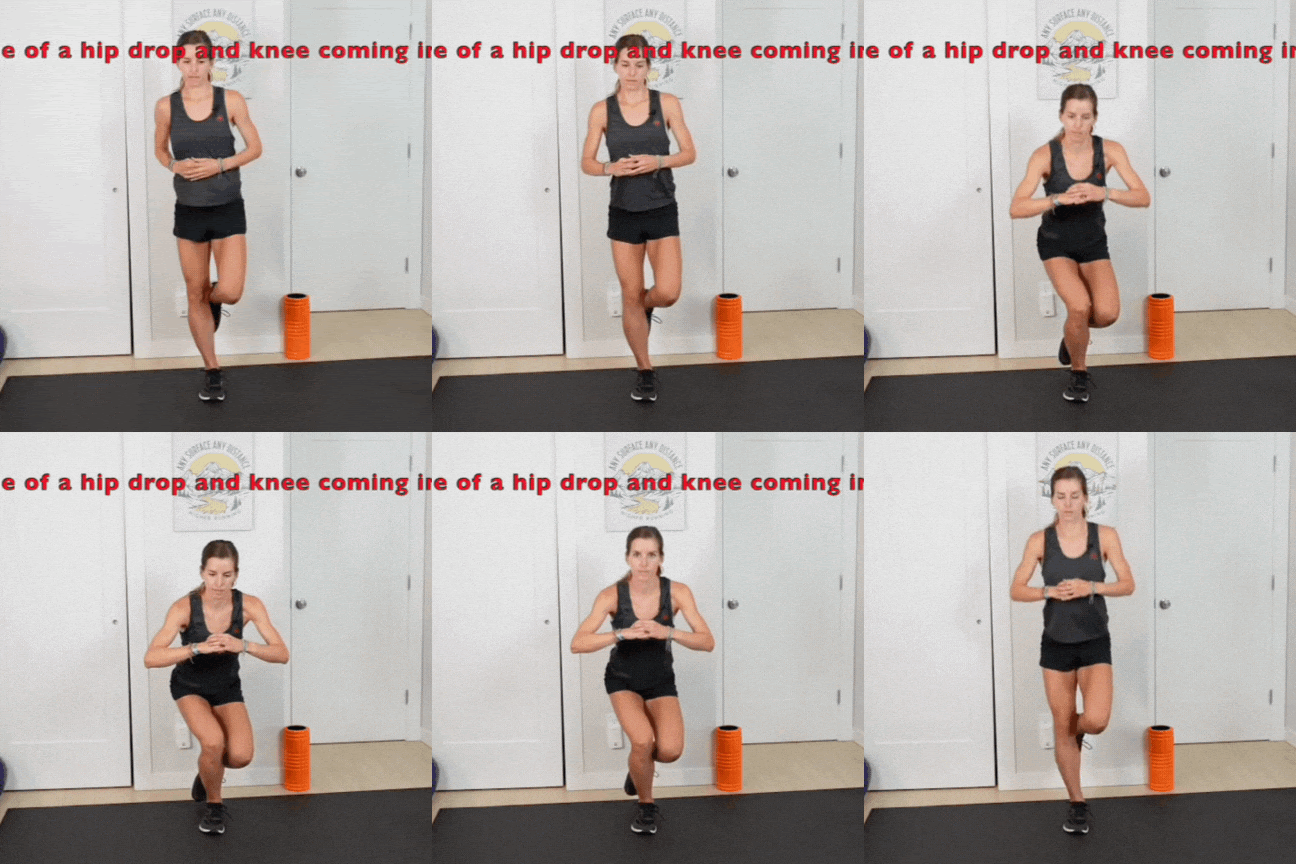
Mistake #1 A common mistake I see is when the hip drops down and the knee moves toward or even past the big toe.
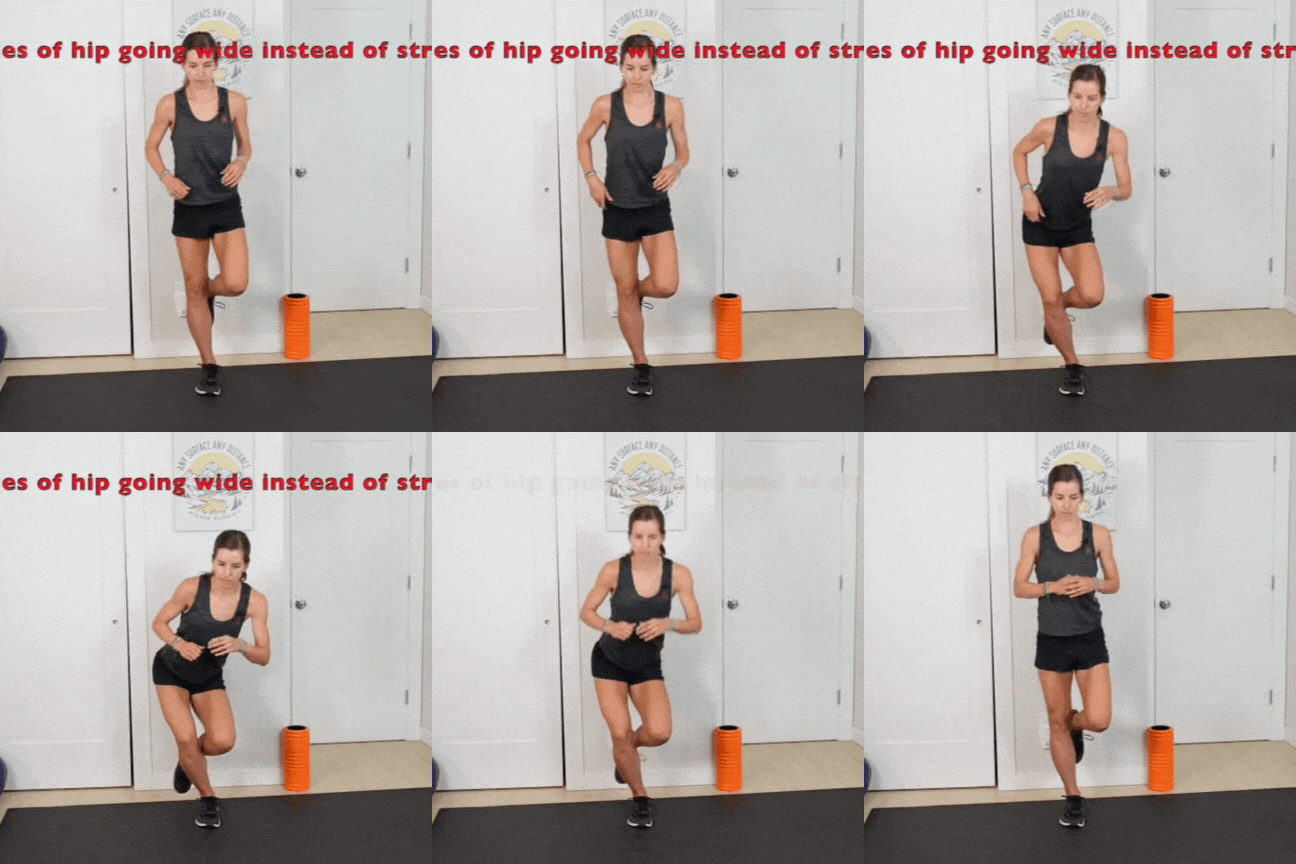
Mistake #2 Another mistake is swinging the hip out wide instead of simply bringing the glutes back.
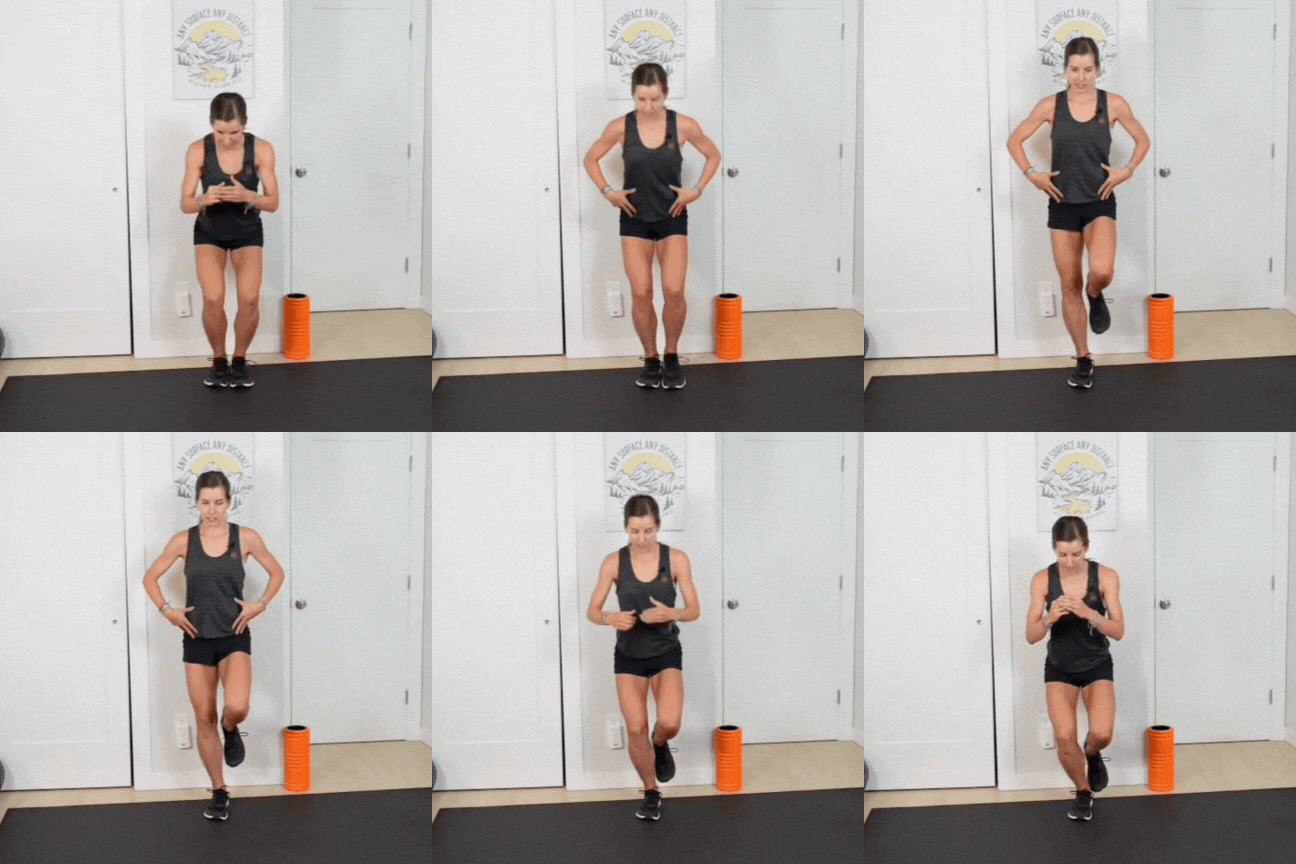
Before moving on, remember it’s okay if you’ve been making these mistakes, even for a long time. Don’t dwell on it—the power to improve is in the present! Focus on what you can control now, and get excited about the potential improvements this can bring to your future performance. Now that you know what not to do, let’s work on correcting your single-leg squat form. I prefer to focus on solutions, so let’s dive into making your single-leg squat and running form stronger. Here are some key points to remember, which apply to all single-leg exercises: 1. Keep your hips as level as possible.2. When you bend your knee, direct it toward your second or third toe. Avoid letting the knee move inward or toward the big toe.
To help with this, try using a mirror while practicing single-leg exercises. For some people, just maintaining level hips and proper knee alignment (toward the second toe) will be enough. But if this isn’t quite working for you, don’t worry—I have more tips ahead. Here’s a setup technique that works well for those who tend to swing their hip out or experience hip drop during a single-leg squat. I developed this approach for some of my athletes, and it’s been effective:
TIP #1 Start in a chair pose, squatting with both legs and going only as deep as you can while maintaining good form. Look in the mirror, keep your hips level, and ensure your knees point in the right direction. Once set, lift one leg and perform a single-leg squat, using the lifted leg briefly if you need to reset. Many people struggle with single-leg squats simply because they go too low, causing the hip to kick out or the knee to fall inward. Instead, work within your current range to maintain good form. As you get stronger, you’ll be able to go lower with control. Here’s what I mean:
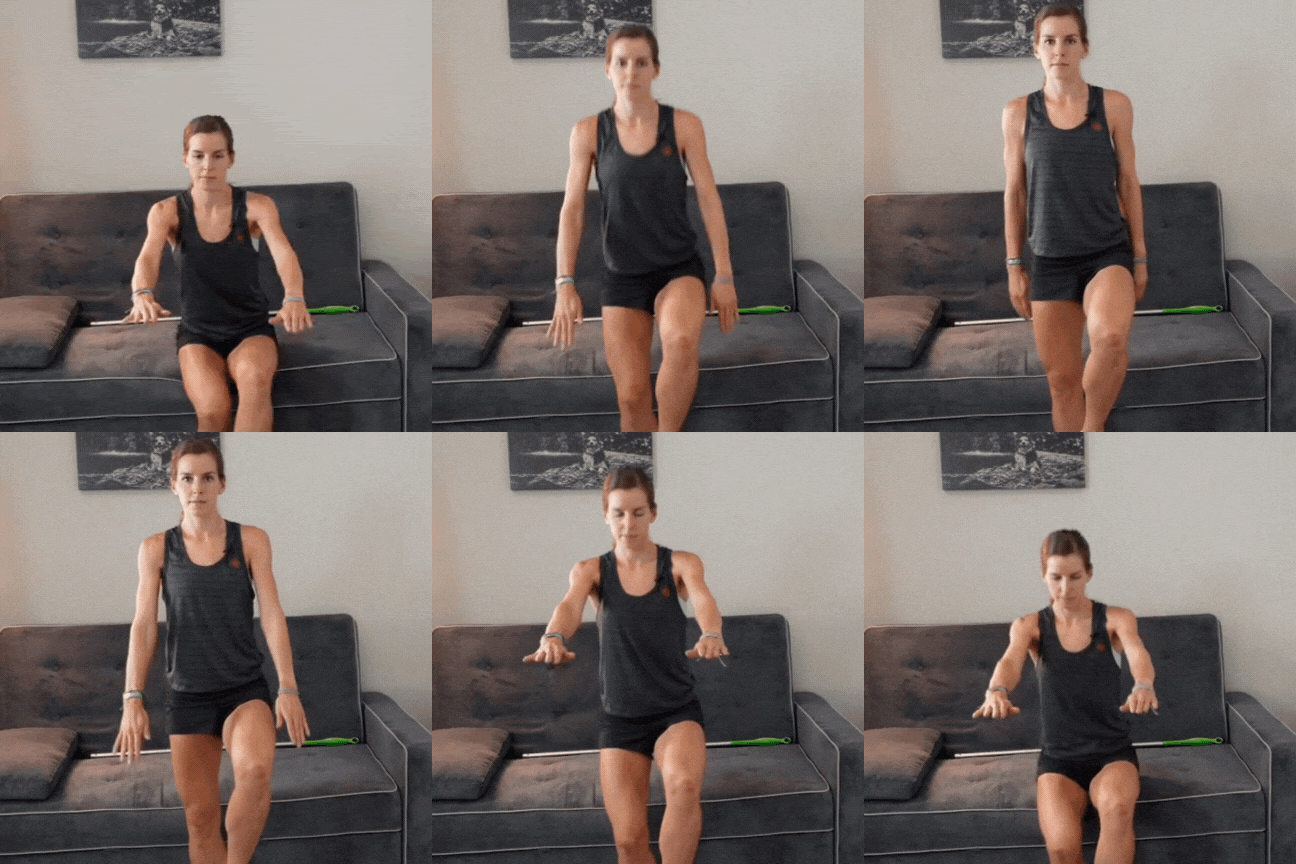
TIP #2 Another exercise I often do that can help with a single leg squat is a squat onto a couch—similar to sitting back until your glutes just touch the couch, then standing back up.
TIP #3 Another quick tip I have is for you to consider your footwear—or going barefoot—for single-leg squats. Thick shoes can increase instability, so if you’re comfortable and in a suitable space, try barefoot for better control.
Apply This Let’s put what you’ve learned into action. If you’re strength training with weights, aim to do these exercises two to three times per week, with 48 to 72 hours between leg sessions. This recovery time helps your muscles rebuild and prevents fatigue from holding back your progress.
For daily practice, try technique drills and activation exercises before runs. These will help you apply your strength gains to your running form, leading to improvements in form and pace over time. Remember, a slight hip drop during running can be normal. It’s the excessive drop—when the hip goes too far out and the knee turns inward—that we want to avoid. To catch and correct these patterns, do this movement assessment regularly.
This is just one of the exercises in my strength and movement assessment for athletes. For the full program, including tools and strategies to coach yourself, check out the Ultimate Running Course: Learn to Coach Yourself.
I hope this helps you in your running. Happy running! Coach Sandi
For today’s newsletter, Coach Sage Canaday gives you 9 elements to consider as to whether you should be running or power hiking.
Altitude ☁️
As you climb to higher altitudes, running becomes more taxing because of the reduced oxygen levels. In these cases, power hiking is often the more efficient option to avoid overexerting yourself. Personally, I’ve found that when racing at higher altitudes, my breathing becomes a major indicator of when to switch from running to hiking. Once I start gasping for breath, I know it’s time to hike. This is especially important early in a race—if it’s a 100-mile ultra, for example, I don’t want to be struggling with my breathing too soon.
Steepness (Grade) 📈
The steepness of the trail is a major factor in deciding whether to run or hike.
5% Grade: This is the kind of incline you see on many highways or roads, and it’s typically runnable for most people. It’s gentle enough that maintaining a running pace doesn’t strain your muscles too much.
10% Grade: At this point, the hill is much steeper. Depending on your fitness level and how far into the race you are, you may start to feel the need to power hike. I personally enjoy running up moderate hills, but at a 10% incline, especially during a longer race, I start to seriously consider power hiking.
15% Grade: This is very steep, and most treadmills max out at this grade. For me, running a 15% incline for an extended period is exhausting, and I almost always switch to power hiking.
Race Distance & Duration 🏆
In shorter races, like a 30K or even a long training run, I might be more inclined to run up hills that I would hike in an ultra. But in ultra races—especially those that are 50K or longer—it’s critical to pace yourself. For races like a 100-mile or 160K ultra, you’re likely to be power hiking a lot of the uphills, particularly early on. In races like the Western States 100, you don’t want to burn out by running up every hill from the start. Power hiking early helps preserve your glycogen stores and saves your legs for later in the race when you really need them.
Fitness & Strengths 💪
Your personal fitness level and strengths as a runner play a big role in how much you can run versus hike. I consider uphill running one of my specialties, and I love runnable uphills. That said, even with strong uphill running ability, it’s essential to know when to switch to power hiking to avoid fatigue. Some runners may excel at downhill running, which means they can conserve energy on the uphills by hiking. For me, if the incline exceeds 20% (unless, say, it’s something like an all-out vertical K race), I’ll start power hiking to conserve energy.
Energy Conservation & Pacing ⏰
The most important thing to monitor when deciding whether to run or hike is your breathing and heart rate. I recommend staying in a zone where you can carry on a conversation—once you’re gasping for breath, you’re likely pushing too hard, especially early in a long race. I rely on this guideline during ultras: if I can’t talk comfortably, I know I need to slow down or start hiking. Power hiking helps me stay in the aerobic zone, avoiding spikes in heart rate that would deplete my glycogen too quickly and force me out of the fat-burning zone. This pacing strategy is essential in longer races like a 50K or 100-mile, where managing energy over the hours becomes critical.
Trail Technicality ⛰️
Another important factor is the technical nature of the trail. If the trail is smooth or paved, it’s easier to maintain a running motion, even on steeper inclines. But on rocky, uneven terrain, power hiking is often more efficient. If the trail requires you to step up or jump over obstacles, power hiking saves energy and reduces the risk of injury. I’ve had races where technical trails, especially with large rocks or steps, forced me to power hike even if I felt capable of running on a smoother trail.
Environmental Conditions ❄️
Sometimes, the environment dictates whether you run or hike. Icy or snowy conditions, for example, make running dangerous and inefficient. In such cases, power hiking is often necessary. I’ve also found that using poles can help in these situations—they provide extra balance and stability, allowing me to hike more efficiently without slipping or wasting energy.
Power Hiking Technique 📚
Like any skill, power hiking requires practice. It’s important to incorporate steep hill repeats, long uphill runs, and power hiking into your training, especially if you’re preparing for a mountain race. Personally, I like to include uphill tempo runs in my training, where I focus on sustaining a high intensity for 20-30 minutes. These workouts build my strength and help me feel confident in my ability to transition from running to hiking during a race. With consistent practice, you’ll find that you can hike efficiently on grades where you might have struggled before.
Fatigue & Bonking 😮💨
In longer races, fatigue is inevitable, and sometimes you’ll need to hike simply because running isn’t an option anymore. I’ve experienced this in races where, late in the event, I start feeling muscle fatigue, cramping, or even the early signs of bonking. If you’re low on fuel or dehydrated, power hiking can help you get through the tough moments without completely burning out. At this point, I focus on maintaining forward momentum, knowing that running could push me over the edge.
Personal Experience & Lessons:
In some races, I’ve seen other runners power hiking next to me while I continue to run, and they sometimes pass me. This highlights that power hiking can often be just as fast, if not faster, than running on steep inclines. It’s something that requires practice and confidence, but it’s also about understanding your own limits and strengths as a runner.
In shorter races (half marathon or less), you might push harder and run more of the uphills since you’re less concerned about bonking or glycogen depletion. In longer ultras, though, managing your energy is key. Avoid spiking your heart rate too high, and save your legs for later sections of the race when you’ll need every bit of strength to push through.
All in all, listening to your body, practicing your hiking technique, and staying mindful of your energy levels, you can make smart decisions about when to hike and when to run!
Coach Sage Canaday teaches you what it takes to run a sub 45-minute 10k!
A few weeks back, Coach Sage Canaday gave his advice on what to do in order to crack a sub 22-minute 5km. Now, he’ll take it one step further if you’re looking to run a fast 10k! These are tried-and-true training methods and workouts that can be adapted, whether you’re slightly faster or slower than these target times.
Let’s Start Off With The Math
To achieve a sub 45-minute 10K, you’ll need to maintain a pace of approximately 7:15 per mile or 4:30 per kilometer. Ideally, you should be able to run a 5K under 22 minutes—closer to 21:30 would be even better. If you haven’t yet reached that level, it will be challenging to sustain two back-to-back 22:30 5Ks, which is necessary for a sub 45-minute 10K.
Getting Started
So if you’re not quite there yet, focus on racing some 5Ks first to build up your speed and fitness. Once you’ve achieved a solid 5K time, you can then move up to the 10K distance and work on lowering your time there as well. The key is to develop your baseline speed for the 5K and then apply it to the 10K. About 80% of your baseline or “easy” pace should be about 8:45 per mile or 5:30 per km. If you’re in sub 45-minute 10km fitness, this is the easy pace that you’d be shooting for.
Since a 10K is twice as long as a 5K, it’s crucial to have extra endurance and stamina. But once you’ve built a strong mileage base and are consistent in your training, you can start incorporating quality workouts. These harder sessions include speed and interval workouts, similar to those in 5K training. For the 10K, it’s better to focus on longer repeats, such as mile repeats or 1600-meter intervals.
Advanced Workouts for 10K Training
To train effectively for a 10K, it’s crucial to include workouts that challenge both your speed and endurance.
Workout #1: Tempo Runs
Before starting the interval workouts, it’s beneficial to build up your stamina with tempo runs. Begin with a 20 to 25-minute tempo run at a pace slightly slower than your goal 10K pace, around 7:25 per mile or 4:35 per kilometer. This steady-state effort, at about 80 to 85% of your maximum, is controlled and sustainable, helping you develop the stamina needed for longer periods of sustained effort. Incorporate this workout once a week as part of your training routine to enhance your endurance and to get your legs and breathing accustomed to a near 10K pace.
Workout #2: Vo2 Max Workout
The next key workout is mile repeats. Aim for 4 to 5 repeats of 1 mile or 1600 meters each, targeting a pace of around 7:00 to 6:55 per mile. You can perform these on a track or a flat, measured path. Between each repeat, take a controlled rest break of 3 to 4 minutes. During this rest, you can walk or jog lightly, but your heart rate should not fully return to its resting state. This will keep you slightly fatigued, building specific strength and endurance for sustaining a high-effort pace over the 10K distance.
These intervals will elevate your heart rate to over 90% of your maximum and get your legs accustomed to running significantly faster than your 10K goal pace. This makes your goal pace feel more comfortable on race day!
Workout #3: 400-Meter Repeats
Similar to the 5K training, include 400-meter repeats at a pace faster than your 5K race pace. Aim for 8 to 10 repeats at 1:38-1:40 each on a track with a two-minute rest between each rep. This workout helps develop your top-end speed, which can be useful for a strong finishing kick in a 10K race. However, this is not as crucial for 10K training as it is for 5Ks. Consider doing this workout once every two weeks.
Workout #4: 2-Mile or 3200-Meter Repeats
The final key workout I’ll give you for today is 2-mile repeats or 3200-meter repeats. Perform these at your current 10K race pace, with the goal of gradually working down to your target 10K pace. For example, you might aim to complete each 2-mile repeat in around 14.5 minutes if targeting a sub-45-minute 10K. Try to do 3 sets of these repeats with a short, 5-minute rest in between. This workout covers approximately 6 miles of running at or near race pace, which is about the same distance as a 10K.
This type of workout is essential for building strength and stamina specific to 10K racing. It targets your 10K pace and is a staple for preparing your body to maintain that speed over the race distance. You only need to do this workout about once every two weeks.
The Five-Pace Theory
Think of your 10K pace as being in the middle of a five-pace spectrum. There are two paces slightly faster and two paces slightly slower than your 10K race pace. Training across this range ensures a balanced approach to developing both speed and endurance.
Let’s put it all together:
Structuring Your 10K Training Plan
In your training plan, it’s essential to include a variety of paces to maximize your 10K fitness. Here’s a quick breakdown of the key paces and workouts:
1. Easy Pace:Base mileage runs at a relaxed, conversational pace.
2. Tempo Runs:Sustained efforts at a slightly slower pace than your 10K goal pace.
3. 10K Pace: Longer intervals like 2-mile repeats performed at your current or goal 10K race pace.
5. 400-Meter Repeats and Strides: Shorter, high-speed intervals to develop top-end speed and running economy.
Mixing these workouts in a cohesive plan is crucial for achieving your best 10K performance. Proper timing and progression of these workouts are important, so be sure to build your base mileage first before adding in the harder sessions.
I hope this is helpful – happy running and have a great week!
In today’s newsletter, Coach Sage Canaday gives you everything you need to know to successfully incorporate hill workouts into your own training plan.
Let’s go!
This is one of my favorite type of workouts to give to my athletes. Why? Flat track runners, road marathoners, half marathoners, and ultra mountain trail runners should all incorporate hill repeats, because they build efficiency at every distance.
What I Look For In a Hill 🏔️
Let’s start from the beginning. When looking for a hill to complete a workout on, what should you be looking for? I try to find a hill that averages a 5 to 10 percent grade, as this tends to work well for a variety of hill workouts. If you can find something even steeper, that’s great depending on what you have available and your target race. For example, I prefer to steeper grades when preparing for a mountain ultra race whereas road runners may aim for 5 to 8 percent.
When I start an athlete on a training block, I typically have them start with shorter hill repeats, such as 30 to 60-second sprints, and then gradually build up over weeks and months to longer repeats—two, three, even four or five minutes in duration. If you’re having trouble finding a hill in your area that would meet these parameters, I usually suggest completing them on a treadmill or a bridge (if possible).
Why Hill Workouts WORK ✅
Hill workouts are unique in the sense you’re able to engage your calves, quads, hamstring, and other key muscles like hip flexors, abdominals, and even arms due to the exaggerated arm swing experienced while running uphill. Not only are there key muscular adaptions, but outstanding cardiovascular benefits as well. Your heart rate gets significantly elevated so you’re breathing hard and gaining substantial aerobic benefits.
How to Get the Most Out of Your Hill Workouts 📈
The idea is to maintain good form and avoid a hunched posture. Instead, focus on driving the legs with an exaggerated knee drive, knee lift, and arm swing, working out any kinks in your form and mechanics as you ascend the hill. Hill repeats are never easy, but that’s why they lead to big gains. Understandably, your body is going to get tired and lead to your form breaking down. It’s up to you to be cognizant of this and self-correct!
If you’re interested in reading more on proper uphill running form, I’ve written on that previously which you can check out here.
What Hill Workouts Should Look Like 🔍
Often, I’ll prescribe my athletes to run hard for 1 to 3 minutes at a certain number of reps while focusing on good form and getting their heart rate up. After each intense effort, take a long rest, slowly jogging back down to recover (and possibly walking around at the bottom).
As a rule of thumb, you want the rest period to be longer than the high intensity run time. For example, if you’re running hard for one minute up the hill, you’ll jog down and rest for three minutes between each rep. Why? This helps prevent excessive lactate buildup, allowing you to maintain good form and complete all repetitions, thereby building neuromuscular coordination, efficiency, and running form.
Workout Example ⚡️
Here’s an example workout I’d give to my athletes and use myself: 10 x 1 minute ‘hard’ uphill with a 3-minute jog rest between each. Note: depending on where your fitness is at, it’s important to. modify the number of reps or minutes you run up a hill to prevent overtraining and/or injury!
That’s it for this week! I hope you found this helpful in covering the basics for your own hill workouts.
Coach Sandi Nypaver gives you a few of the different ways to approach setting goals.
As we head into the fall season of running, these could be some great tips for you to consider. Coach Sandi will also discuss a few ways she helps avoid the comparison trap.
Let’s dive in.
I was once approached by an athlete that was willing to open up about their low self-esteem, stating that they often struggle with setting personal goals and end up comparing their achievements to others in search of validation. “If sights are set too low, I might belittle my wins, but if they’re set too high, I convince myself that I can never reach them. Is it straightforward to know that a great outcome equates to winning a race?”
There’s a lot to unpack here, so I’ll start with each part of this question.
How I Set Goals Depending on the Race:
My goals change depending on the race. There are races where I may be targeting a certain time or certain pacing strategy. There are also races like Hard Rock, UTMB, or Western States, that I have been dreaming about, the training had gone well, and I had poured my heart and soul into everything. For those races, I might have a goal just to finish! For everyone I coach, including myself, we usually set A, B, and C goals.
Sometimes there’s an A-plus goal, which is really challenging but still achievable. Then there’s the B goal, the C goal, and finally, the ‘if everything goes wrong’ goal. This last one is about maintaining a positive mental attitude no matter the outcome. Staying positive when everything goes wrong is a great challenge in itself; that’s a goal I always set for all my athletes going into every race.
How To Work on Self-Esteem
But I really want to address other parts of this question, especially regarding self-esteem. If you’re a runner that struggles with low self-esteem, why not make it a goal right now to work on improving your self-esteem, even before prioritizing race goals?
I know it’s easy to think that your self-esteem can’t change, but it can. You need to start by finding a better way to talk to yourself. I often take a step back and ask myself, ‘If I were talking to a loved one in my situation, how would I talk to them?’
That could be a good starting point for you. Consider how you can develop a more positive mindset about yourself. And why are you comparing yourself to others in the first place? Just by signing up for a race, you’re already doing so much more than if you were just sitting on the couch watching TV and not signing up at all.
Running & Comparison
I know running is a sport where it’s easy to compare yourself to others, but there’s beauty in using others to help you reach your goals and in wanting to see success for others without necessarily comparing yourself. Even though comparison will inevitably slip in, when it does, take a step back and remind yourself that you don’t need to compare yourself to that person.
Instead, compare yourself to the version of you who made less healthy decisions, who didn’t sign up for the race, or who didn’t make it to the start line. You don’t need a race to validate yourself. Running isn’t meant to validate you. Simply showing up is something you can use to validate yourself.
Final Thoughts:
If you don’t meet your goals, at least you tried. That’s so much better than not trying at all, right? You’re going to surprise yourself. It might not happen when you want or how you expect, but if you set big goals for yourself and work toward them, you’ll get so much farther than if you didn’t set those goals at all. Even if things don’t work out, you’ve improved, and you know you tried, which is so much better than not trying and selling yourself short.
This mindset applies to all aspects of your life! Do the mental training, talk yourself through it, and find better thoughts. You can do this. I know it’s hard, but I promise you it’s worth your time!
Coach Sage Canaday discusses how speed and high-intensity training can improve your running form.
Why Does Faster Running Improve Form?
Let me start off with an example: You can’t typically sprint 100 meters or 400 meters with poor form. When sprinting 100 meters quickly, you’re not heel striking; you’re running with a fast turnover, probably over 200 steps a minute. This isn’t distance running form but involves high knees and straight arm drive forward and back. Inefficiencies get ironed out, and the same happens when you scale down.
Even if you’re not a sprinter, the purpose of high intensity work as a marathon or ultra-marathon runner has similar principles and benefits. It trains you at the neuromuscular level, helping your muscle fibers coordinate better, and improves your stride rate and turnover. It also gives you power in your stride, enabling a longer stride length, which is key to speed (however, you need the aerobic system to support that!).
For marathon, ultra-marathon, or half-marathon runners, once you build your base mileage and improve your aerobic efficiency, the next step is to refine your form and build leg strength to enhance speed and progress. Part of this involves lowering the lactate threshold and increasing the speed at which you run at VO2 max (maximum aerobic capacity). While your heart and lungs will limit you at VO2 max, good running form not only improves speed and efficiency but also reduces the risk of injury.
It’s A Balance
Overuse injuries can result from heel striking or running with too slow of a cadence or stride rate, which increases impact force. Running at 160 steps per minute or less results in more impact force, especially on downhills. As you increase mileage, for example from 30 miles (50k) a week to 50 miles (80k) a week, the risk of injury rises, and this is especially true if you have poor form or muscle and tendon imbalances.
Minimizing the risk of injury involves running efficiently with the best possible form. While not everyone will look like Kipchoge, it’s important to understand that different muscle mass distributions affect running mechanics. For instance, I have much thicker legs than many elite East African marathon runners who have very thin legs, and my arm strength differs as well. These differences change how form and mechanics look.
What This Means For You
It’s not necessary (or recommended) to run on your toes or forefoot, but it is important to avoid a large heel strike, which acts as a braking force. Maintaining a stride rate over 160 steps per minute is generally effective, because the faster you run, the easier it is to increase your stride rate. For paces from 5k to marathon, aim for at least 165, ideally closer to 180 steps per minute. Speed work helps to improve your form by addressing and correcting inefficiencies.
Track workouts and hill sprints benefit distance runners by not only elevating heart rate and enhancing the aerobic system but also by developing muscle tension, extending the stride, and refining neuromuscular coordination. This leads to improved efficiency and form. Ultimately, faster 400-meter and kilometer repeats should translate into faster 5k, 10k, marathon, and ultramarathon times.
In summary, integrating speed work and high-intensity training into your running routine is crucial for enhancing form, efficiency, and overall performance. By focusing on stride rate, muscle coordination, and aerobic capacity, runners can achieve faster times and reduce the risk of injury. Remember, the key to success lies in consistent training, proper form, and listening to your body’s needs.
I hope this helps you as you look towards your next speed or interval session.

 The common mistakes people make while doing the single-leg squat and other single-leg exercises.