How to Run a Sub 45-Min 10km!

Coach Sage Canaday teaches you what it takes to run a sub 45-minute 10k!

A few weeks back, Coach Sage Canaday gave his advice on what to do in order to crack a sub 22-minute 5km. Now, he’ll take it one step further if you’re looking to run a fast 10k! These are tried-and-true training methods and workouts that can be adapted, whether you’re slightly faster or slower than these target times.

Let’s Start Off With The Math

To achieve a sub 45-minute 10K, you’ll need to maintain a pace of approximately 7:15 per mile or 4:30 per kilometer. Ideally, you should be able to run a 5K under 22 minutes—closer to 21:30 would be even better. If you haven’t yet reached that level, it will be challenging to sustain two back-to-back 22:30 5Ks, which is necessary for a sub 45-minute 10K.

Getting Started

So if you’re not quite there yet, focus on racing some 5Ks first to build up your speed and fitness. Once you’ve achieved a solid 5K time, you can then move up to the 10K distance and work on lowering your time there as well. The key is to develop your baseline speed for the 5K and then apply it to the 10K. About 80% of your baseline or “easy” pace should be about 8:45 per mile or 5:30 per km. If you’re in sub 45-minute 10km fitness, this is the easy pace that you’d be shooting for.

Since a 10K is twice as long as a 5K, it’s crucial to have extra endurance and stamina. But once you’ve built a strong mileage base and are consistent in your training, you can start incorporating quality workouts. These harder sessions include speed and interval workouts, similar to those in 5K training. For the 10K, it’s better to focus on longer repeats, such as mile repeats or 1600-meter intervals.

Advanced Workouts for 10K Training

To train effectively for a 10K, it’s crucial to include workouts that challenge both your speed and endurance.

Workout #1: Tempo Runs

Before starting the interval workouts, it’s beneficial to build up your stamina with tempo runs. Begin with a 20 to 25-minute tempo run at a pace slightly slower than your goal 10K pace, around 7:25 per mile or 4:35 per kilometer. This steady-state effort, at about 80 to 85% of your maximum, is controlled and sustainable, helping you develop the stamina needed for longer periods of sustained effort. Incorporate this workout once a week as part of your training routine to enhance your endurance and to get your legs and breathing accustomed to a near 10K pace.

Workout #2: Vo2 Max Workout

The next key workout is mile repeats. Aim for 4 to 5 repeats of 1 mile or 1600 meters each, targeting a pace of around 7:00 to 6:55 per mile. You can perform these on a track or a flat, measured path. Between each repeat, take a controlled rest break of 3 to 4 minutes. During this rest, you can walk or jog lightly, but your heart rate should not fully return to its resting state. This will keep you slightly fatigued, building specific strength and endurance for sustaining a high-effort pace over the 10K distance.

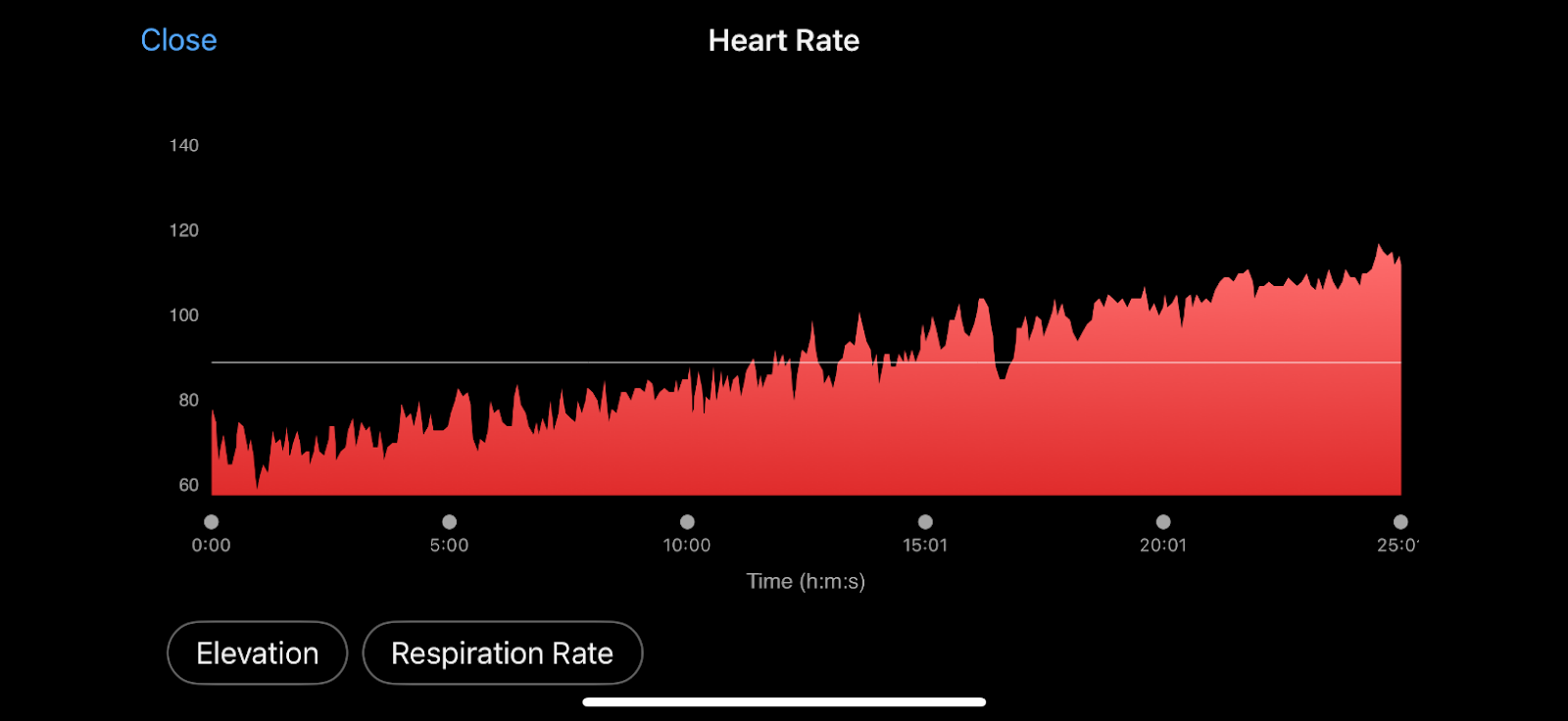
These intervals will elevate your heart rate to over 90% of your maximum and get your legs accustomed to running significantly faster than your 10K goal pace. This makes your goal pace feel more comfortable on race day!

Workout #3: 400-Meter Repeats

Similar to the 5K training, include 400-meter repeats at a pace faster than your 5K race pace. Aim for 8 to 10 repeats at 1:38-1:40 each on a track with a two-minute rest between each rep. This workout helps develop your top-end speed, which can be useful for a strong finishing kick in a 10K race. However, this is not as crucial for 10K training as it is for 5Ks. Consider doing this workout once every two weeks.

Workout #4: 2-Mile or 3200-Meter Repeats

The final key workout I’ll give you for today is 2-mile repeats or 3200-meter repeats. Perform these at your current 10K race pace, with the goal of gradually working down to your target 10K pace. For example, you might aim to complete each 2-mile repeat in around 14.5 minutes if targeting a sub-45-minute 10K. Try to do 3 sets of these repeats with a short, 5-minute rest in between. This workout covers approximately 6 miles of running at or near race pace, which is about the same distance as a 10K.

This type of workout is essential for building strength and stamina specific to 10K racing. It targets your 10K pace and is a staple for preparing your body to maintain that speed over the race distance. You only need to do this workout about once every two weeks.

The Five-Pace Theory

Think of your 10K pace as being in the middle of a five-pace spectrum. There are two paces slightly faster and two paces slightly slower than your 10K race pace. Training across this range ensures a balanced approach to developing both speed and endurance.

Let’s put it all together:

Structuring Your 10K Training Plan

In your training plan, it’s essential to include a variety of paces to maximize your 10K fitness. Here’s a quick breakdown of the key paces and workouts:

1. Easy Pace:Base mileage runs at a relaxed, conversational pace.

2. Tempo Runs:Sustained efforts at a slightly slower pace than your 10K goal pace.

3. 10K Pace: Longer intervals like 2-mile repeats performed at your current or goal 10K race pace.

4. 1-Mile Repeats (1600 meters): Faster intervals to build speed endurance.

5. 400-Meter Repeats and Strides: Shorter, high-speed intervals to develop top-end speed and running economy.

Mixing these workouts in a cohesive plan is crucial for achieving your best 10K performance. Proper timing and progression of these workouts are important, so be sure to build your base mileage first before adding in the harder sessions.

I hope this is helpful – happy running and have a great week!

– Coach Sage Canaday

Hill Repeat Workouts: The best workout there is?!

Hill Repeat Workouts: The best workout there is?!

In today’s newsletter, Coach Sage Canaday gives you everything you need to know to successfully incorporate hill workouts into your own training plan.

Let’s go!

This is one of my favorite type of workouts to give to my athletes. Why? Flat track runners, road marathoners, half marathoners, and ultra mountain trail runners should all incorporate hill repeats, because they build efficiency at every distance.

What I Look For In a Hill 🏔️

Let’s start from the beginning. When looking for a hill to complete a workout on, what should you be looking for? I try to find a hill that averages a 5 to 10 percent grade, as this tends to work well for a variety of hill workouts. If you can find something even steeper, that’s great depending on what you have available and your target race. For example, I prefer to steeper grades when preparing for a mountain ultra race whereas road runners may aim for 5 to 8 percent.

When I start an athlete on a training block, I typically have them start with shorter hill repeats, such as 30 to 60-second sprints, and then gradually build up over weeks and months to longer repeats—two, three, even four or five minutes in duration. If you’re having trouble finding a hill in your area that would meet these parameters, I usually suggest completing them on a treadmill or a bridge (if possible).

Why Hill Workouts WORK ✅

Hill workouts are unique in the sense you’re able to engage your calves, quads, hamstring, and other key muscles like hip flexors, abdominals, and even arms due to the exaggerated arm swing experienced while running uphill. Not only are there key muscular adaptions, but outstanding cardiovascular benefits as well. Your heart rate gets significantly elevated so you’re breathing hard and gaining substantial aerobic benefits.

How to Get the Most Out of Your Hill Workouts 📈

The idea is to maintain good form and avoid a hunched posture. Instead, focus on driving the legs with an exaggerated knee drive, knee lift, and arm swing, working out any kinks in your form and mechanics as you ascend the hill. Hill repeats are never easy, but that’s why they lead to big gains. Understandably, your body is going to get tired and lead to your form breaking down. It’s up to you to be cognizant of this and self-correct!

If you’re interested in reading more on proper uphill running form, I’ve written on that previously which you can check out here.

What Hill Workouts Should Look Like 🔍

Often, I’ll prescribe my athletes to run hard for 1 to 3 minutes at a certain number of reps while focusing on good form and getting their heart rate up. After each intense effort, take a long rest, slowly jogging back down to recover (and possibly walking around at the bottom).

As a rule of thumb, you want the rest period to be longer than the high intensity run time. For example, if you’re running hard for one minute up the hill, you’ll jog down and rest for three minutes between each rep. Why? This helps prevent excessive lactate buildup, allowing you to maintain good form and complete all repetitions, thereby building neuromuscular coordination, efficiency, and running form.

Workout Example ⚡️

Here’s an example workout I’d give to my athletes and use myself: 10 x 1 minute ‘hard’ uphill with a 3-minute jog rest between each. Note: depending on where your fitness is at, it’s important to. modify the number of reps or minutes you run up a hill to prevent overtraining and/or injury!

That’s it for this week! I hope you found this helpful in covering the basics for your own hill workouts.

Happy running,

  • Coach Sage Canaday
A Different Perspective on Goal Setting (for Runners)

A Different Perspective on Goal Setting (for Runners)

Coach Sandi Nypaver gives you a few of the different ways to approach setting goals.

As we head into the fall season of running, these could be some great tips for you to consider. Coach Sandi will also discuss a few ways she helps avoid the comparison trap.

Let’s dive in.

I was once approached by an athlete that was willing to open up about their low self-esteem, stating that they often struggle with setting personal goals and end up comparing their achievements to others in search of validation. “If sights are set too low, I might belittle my wins, but if they’re set too high, I convince myself that I can never reach them. Is it straightforward to know that a great outcome equates to winning a race?”

There’s a lot to unpack here, so I’ll start with each part of this question.

How I Set Goals Depending on the Race:

My goals change depending on the race. There are races where I may be targeting a certain time or certain pacing strategy. There are also races like Hard Rock, UTMB, or Western States, that I have been dreaming about, the training had gone well, and I had poured my heart and soul into everything. For those races, I might have a goal just to finish! For everyone I coach, including myself, we usually set A, B, and C goals.

Sometimes there’s an A-plus goal, which is really challenging but still achievable. Then there’s the B goal, the C goal, and finally, the ‘if everything goes wrong’ goal. This last one is about maintaining a positive mental attitude no matter the outcome. Staying positive when everything goes wrong is a great challenge in itself; that’s a goal I always set for all my athletes going into every race.

How To Work on Self-Esteem

But I really want to address other parts of this question, especially regarding self-esteem. If you’re a runner that struggles with low self-esteem, why not make it a goal right now to work on improving your self-esteem, even before prioritizing race goals?

I know it’s easy to think that your self-esteem can’t change, but it can. You need to start by finding a better way to talk to yourself. I often take a step back and ask myself, ‘If I were talking to a loved one in my situation, how would I talk to them?’

That could be a good starting point for you. Consider how you can develop a more positive mindset about yourself. And why are you comparing yourself to others in the first place? Just by signing up for a race, you’re already doing so much more than if you were just sitting on the couch watching TV and not signing up at all.

Running & Comparison

I know running is a sport where it’s easy to compare yourself to others, but there’s beauty in using others to help you reach your goals and in wanting to see success for others without necessarily comparing yourself. Even though comparison will inevitably slip in, when it does, take a step back and remind yourself that you don’t need to compare yourself to that person.

Instead, compare yourself to the version of you who made less healthy decisions, who didn’t sign up for the race, or who didn’t make it to the start line. You don’t need a race to validate yourself. Running isn’t meant to validate you. Simply showing up is something you can use to validate yourself.

Final Thoughts:

If you don’t meet your goals, at least you tried. That’s so much better than not trying at all, right? You’re going to surprise yourself. It might not happen when you want or how you expect, but if you set big goals for yourself and work toward them, you’ll get so much farther than if you didn’t set those goals at all. Even if things don’t work out, you’ve improved, and you know you tried, which is so much better than not trying and selling yourself short.

This mindset applies to all aspects of your life! Do the mental training, talk yourself through it, and find better thoughts. You can do this. I know it’s hard, but I promise you it’s worth your time!

Happy running, and have a great week.

Coach Sandi

Why High Intensity Run Workouts Improve Form!

Coach Sage Canaday discusses how speed and high-intensity training can improve your running form.

Why Does Faster Running Improve Form?

Let me start off with an example: You can’t typically sprint 100 meters or 400 meters with poor form. When sprinting 100 meters quickly, you’re not heel striking; you’re running with a fast turnover, probably over 200 steps a minute. This isn’t distance running form but involves high knees and straight arm drive forward and back. Inefficiencies get ironed out, and the same happens when you scale down.

Even if you’re not a sprinter, the purpose of high intensity work as a marathon or ultra-marathon runner has similar principles and benefits. It trains you at the neuromuscular level, helping your muscle fibers coordinate better, and improves your stride rate and turnover. It also gives you power in your stride, enabling a longer stride length, which is key to speed (however, you need the aerobic system to support that!).

For marathon, ultra-marathon, or half-marathon runners, once you build your base mileage and improve your aerobic efficiency, the next step is to refine your form and build leg strength to enhance speed and progress. Part of this involves lowering the lactate threshold and increasing the speed at which you run at VO2 max (maximum aerobic capacity). While your heart and lungs will limit you at VO2 max, good running form not only improves speed and efficiency but also reduces the risk of injury.

It’s A Balance

Overuse injuries can result from heel striking or running with too slow of a cadence or stride rate, which increases impact force. Running at 160 steps per minute or less results in more impact force, especially on downhills. As you increase mileage, for example from 30 miles (50k) a week to 50 miles (80k) a week, the risk of injury rises, and this is especially true if you have poor form or muscle and tendon imbalances.

Minimizing the risk of injury involves running efficiently with the best possible form. While not everyone will look like Kipchoge, it’s important to understand that different muscle mass distributions affect running mechanics. For instance, I have much thicker legs than many elite East African marathon runners who have very thin legs, and my arm strength differs as well. These differences change how form and mechanics look.

What This Means For You

It’s not necessary (or recommended) to run on your toes or forefoot, but it is important to avoid a large heel strike, which acts as a braking force. Maintaining a stride rate over 160 steps per minute is generally effective, because the faster you run, the easier it is to increase your stride rate. For paces from 5k to marathon, aim for at least 165, ideally closer to 180 steps per minute. Speed work helps to improve your form by addressing and correcting inefficiencies.

Track workouts and hill sprints benefit distance runners by not only elevating heart rate and enhancing the aerobic system but also by developing muscle tension, extending the stride, and refining neuromuscular coordination. This leads to improved efficiency and form. Ultimately, faster 400-meter and kilometer repeats should translate into faster 5k, 10k, marathon, and ultramarathon times.

In summary, integrating speed work and high-intensity training into your running routine is crucial for enhancing form, efficiency, and overall performance. By focusing on stride rate, muscle coordination, and aerobic capacity, runners can achieve faster times and reduce the risk of injury. Remember, the key to success lies in consistent training, proper form, and listening to your body’s needs.

I hope this helps you as you look towards your next speed or interval session.

Happy running!

– Coach Sage Canaday

How should you handle pre-race anxiety?

While pre-race anxiety is considered “normal” I actually don’t believe it has to be, though I’ve admittedly not overcome that feat just yet.  So for now, we can say that pre-race anxiety can be greatly reduced.

✅ Mindset- Nervousness vs. excitement; threat vs opportunity for growth:

  • Viewing how you see pre-race anxiety can absolutely change the effects of it.  When you label the feeling as excitement or a sign that you simply care about the race, this thought (in the brain) signals to the body that it’s safe, and therefore your muscles and mind can relax a little. 

  • Same as viewing a race as threat (“I’ll be a failure if I don’t meet my goal”) vs. an opportunity for growth (“I’d really like to hit my goal, but even if I don’t, it will be a beautiful opportunity to see how well my physical and mental training is going. Plus, my family and friends love me no matter what.”)

  • These thoughts can actually change what hormones the brain releases, whether they be stress or motivating and feel-good hormones.

Coach Ray

Five Pace Training Method

To start, let’s define what is Five Pace Training Method is:

Imagine holding up all five of your fingers: your middle finger represents your race pace. The idea behind Five-Pace Training Theory is that you train at two paces slower than your goal race pace and two paces faster than your goal race pace. This means running at different paces or intensities during workouts, either faster or slower than your goal race pace. Let’s dive in:

“In today’s newsletter, I’ll provide more insight into this type of training and explain why it is beneficial for your own running. This theory mainly applies to races like the 1500 meters, mile, 5k, 10k, half marathon, marathon, and even some ultramarathons. We’ll discuss these pace changes and the types of workouts that can improve your running.

The Two Faster Notches

The Five Pace Training Method might be a bit of an oversimplification, but let’s use an example: if you’re training for a sub-1:30 half marathon, your goal pace is 6:52 per mile (4:16/km). For the two paces faster than your race pace, you might want to train at your 5k or 10k pace during interval workouts like kilometer repeats or mile repeats. This would be slightly faster than the 6:52 pace, perhaps around 6:40 or 6:30 per mile (4:00/km) for these repeats and threshold tempo runs.

Going a notch faster, we could be talking about doing 400-meter repeats that are even faster than your 5k pace. This could include one-minute hill sprints or high-intensity reps to develop lactic acid tolerance. Mixing in these different types of workouts, maybe once in a 10-day cycle, contributes to a well-rounded training program. You might say, “Great, but Sage, I just want to do easy aerobic base miles.” We’ll address that shortly when I explain the slower paces.

But if you want to reach your full potential in the sport, you not only need consistent high mileage and a big aerobic base for distance running, but you also need some of these higher-intensity speed workouts. Part of it is for running mechanics and building muscle strength, leg strength, and increasing your stride length.

When you do one-minute hill sprints at high intensity or 400-meter repeats way faster than your half-marathon race pace of 6:52 per mile, like a sub-six-minute mile pace, you’re working on that premium speed. This will give you more muscle power and may increase your VO2 max, your maximum capacity at 100% maximum heart rate.

It’s going to help you minimize lactate clearance and lactate levels, allowing you to run with that extra throttle, that extra power in your engine. Alright, so we have those two notches, those two paces faster. You’re getting a lot of interval training, maybe a 20-minute tempo run closer to 10k pace.

The Two Slower Notches

Now, the two notches slower than your goal race pace of 6:52 per mile for that 1:30 half-marathon example would be an easy recovery pace. Maybe it’s 8:30 per mile or 9:00 per mile (over 5 min/km for a 1:30 half marathon). Your recovery jog could be the start of a long run, warming up, or cool-down pace. So very relaxed, easy, conversational running.

The next notch slower would be what we call “up tempo.” (BONUS: Click HERE to download our free Pace Intensity Spectrum Chart PDF.) For many people, it will be closer to marathon race pace, maybe a little slower. Some people call it aerobic threshold or ventilatory threshold—those are more scientific terms. But we call it “up tempo.” In college, we called it “feel good pace.” It could be a progression run, maybe you’re doing 8 miles or 12K, and you start off pretty easy and relaxed, and as you feel good, you push the pace down a little. It’s not a true tempo run, it’s not to improve lactate threshold, and it shouldn’t be over 80% maximum heart rate, basically. It’s harder running with a purpose, relaxed running.

As with most things, there are nuances…

This is a bit of an oversimplification, as there are nuances where you run different paces. Having said all of this, remember that the vast majority of your training mileage, around 80% on average, or maybe even higher, should be at an aerobic pace. This means building up slowly with consistent high mileage and high volume at very easy paces to avoid injury and achieve adaptations like increased mitochondrial density, improved blood flow, and enhanced capillary bed density. This process also gradually strengthens your tendons and muscles with progressively higher mileage at slow paces while incorporating faster pace work.

So, 80% of your mileage should focus on aerobic base-building running. The “icing on the cake” is the hard intervals, VO2 max work, and the training at race pace and faster, especially for 5k and 10k races. Be cautious with marathon and ultra training, as race pace becomes less defined. At the end of the day, the key idea is to vary your paces and intensity to provide new stress for the body to adapt to, making you extra fit while staying healthy.

I hope this helps! Happy running and have a great week.

• Coach Sage Canaday