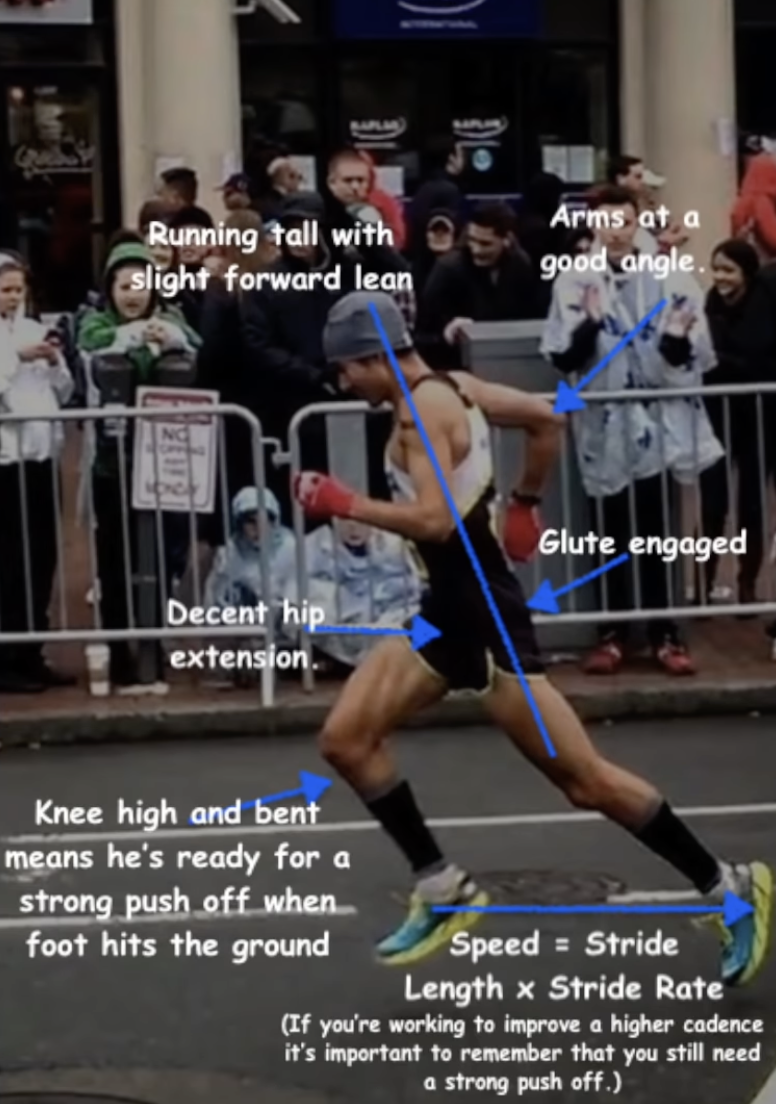
Your glutes can generate an enormous amount of power to enhance your running, but many runners have weak glutes or don’t properly activate their glutes while running. In this newsletter, Coach Sandi Nypaver will explain how to activate your glutes and help you become a faster runner.
“Today, we’re going to talk about your glutes. Now, saying “glutes” is simplifying things. You actually have your gluteus medius, gluteus maximus, and gluteus minimus. But, to simplify things, I’m just going to say “your glutes” today. The reason your glutes are so important is that they can generate a lot of power when working together.
Unfortunately, a lot of people don’t take full advantage of their glutes. One of the most common problems we see today with running form is people having weak glutes or not being able to activate them while running. So, I want to talk a little bit about how to address that.
The first step is to ensure your glutes are actually strong! I’ve already covered this in an older video, which is how to strengthen your glutes. However, one thing I didn’t mention in that video is that you could actually do some heavier strength training exercises, like deadlifts or certain types of squats, to help strengthen your glutes. I won’t go much further into this for the purpose of this newsletter.
So, why do most people have weak glutes or not activate them when they’re running? Well, a lot of it is because of sitting. If you’re sitting at a desk for hours a day, your glutes are doing nothing and kind of learning not to work. It could also be due to other life circumstances, but I would say sitting is the number one reason for most people.
Signs Your Glutes Aren’t Activating Before we get into how to activate your glutes when running, let’s talk about the signs that show your glutes might not be activating currently. The biggest indicator is probably hamstring tightness. It could also be lower back pain or even IT band pain. Additionally, you might experience tightness showing up in your calves.
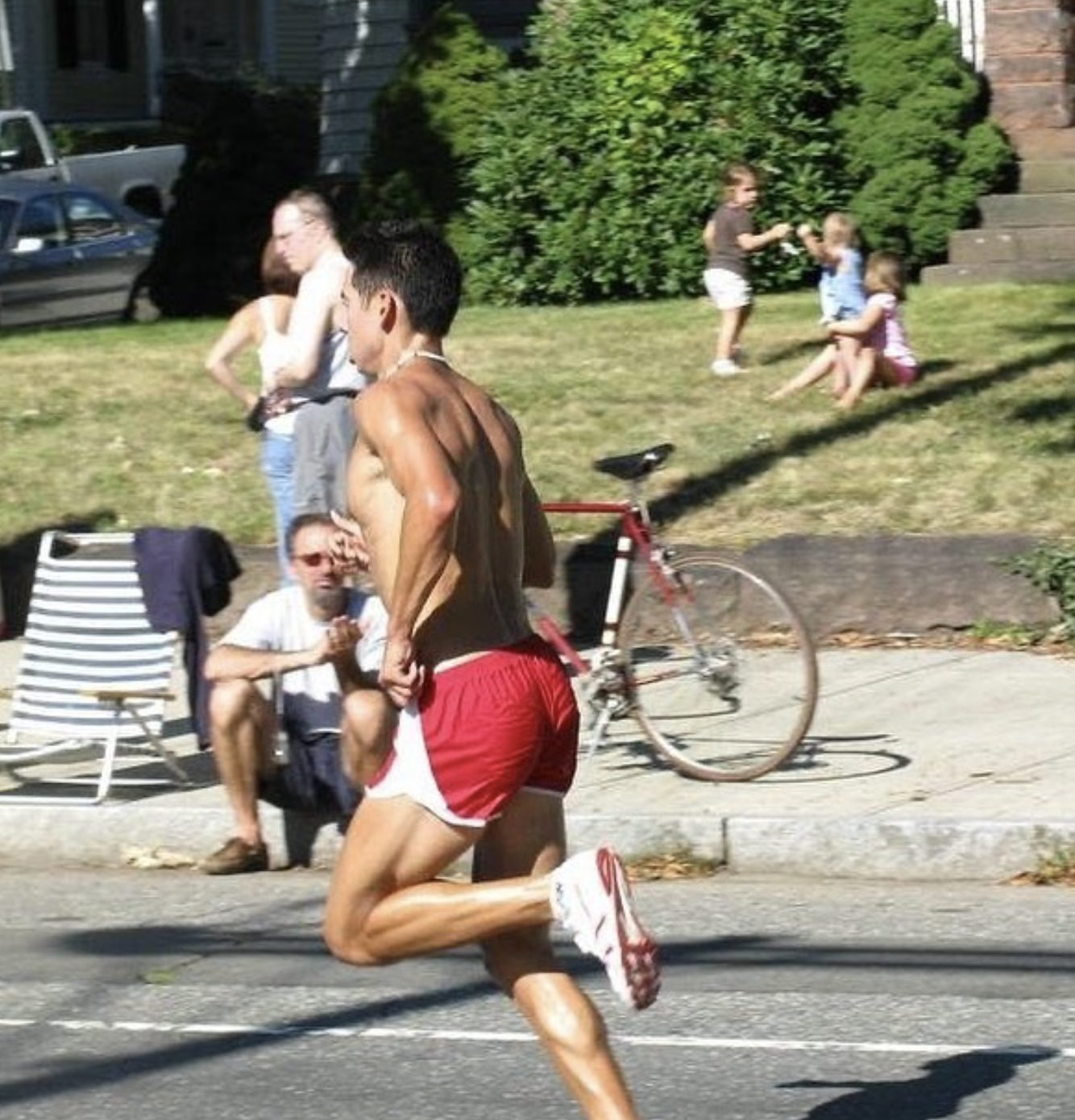
Your body tries to generate more power from your calves since you’re not getting the power you need from your glutes. Another significant sign is having a hip drop. So, if you’ve ever seen a running picture of yourself, and it looks something like the photo below, that’s probably a strong indication that your glutes aren’t activating properly.
What should you be thinking about instead? Here are three ways to activate your glutes: Stand with your feet hip-width apart and try to do the “hip drop” test. Squeeze your glutes on one side, and you’ll feel it activate. Repeat this a couple of times before going out for a run. Try a really awkward walk to engage your glutes. Squeeze one glute while pulling the opposite leg through using your lower abs. Keep squeezing your glutes as you walk and transition into a run. This will also help prevent a crossover gait, where your knees come too close together, reducing glute engagement and power. March forward while focusing on squeezing the glute on your standing leg. Practice this proper form before your run, emphasizing glute activation and using your lower abs as you bring the other leg up. By incorporating these techniques into your routine, you can improve glute activation and enhance your running performance.
One other thing you can do to activate your glutes is to perform single-leg bridges, as shown in my other core video. Do these exercises with just your body weight and focus on your glutes activating. Incorporate this into your pre-run routine and then continue thinking about engaging your glutes while running. Remember, it will take time for your body to learn this new pattern, so simply thinking about using your glutes will be helpful too.
Additionally, there’s one more simple way to practice activating your glutes, and that’s while walking. Many people tend to have bad form even while walking, but you can consciously use your glutes during this activity. It’s also beneficial to avoid wearing flip flops, especially in the summertime, as they can alter your form by causing your toes to grip the front of the shoe and affect how your ankle works. So, wearing appropriate footwear can contribute to better glute activation and overall form.
Now that we’ve discussed how to activate your glutes, here’s what you can do to ensure you maintain this progress: Continue doing the glute activation exercises regularly. While running, consistently remind yourself to engage your glutes using the techniques we’ve discussed. Film yourself running periodically. This is crucial because you might think you’re using your glutes and correcting your form, but your body may naturally revert to old patterns. By recording yourself every few weeks, you can spot any form issues and correct them promptly.
Here’s an additional tip: Occasionally, deliberately go back to using bad form during a short part of your run for a couple of weeks. While this may seem counterintuitive, it can be a valuable learning experience.
By comparing how it feels to run with weak glutes versus activated glutes, you’ll notice the difference and reinforce the importance of maintaining good form.If you follow these strategies, you’ll be more likely to sustain proper glute activation and running form, leading to improved performance and reduced risk of injuries.”
Coach Sage Canaday Weighs In On What Zone 2 REALLY Means.
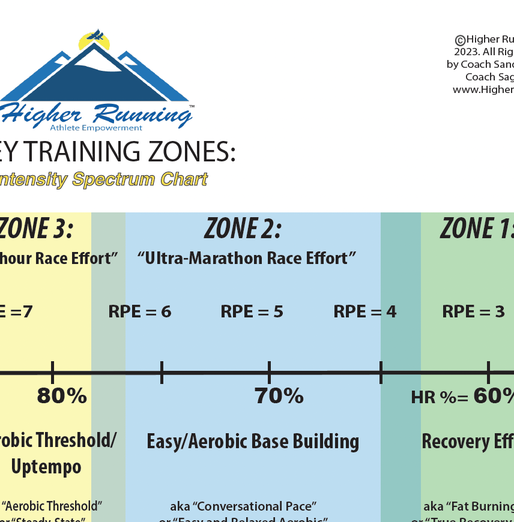
A lot of talk about “Zone 2 Training”…(out of 5 Zones not 3!). First of all people seem to think it means different things and are defining it differently now! So I will start with a ball park of: “65% to 75% of true max Heart rate”….however:
Now if that zone is just heart-rate based (subject to heart rate monitor errors and also compounded by the fact that many don’t know their actual 100% max HR as well), then all of a sudden we can easily be going “too slow” or “too fast” in training.
So how do we know the proper intensity and what actually “zone 2” or “Easy Aerobic ‘Base Building’” effort really is? Well, we could also read mmol (lactate level), but that is relative and not very practical for most.
However, if we are a dialed road marathon runner (training on flat roads) with a PR pace of 7:00/mile or 4:21/km (3:03 finishing time), then we also could just say: “Most Easy Days for ‘Zone 2’ will be significantly slower than that”….like 8:15 to 8:45 per mile (5:00-5:30/km) pace.
Notice the Pace range! It’s dependent on the day, your weekly mileage, and fatigue level. It’s okay to go into Zone 1-Zone 3 as well in a single run, too.
Finally (the ultimate) is by “feeling Zone 2…. or so” by our breathing rate and perceived effort as well. So: Can you easily carry on a conversation? If not you’re probably going “too hard” for true Zone 2! As we cross over up into higher intensity (aka “Zone 3”) we are usually crossing a Threshold (aerobic/ventilatory). That could be reflected on RER (respiratory exchange ratio) values as well, but that’s a whole another discussion about the science behind running and endurance training!
Still Confused by All This “Zone” Talk?
Don’t sweat it!
Our Higher Running Training Zones Chart (Pace-Intensity Spectrum Chart) is a FREE download that comes with all our Training Plans (or you can get yourself a free, PDF download file copy below to see what we’re all about first!). It shows relative workout intensities and terms along with percent of your max Heart-rate or perceived effort as well as some workout examples for each “type” of zone.
Welcome to our latest newsletter, where we delve into the world of trail running with a focus on perfecting your uphill and downhill form. Today, Coach Sandi Nypaver will be sharing her advice on how to optimize your technique for the best trail running experience running.
It’s a shorter one today, which may be the case for the remainder of the summer as we’re also out and about enjoying some amazing mountain adventures. We hope the advice is just as good as our longer ones. 😎
Uphill Running: Small Steps for Optimal Performance 📈
One of the most common mistakes in uphill trail running is taking big, powerful steps. Sandi emphasizes the importance of taking small steps and maintaining straight alignment, which not only helps with breathing but also prevents quick exhaustion. By keeping your back straight and your neck aligned, you ensure optimal airflow, even on technical trails. Remember, a few feet ahead is a better gaze point than looking down at the ground.
Efficiency on Steep Inclines: The Power Hike 🥾
When tackling extremely steep hills or feeling fatigued during an ultra marathon, I recommend the power hike as an efficient alternative. With this technique, you maintain a forward lean, take quick steps, and push down on your thighs with your hands. This motion allows you to conserve energy and tackle the uphill with confidence.
Downhill Running: Mastering Control and Technique ⚡️
Downhill running can be a rewarding and exhilarating experience, but it’s essential to do it correctly to avoid injuries. I advise landing on your midfoot or lightly on your heel while maintaining a neutral or slightly forward-leaning position. By taking smaller steps, you can easily regain control and reduce the stress on your knees and quads.
What Not to Do: Learning from Mistakes ❌
Leaning far back, landing on heels, and overstriding can lead to unnecessary stress on your body and diminish your overall performance. By analyzing your own form and avoiding these mistakes, you can enhance your downhill running experience.
We hope you found these tips on uphill and downhill trail running form beneficial. By incorporating her advice into your trail running routine, you can improve your performance, increase efficiency, and reduce the risk of injury.
Welcome to today’s newsletter, where we explore the crucial topic of post-race recovery. So, let’s delve into the key considerations regarding breaks and training after completing your A race:
The question at hand is: Do you advise any break from running, and if so, how long directly after an A race? To address this effectively, we’ll break it down into three essential factors:
1. Race Length and Surface:
The first factor to consider is the length of your race. If you’ve just completed an ultra marathon, such as a grueling 100-mile (160 kilometers) challenge, it likely served as your main focus race of the year. Such endurance endeavors necessitate a more extended recovery period due to the immense physical toll involved.
On the other hand, if your target was a fast 5K race on a pavement surface, your recovery time will generally be shorter. It’s important to recognize that the impact on your body varies depending on the race distance and the surface you ran on. Road marathons, with their hard asphalt or tarmac, tend to place greater stress on your muscles compared to trail races conducted on softer terrain. Courses with significant elevation changes can also affect recovery, as downhill segments can be particularly taxing.
2. Peak Weekly Mileage and Experience:
Your peak weekly mileage and running experience play a significant role in determining your recovery timeline. If you consistently run high mileage, typically exceeding 50 miles (80 kilometers) per week for an extended period, you’re likely to bounce back more quickly compared to those with lower mileage or less running experience. It’s worth mentioning that age can influence recovery time as well, with older runners typically requiring more time for recuperation. Conversely, younger runners should exercise caution and avoid rushing back into high mileage too soon to prevent injuries.
3. Individual Factors and Mental Reset:
The recovery process is highly individual and influenced by various factors. Genetics, injury history, and mental attitude all contribute to the duration and effectiveness of recovery. Taking a break after a demanding race is not solely about physical restoration but also about mental rejuvenation. Regardless of the race distance, if it was a significant goal race, allocating time for mental recovery is crucial. Mental fatigue can be just as challenging as physical exhaustion. Therefore, it’s recommended to take at least a couple of weeks off, with many athletes opting for several weeks of total rest. Introducing cross-training activities gradually during this period can help maintain fitness without pushing your body too hard.
It’s important to emphasize that rushing back into intense training immediately after a rest period can lead to injuries and mental burnout. Resisting the temptation to resume high-mileage training right away is vital. Allow your body and mind to fully recover to ensure sustainable progress in your running journey.
Instead, consider a phased approach, gradually reintroducing training by starting with a few weeks of base and easy mileage before diving into a structured training plan.
In summary, post-race recovery is a nuanced process influenced by race length, surface, peak weekly mileage, and individual factors.
While there are general guidelines, such as taking at least two weeks off after most distance races, it’s crucial to listen to your body, acknowledge mental fatigue, and avoid pushing yourself too hard too soon. By incorporating strategic recovery periods and adopting a balanced training approach, you can maintain consistency and continue striving towards your running goals.
It’s so simple to live our lives feeling like our thoughts and emotions control us, but that doesn’t have to be the case.
This ONE piece of advice is something that Coach Sandi Nypaver truly believes is a game changer for mental strength.
Definitely for running, but it could also impact all aspects of your life. Here’s what it is: Ask Yourself This One Question:“The basic piece of advice is to pause throughout the day, especially in challenging situations, and ask yourself: “What does the best version of myself look like in this situation?” Alternatively, you can ask, “What is my highest level of thinking in this situation?” Stopping to reflect and pose these questions can unlock the knowledge within us that we often overlook, as we tend to offer sound advice to others but neglect to apply it to ourselves.
Moreover, this practice has the potential to completely transform our thought patterns and the underlying habits of our thinking. From personal experience, I can attest to the fact that we often find ourselves trapped as victims of our own thoughts, feeling powerless to control them because we rarely make an effort to do so. However, by pausing and asking ourselves those pivotal questions, we regain control over our thoughts. This shift in approach empowers us to actively shape our thinking processes.
Certainly, this transformative process takes time. If you currently feel overwhelmed and dominated by your thoughts, it’s important to acknowledge that this will be a gradual journey requiring continuous effort. Even though I still encounter challenges in this aspect, I find solace in knowing that consistent practice yields progress. Having devoted a considerable amount of time to this practice, I now find it significantly easier to identify negative thinking patterns as they arise. This heightened awareness enables me to address and counteract them more effectively.
When I stop and regain my focus, continue to practice, it becomes faster and more efficient. It truly is a game changer. Returning to the topic of thoughts controlling us, it is crucial to recognize that some of our thoughts persist simply because we have repeated them relentlessly.
How to Work Through, “I Am Not Enough” One prevalent example these days is the belief of ‘I am not enough.’ Many individuals adopt this notion at a young age, and it gradually solidifies into a habitual pattern of thinking.
However, if we take a moment to question or examine this phrase or thought of ‘I am not enough,’ we can step back and analyze it.You might be able to change that form of thinking. So, let’s continue with the example of “I am not enough.” If you stop and think about it, you ask yourself, “Is that actually true?” What are alternative thoughts or perspectives that contradict this belief? Is there a better way to approach this or reframe my thinking? How can I actively work towards making this belief untrue?
And simply going through the process of stepping back and examining why that thought exists gives you the power to actually modify that thought. Initially, it may be quite challenging, but eventually, that trigger thought of “I’m not enough” will serve as a reminder that it’s time to cultivate a more positive mindset. And eventually, you know, that thought could simply cease to exist, leaving you with only more positive thoughts.
In terms of running, I believe that pausing again to ask yourself, “What is the best version of myself in this situation?” or “What is my highest level of thinking right now?” opens up numerous possibilities for application. Putting it Into Practice (What You Can Start Doing)So, if you’re someone who experiences significant anxiety before a workout or a race, by asking yourself those questions, you may start thinking along the lines of: “I can only control what’s happening right now. The upcoming workout or race is still a day or a few hours away, and I can’t control it at this moment. However, I can prepare myself for success in the present by focusing on aspects like eating healthily, getting enough sleep, and staying hydrated.”
Another perspective to consider is that if you have a poor workout or a disappointing race, it’s not a monumental issue. When you commit to being a runner and participating in races, encountering setbacks and failures is a definite part of the journey.
If you set ambitious goals and actively pursue them, it’s inevitable that you will encounter failures along the way. In fact, it’s likely that you will face multiple failures, which is an inherent part of the running process. However, we can extract valuable lessons from these challenging experiences and apply them to improve our future races. Even in instances where you have a disappointing race and struggle to identify what went wrong, there are still numerous positive aspects in your life to focus on, which can diminish the significance of running.
I completely understand that running holds great importance and occupies a significant portion of my life as well, being both a coach and a runner myself.I love discussing running and helping people with their running, but it does not define my entire being. There are countless other aspects in my life for which I am immensely grateful. When I step back and view the bigger picture, it diminishes the stress associated with running and enhances my enjoyment of it. Maintaining that sense of joy is crucial.
Practice Makes PerfectWhat can truly foster a resilient mindset is regularly practicing these questioning techniques, not only in relation to running but also in all aspects of life on a daily basis. While it’s beneficial to apply them during your runs and various running-related matters, if you can consistently ask yourself these questions in non-running situations as well, your mental strength will undoubtedly grow, benefiting both your racing performance and your overall running experience.
However, it will also profoundly impact your entire life, leading to an overall increase in happiness as you develop a strong mindset. It’s a continuous work-in-progress, and I, too, am still striving to improve. Nevertheless, the effort is undeniably worthwhile, and I wholeheartedly believe it to be a game changer.
If you believe this advice can genuinely benefit you, I urge you to create a plan for its implementation. Setting the intention may suffice for some individuals, but personally, I found it helpful to write notes as reminders. I had one on my computer that I frequently referred to, and it made a significant difference. Therefore, I strongly encourage you to consider a similar approach.
You could consider sharing this idea with your friends or family members, saying, “Hey, I want to try this,” so they can provide support and hold you accountable. If developing a stronger mindset is truly important to you and you’re committed to it, make a plan for its implementation, similar to how you would create a running training plan. I genuinely hope you will embrace this advice and put it into practice.
Honestly, it has completely transformed my mindset, making me a much stronger individual. By taking a step back and asking myself these questions, I feel like I have regained control over my thoughts, which is incredibly empowering. If you decide to give it a try and notice its positive impact on your life after a couple of months, I would be delighted to hear about your experience.”
️️ Why Our Training Plans Work ️️
All Higher Running Training Plans include effective and detailed workouts. With a combined 30+ years of running experience among the coaches that create our training plans, we’re confident you can achieve your goals. What do people love most? Training plans for ANY Type of race and all experience levels Daily run schedule and easy-to-follow training guide Get training tips and workouts used by Pros Can be tailored to YOUR schedule Start your running journey today!
In this newsletter, Coaches Sandi and Sage will specifically focus on two different theories on how to implement running form changes. We don’t go super into depth as to what good running form looks like, but rather how to ensure proper implementation. If you’re interested on previous newsletters speaking specifically on running form, you can check those out HERE or HERE.
THEORY #1: Gradually Build Into ItThe first theory that a lot of the biomechanic experts go with. Basically, it suggests that when you implement a form change in the first two weeks, you really have to think about it, and you’re going to feel it with every single step. If you’re not feeling that form change, you’re probably reverting back to old habits and doing what you’re used to. So, that’s the first two weeks when you really have to think about it and feel it in your stride. Then there are the second two weeks. In these two weeks, the movement you want to change is going to feel much easier, like you can do it, but you still have to think about it and keep checking in with yourself.
Finally, after those four weeks are up, the form change should be officially your new movement pattern. It’s programmed in your brain and in your body, so it should be a really fluid motion. That’s a big commitment for a form change, and a lot of people don’t think about that.
That’s why we say don’t implement a form change right before a race because it takes time for your body to get used to it and to build the right connections.
Understand What You’re Getting Yourself Into: It’s also important to know that this process can be quite tiring. We know this from first-hand experience! You have to constantly think about every step on every run, especially during those first two weeks. Make slight adjustments at a time. If you make too drastic of a change too fast, you won’t be able to compensate, or it will take a longer period of time to compensate.
A good way to check in on yourself is if you do a hard workout, have someone film you or set up a camera and see if you revert back to those old, poor form habits. When you’re tired, your form usually breaks down more, and you’re not thinking as much about the new changes you’re trying to make to your running form. Filming yourself or working with an expert is perhaps the best way to correct running form issues.
THE PROBLEM: A big problem we see with people who want to implement form changes is that they overcompensate somewhere, and that’s not what we’re looking for.You’re trying to address one pain and fix your form to do that, but then you end up with another pain on the other side of your body, which probably means you’re overcompensating somewhere. That’s why having a video of yourself running is important.
We suggest making just one change at a time. Focus on one change you can think of. You could think of a hundred different things as you’re running, what you’re changing with your form, but you want to focus on one change at a time and establish that new neuromuscular pathway—the connection between your brain and your muscles firing the correct way in the correct movement pattern.
THEORY #2: The Broomstick Cue The second theory is using a running form cue that you can incorporate into your movement patterns when considering your running form and making running form changes. We will refer to it as the ‘broomstick cue.’ You don’t necessarily need an actual broomstick; you can use a Swiffer or even imagine a line at knee height with your plant foot.
The motion cue you should focus on during distance running is lifting up and over, where your foot clears the imaginary line or the stick and swings forward on the drive face. The idea is to lift up and over while thinking of another running form cue.
The Heel Flick TrickOne example of this is the ‘heel flick trick,’ where you attempt to kick your butt with your heel. However, that is usually an exaggeration and not necessary. It’s more appropriate for sprinting at high speeds with a high knee lift and drive. In distance running, it’s better to clear the parallel height to the ground.
Your leg should be at about that height as it moves forward, essentially creating a shorter lever with your leg. If you swing your extended leg forward without much knee bend, it becomes difficult to swing the entire leg. It’s challenging to generate the swinging motion when your leg is extended on the ground. It’s all about leverage.On the other hand, if your knee is more bent, the distance between your butt and heel becomes shorter. This shorter lever, with more mass closer to your center of mass, allows you to bring your leg forward more easily. This leads to improved efficiency, enabling you to transition into the next stride, which provides real propulsion, speed, and increased efficiency over longer distances.
In conclusion, implementing proper running form and making intentional form changes can significantly impact your running performance and reduce the risk of injury. By focusing on cues such as the “broomstick cue” and maintaining a shorter lever with a bent knee, you can improve your running efficiency and stride propulsion. Remember, it takes time and practice to establish new habits, so be patient and allow yourself a few weeks to adapt to the changes.
Filming yourself or seeking guidance from an expert can also be beneficial in tracking your progress and avoiding overcompensation. With dedication and consistent effort, you can enhance your running form and enjoy the benefits of improved performance and reduced injury potential. Keep striving for your running goals and enjoy the journey. Happy running!