by Coach Sandi & Coach Sage | Sep 4, 2023 | Uncategorized
Today’s newsletter is focused on speed training considerations if you’re focused on a 5K or 10K event, versus a marathon or ultra-marathon. Let’s discuss the differences in focus:
Now, when I say “speed training”, we’re generally talking about focused interval sessions, perhaps on the track, hill repeats, tempo runs, and activities that are faster than your goal race pace.
Speed training for an ultra marathon runner differs slightly from speed training for a 5K runner, but the general basis remains the same: you’re incorporating high-intensity intervals and high-intensity training, which are essential for these distance running events.
SHORTER RACES:
For a 5K or 10K, you’re aiming for very high heart rate values, with heart rate spikes reaching over 90% to 95%, and even up to 100% of your maximum heart rate (known as VO2 max).
You’re not necessarily sprinting like you would in a mile or 1500-meter race, but you’re running at around 80% to 85% of your top-end speed.
To excel in these events, you need strong leg power, stride length, and stride extension. Equally important is having the capacity for high-end heart and lung power, enabling you to clear lactate and reach anaerobic states.
Regardless of the event you’re preparing for, the foundation of speed training starts with exercises like strides.
I’ve covered strides in some of my videos, as well as with training plan we sell, we include details on what strides are and when to do them. Now, let’s delve into the details of speed training.
To start, try running light and relaxed for a hundred meters, aiming for around 20 seconds, perhaps with a full recovery period. You can incorporate this into your easy, slow mileage and gradually build it up. Afterward, you can move on to more structured workouts, such as hill repeats or interval sessions like fartlek.
I’m tossing out these terms, and you might not be familiar with all of them, but the overarching principle remains the same. For the 5K and 10K distances, you’ll need to emphasize interval speed work more than for the marathon and ultra marathon. The key difference lies in the frequency of speed workouts.
During peak training for the 5K, 10K, or half marathon, you might find yourself doing two speed workouts a week. At your peak, you could be hitting the track for short intervals like 400-meter repeats and longer intervals like kilometer repeats. Meanwhile, for marathon and ultra marathon runners, you might incorporate similar workouts but potentially skip the 400-meter repeats.
In this context, you’ll likely concentrate on workouts like five times a kilometer or eight times a kilometer, typically done once a week. Remember that you don’t have to limit yourself to just one track session per week. Another valuable addition to your speed training repertoire is tempo or lactate threshold training, a tried-and-true approach based on Jack Daniels’ distance running formula.
THE TEMPO RUN:
A classic example of this is the 20-minute tempo run. Essentially, it involves running for 20 minutes at around 80% to 85% of your maximum heart rate or an overall effort level at 85%. For many individuals, this pace might be slightly slower than their projected 10K race pace. This type of workout is highly effective for all distance running events.
Interestingly, for the marathon and ultra marathon crowd, this tempo run can serve as a speed workout because it pushes you to run faster than your marathon race pace. In essence, you’re working on enhancing efficiency by moving your legs at a faster pace than you would during a road marathon. This is closer to 10K race pace. However, if you’re a 5K runner, this pace may actually be slower than your current race pace. Nevertheless, it can be a valuable tool to fine-tune your 10K pace or prepare for a
half marathon.
LONGER RACES:
Indeed, for the half marathon and marathon runners, the tempo run training remains a form of speed training because it’s still faster than their half marathon pace. During these tempo runs, you’re operating at over 80% of your maximum heart rate and putting in over 80% effort, which means you’re engaging in some level of anaerobic energy contribution.
However, it’s crucial to understand that you don’t need to incorporate these intense workouts frequently into your training routine. In most cases, you begin with a foundation of easy, conversational pace base mileage to increase your overall mileage. Afterward, you gradually introduce intensity.
Even during the peak season, which might be four weeks, six weeks, or eight weeks before your main race, you may only include about two high-quality speed sessions per week for both half marathon and marathon events.
Another significant stressor for marathon and ultra marathon runners is the long run. These lengthy runs can be incredibly taxing, requiring several days to recover from. You’ll need to balance these demanding long runs with your tempo runs and speed work. In contrast, for 5K runners, their long runs typically won’t be as long or as intense.
Certainly, for 5K runners, their training can differ in terms of mileage and intensity. They might be covering slightly fewer total miles, but they could be hitting the track twice a week and incorporating more frequent 400-meter repeats compared to ultra marathon runners.
VOLUME VS INTENSITY:
It’s a balancing act and a trade-off between the volume and intensity of training, and it hinges on the specific paces you’re aiming to achieve.
It’s worth noting that we’re primarily discussing flat road surfaces or well-maintained trails for these types of runs. Ultra marathon runners, on the other hand, often tackle trail races or hilly mountain ultra marathons where pace becomes less relevant, and the focus shifts towards endurance and adaptability.
In contrast, if you’re training for a precise road marathon, like aiming for a Boston Marathon qualification with a sub-three-hour time, you should be acutely aware of your goal marathon pace and work to refine your performance from that starting point. This means incorporating workouts that hit paces that are 15 seconds per mile or 10 seconds per kilometer faster than your target marathon pace. These workouts help you condition your body to handle and maintain that pace throughout the entire marathon distance.
Similarly, for the 5K, if you can’t complete repeat 800-meter intervals, say six to eight times with a two-minute rest, at your projected 5K pace, it becomes challenging to maintain that pace for the entire 5,000 meters during the race. In essence, much of speed work involves training at fractions of your goal race pace.
This approach allows you to become comfortable with running at various intensities, stimulating fast-twitch muscle fibers, boosting metabolism, and building mental toughness to handle the lactate buildup and intensity that comes with racing in events like the 10K and 5K.
Hopefully after reading this newsletter you can start to better understand the differences and nuances that the different distances demand. However, there’s still plenty of similarities that allow you to become an #AnySurfaceAnyDistance runner! We’ll see you next week.

by Coach Sandi & Coach Sage | Sep 2, 2023 | Uncategorized
Even if you’re used to running, the idea of going for a really long distance can make anyone nervous. It’s not just about the physical effort, but also about the mental challenge. When you’re out there for an extended period, it’s like you’re facing all your doubts and uncertainties head-on. That feeling of your heart racing, not knowing if you can keep going, and dealing with your own thoughts can be a bit scary. But the cool thing is, by pushing through that fear, you can discover a lot about yourself and what you’re capable of accomplishing.
For today’s newsletter, Coach Sandi Nypaver takes us through some of her top mindset tips she uses herself, as well as what she tells her athletes:
“It’s common to feel a bit nervous before tackling those long workouts, especially when speed is involved.
As a coach, I’ve noticed that fear often creeps in when we start thinking about things beyond our control or focus on the potential pain. So, let’s chat about some mental strategies to help you conquer those worries and excel during your runs —
1. Shift Your Focus: Instead of dwelling on the negatives, redirect your thoughts to the positive aspects of the workout. Remind yourself that this type of training is crucial for reaching your goals, both physically and mentally. Embrace the opportunity to grow stronger through the challenge. This is a lot easier said than done, but practicing visualization with a positive outcome can have a dramatic impact on the end result. The science on this even tells us so! Top endurance athletes around the world use visualization as a core component of their mental preparation. We could have a whole newsletter topic on this in the future, but for now, we encourage to you to give it a try.
2. Confidence is Key: These lengthy sessions require mental resilience. Believe in your capacity to stay strong throughout the run. Cultivating confidence is a gradual process, but trusting in your abilities can make a world of difference.
3. Embrace Feeling Strong: It’s easy to anticipate discomfort but remember that you can also feel powerful during the run. Don’t fixate on potential pain; focus on the satisfaction of pushing through and achieving greatness.
4. Failure is Not the End: Understand that unsuccessful workouts are part of the journey. They indicate that you’re pushing boundaries and striving for improvement. Learn from these experiences, adapt, and move forward with a positive mindset. In other words, failing is expected, and if you’re not failing, you’re probably not trying very hard or you’re not just setting big enough goals. So, failing a workout? No big deal in my book.
It’s going to happen when you’re trying to perform at your best, and so when a bad workout happens, think about why it didn’t go well.
For example: Did you not drink enough during your long run? Did you miss your goal of consuming X number of gels? These are the types of things to reflect on, so that next time, you can improve
5. Analyze and Adjust: This kind of goes along with our last point and examples. When a workout doesn’t go as planned, take a moment to reflect. Was fatigue a factor? Did you doubt your abilities beforehand? Use these insights to fine-tune your approach and grow from each setback.
6. Embrace the Journey: Running has its ups and downs, just like life. Don’t let occasional setbacks deter you. Instead, approach each run as a unique chance to learn, grow, and prepare for future successes.
As we’ve journeyed through this past year together, it’s clear that running can be a rollercoaster. Remember, setbacks are temporary, and breakthroughs await. Recently, I had a great run myself, which was partly due to my mindset. I approached it with the intent to do my best and recognized its potential impact on my upcoming races.
Stay motivated and keep chasing those goals!”

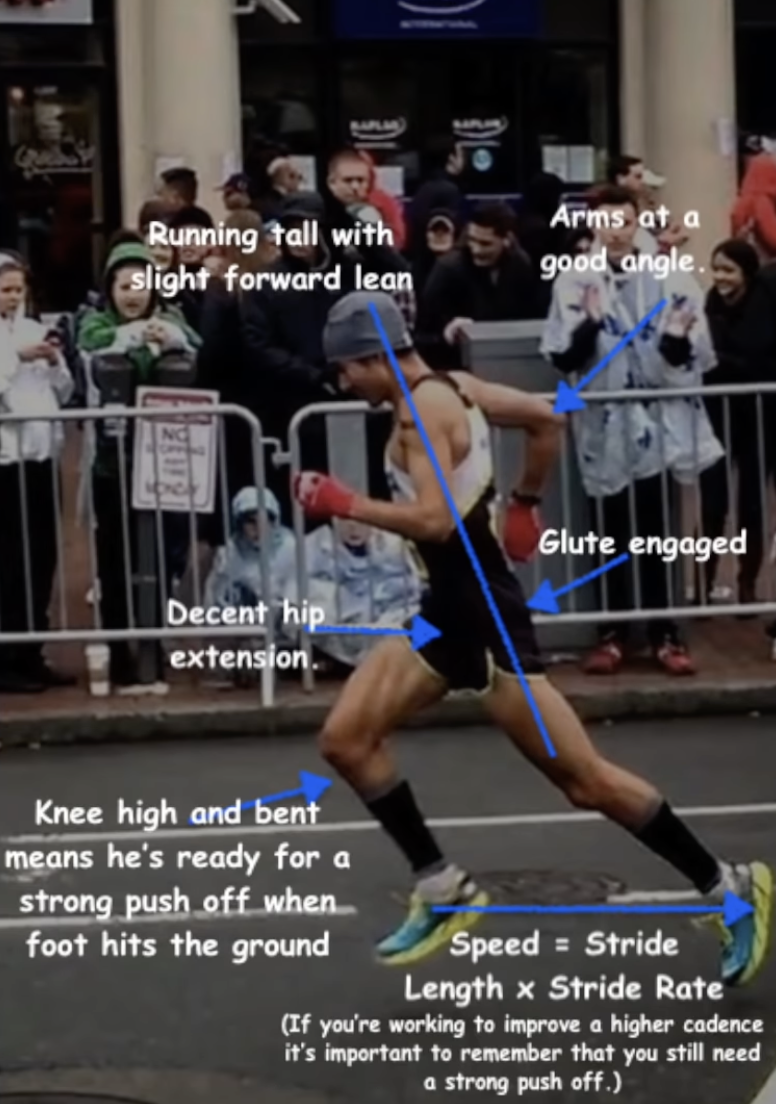


 Stand with your feet hip-width apart and try to do the “hip drop” test. Squeeze your glutes on one side, and you’ll feel it activate. Repeat this a couple of times before going out for a run.
 Try a really awkward walk to engage your glutes. Squeeze one glute while pulling the opposite leg through using your lower abs. Keep squeezing your glutes as you walk and transition into a run. This will also help prevent a crossover gait, where your knees come too close together, reducing glute engagement and power.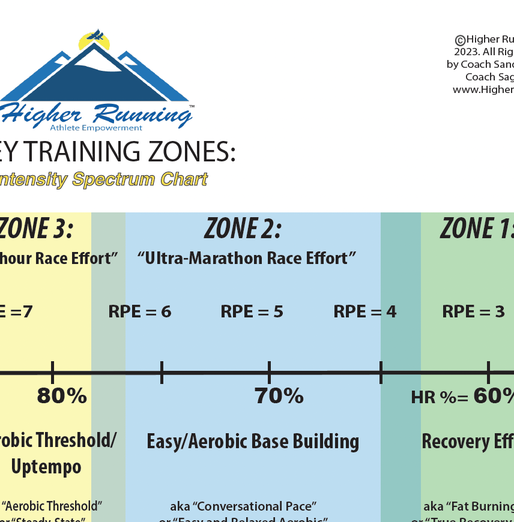
 Now if that zone is just heart-rate based (subject to heart rate monitor errors and also compounded by the fact that many don’t know their actual 100% max HR as well), then all of a sudden we can easily be going “too slow” or “too fast” in training.