
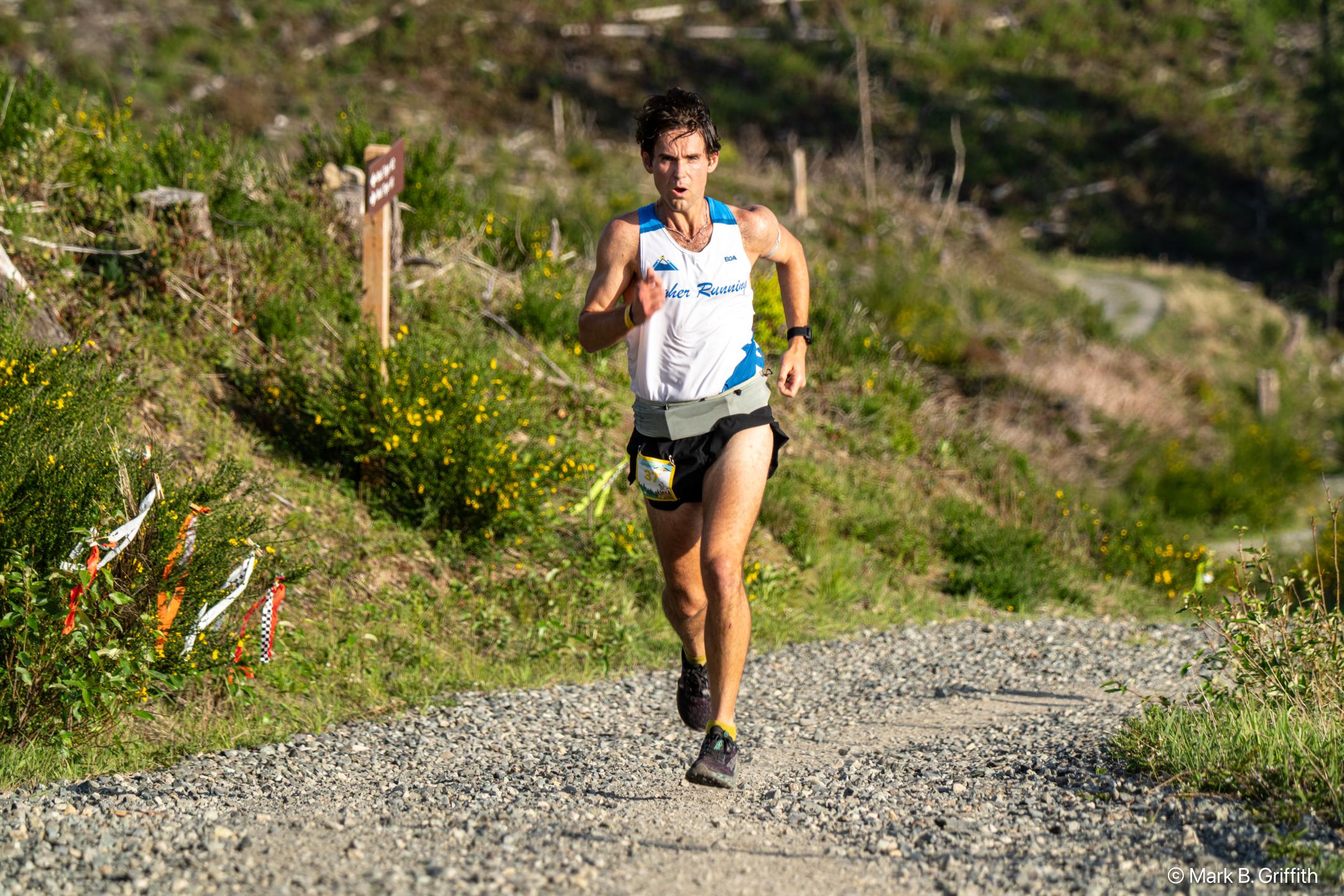
What my trail athletes do every fall to keep improving

What my trail athletes do every fall to keep improving

For a lot of us in the Northern Hemisphere, the main trail season is wrapping up. Snow is starting to cover the high trails here in Colorado, and it’s the perfect time to pause and look back.

Every fall, I have my athletes carve out a little time to reflect on the past year. When we don’t stop, it makes it difficult to see what’s working and what we need to improve upon.

The main question I want you to ask yourself is this: What worked well for me in my training and racing this year, and what areas could I improve upon?

I ask myself the same question every fall too. I’m naturally better at endurance, so I always find I need to work on speed and power. Living at 7,000 feet adds to that, since I can’t run as fast as I could at sea level. That’s why I touch up on speed more aggressively in the winter than I do in the warmer months, when I’m training for longer races.

On the other side, downhills used to be one of my strengths. When I set the old course record at The Rut 50K, part of it came from my technical downhill running. After an odd injury/form issue (a story for another day), getting back to being as fast as I want on the downhills has been more of a challenge. So that’s on my list this winter too.

Figure out your gap

Think of what you need to improve as a gap you want to close. Think back on your races this season…

Were you always getting passed on the downhills? Did you really struggle with power hiking? Was it the flatter, runnable sections where you felt like you weren’t moving well? Was it nutrition or hydration? Did your body start breaking down late in races? Or did injuries keep getting in the way?

Write down what comes up. You might find more than one, and that’s normal, but identify your priorities.

Recover first

Before you start working on anything, make sure you’re recovered, physically and mentally.

What that looks like is very individual. Some of our athletes take a few weeks totally off running. They go mountain biking, go on short walks, do yoga, etc. Others get back into easy running a bit sooner, but they’re not really training yet. They’re running simply because they enjoy it and want to be outside.

You’ll know you’re ready to get back to training when you feel good mentally and physically, and you’re genuinely excited to get back into it because you love the training.

Make a plan to close your gap

Maybe you can’t start working on your gap right now. That’s okay. You can still decide when you’ll start and what you’ll do. Here are some ideas for each one.

Downhills. Scan ahead instead of looking down at your feet. Think about landing with your feet underneath you. Learn to open up on less steep, less technical downhills first, then bring that to the steeper stuff.

Power hiking. Strength training can help, especially step ups and Bulgarian split squats. If you don’t have access to big climbs, find a treadmill with an incline or a stair stepper. Then practice hiking on purpose. Even when you feel like you could run a climb, power hike it if that’s a climb you’d be hiking in an ultra.

Flat speed. Look for flat road races you could do this winter, and follow a training plan that gets you ready for them. I’ve had a few ultra athletes do exactly this. When they got back into ultras, they felt like they had a gear they didn’t have before.

Nutrition and hydration. Set aside time to learn more about fueling and hydration strategies, then practice them on your long runs this winter. If you still can’t figure it out, work with a sports dietitian.

Durability. If you’re breaking down late in races, figure out why first. It could be pacing, strength, volume, or your legs not being used to long descents. Where you live matters here too. If you’re somewhere snowy, dark, and cold, and building volume or doing big long runs and downhills isn’t realistic, strength training is a great place to focus. If you live somewhere warmer, like parts of California, Arizona, or other southern states, winter could be the perfect time to look at how your long runs and weekly volume are structured.

Injuries. If you keep getting injured or just have little niggles that keep popping up, make the time to work with a physical therapist who’s used to working with athletes.

There’s no one right way to close your gap

You still need to put in the work on your gap, but how you do that can look really different from one runner to the next. If you look at successful trail runners, what they do in the winter is drastically different. Some do skimo for months. Some put up fast times on the roads. Some cycle, and many put a bigger focus on strength.

I tend to go with the seasons. I love mountain running and big vert days, but a lot of our best mountain trails are covered in snow in the winter. Doing out-and-backs on hills or convoluted loops just to get the vert in gets boring for me after a while. I love mountain running for the adventure of it and doing out-and-backs on hills doesn’t feel very adventurous to me. Even though they’re on pavement, faster speed workouts feel more exciting to me in the winter, and they’re exactly how I work on my speed gap. And I get my mountain fix ski touring, which is a great way to build easy aerobic volume and can replace some easy runs.

However, I know people who love doing out-and-backs on their local hills all winter. For them, it’s almost meditative. It’s easy to look at one elite and think “this is the way to do it,” but the best approach is a little different for everybody. What matters is finding the approach that closes your gap and keeps you excited to train.

Want help with your plan?

If you’re not sure where to start, Coach Jake has a few openings for 1:1 coaching.

Jake is a certified ultrarunning, nutrition, and strength coach. He trained with Higher Running as an athlete for several years before joining our coaching team, which means he knows our coaching philosophy inside and out, and he genuinely cares about doing his best for every athlete he works with.

Our coaching spots are starting to fill up, so even if you’re not ready to start for another month or so, feel free to reach out now.

Learn more about Jake at higherrunning.com/jake-head, or fill out our contact form to see if it’s a good fit.

Coach Sandi
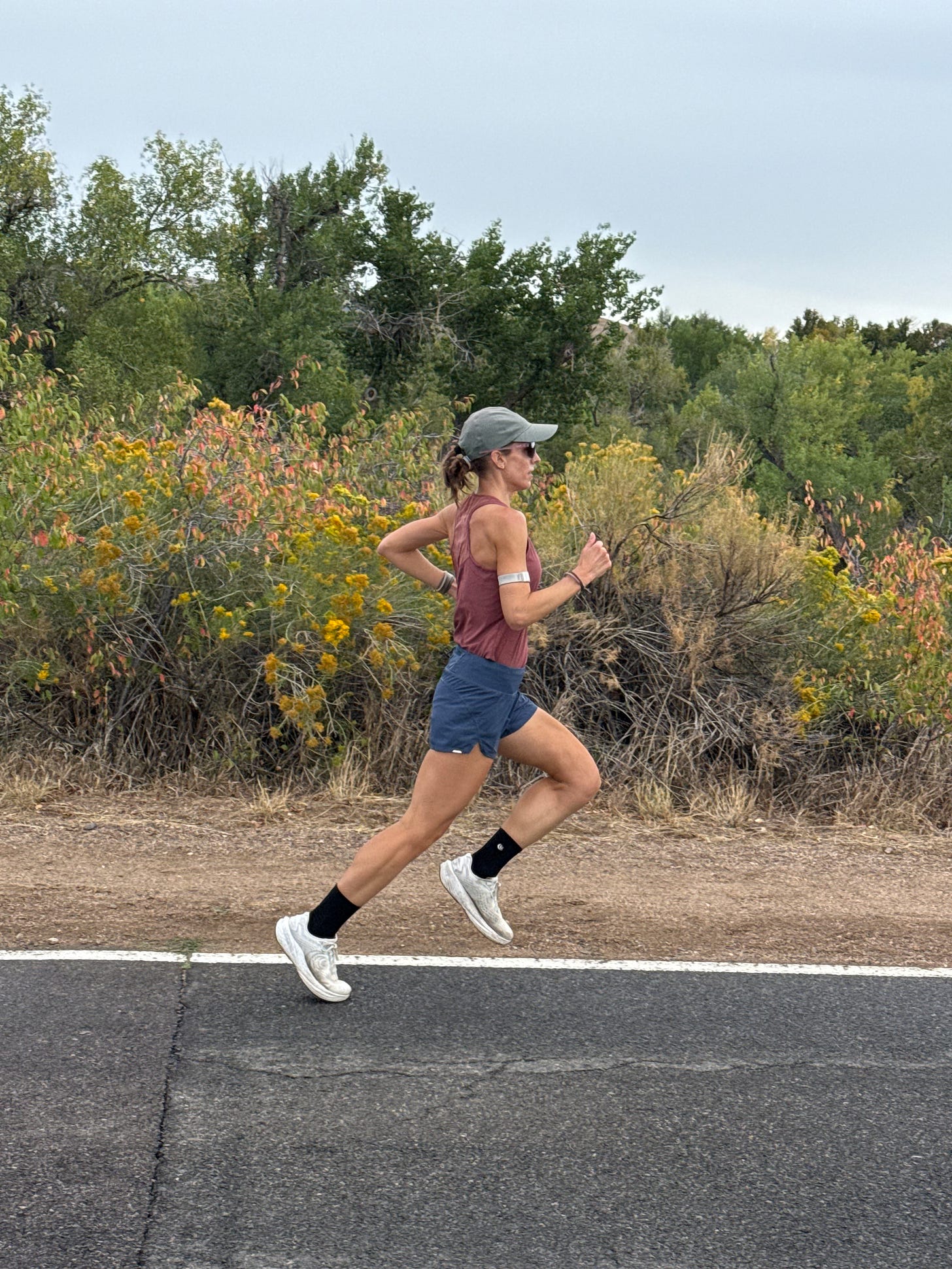
The Big Mistakes Costing You That Marathon PR

The Big Mistakes Costing You That Marathon PR

(From BQ to OTQ, and a few lessons that carry over to ultras)


There are so many athletes I’ve coached who have made at least one of these mistakes, whether they’re training for a marathon or an ultra. They want their goal so bad and they’re so deep in the training that it’s hard to take a step back and see what they could do better. We also hear so much information that our thoughts get jumbled, and we end up ignoring what we know we should be doing.

If you’re feeling stuck, you’re probably doing a ton right already. Sometimes you just need one tweak, or a few small ones, that make a big difference.

Here are the ones I see the most.

1. You run your marathon pace long runs too fast.

If you’re doing 10 miles at marathon pace in a long run, it should feel controlled. You might even feel a little bit bored. That’s because if you were actually racing 26.2 miles, you’d still have 16.2 miles to go after those 10. The first 10 miles of a marathon should not feel that hard.

Marathon pace workouts aren’t just preparing your body for the demands of the marathon. They’re preparing you to stay patient.

This is one of the hardest things to get athletes to believe. I coached a runner who always ran his marathon pace workouts a little too fast. On race day, he’d go out too fast too, and every time he’d fade at the end, just trying to hang on for dear life.

I convinced him to trust the process and slow down his marathon pace long runs and things started to change. He felt better throughout the week. His speed workouts went a little better. When race day came, he was finally able to execute a good pacing strategy. He finished strong and even sped up a little at the end to get a big PR.

That’s what patience in training can buy you. Not just a better long run, but feeling good week after week and better executed races.

And if you do a couple of marathon pace workouts that feel too hard, maybe you need to adjust your expectations for race day. That’s not a bad thing. That’s setting you up for a strong race, not for blowing up.


2. You’re trying to do a big VO2 max session and a marathon pace long run in the same week.

If you’re feeling wrecked, it’s because those are two big workouts. VO2 max sessions have their place, but it’s not when you also want to be doing your biggest marathon pace workouts.

If you want to hold on to some of that short speed late in a marathon build, there are better ways to do it. You could do a threshold run and tack on something like 5 x 1 minute at 5K pace with 1 minute easy running in between. Or you could do intervals at 10K pace with a decent recovery so it almost feels like a threshold session.

You keep a little sharpness without stealing energy from the workouts that matter most for the marathon.


3. You’re forgetting that as your training goes up, your carbs need to go up too.

A lot of people forget to fuel a bit more when their mileage or intensity climbs. This doesn’t mean loading up on sugary treats, though there’s room for those too. Think more whole food carbs like rice, oats, potatoes, and fruit.

In 2016, the American College of Sports Medicine, the Academy of Nutrition and Dietetics, and Dietitians of Canada put out a joint position statement on nutrition and athletic performance. It gives daily carb targets based on how much you’re training:

  • Light (low intensity or skill-based activity): 3 to 5 g/kg of body weight per day

  • Moderate (about 1 hour a day): 5 to 7 g/kg

  • High (1 to 3 hours a day of moderate to high intensity exercise): 6 to 10 g/kg

  • Very high (more than 4 to 5 hours a day of moderate to high intensity exercise): 8 to 12 g/kg

So if you weigh 60 kg (about 132 pounds) and you’re training 1 to 3 hours a day, that works out to roughly 360 to 600 grams of carbs a day.

The statement also makes the point that nutrition goals aren’t static. Your fueling should change with your training, so your biggest weeks deserve more fuel than your base season.

What does under-fueling look like? Often at the start, it’s subtle. If you’re just a little under-fueled, you might feel flat and always a bit tired. If it’s more extreme and it’s been going on longer, you might start noticing niggles, feel much more tired, and even feel like you’re getting a little bit worse instead of better.

That matches what the research shows too. The International Olympic Committee’s 2023 consensus statement on under-fueling in athletes lists a reduced response to training, longer recovery, and more time lost to injury or illness among the performance effects.


4. You’re not staying in touch with your joy for running and what makes you happy outside of running.

This isn’t toxic positivity. If you sit down and think about it, you may notice you tend to recover better when you’re happy, and your running tends to go better too.

I learned this the hard way. Early in my running career, I had so much pre-race anxiety that I’d be in tears the day before a race and not want to race at all. I loved running and training. But I was using doing well in races to help me feel better about myself.

When I was able to separate my performance from who I was, things shifted. I found so much more joy in running and racing. And I took better care of myself, because feeling good and enjoying what I was doing became the priority.

Now, racing feels more free. Still not the same as training (that’s still by far my favorite part!), but better. No matter how I do, I’m okay with it, because it doesn’t define who I am. I get to be curious at the start line and open to all outcomes without stressing about it.

How you handle stress doesn’t just change how racing feels. It affects your body too. A review of 50 years of research on injury in sport found that how athletes respond to stress is the strongest psychological risk factor for acute injury. Your body doesn’t keep separate accounts for training stress and life stress.

This is part of why I care about what’s happening in your life outside of running and I often say that high performance and joy belong together.

Ready for some help?

Sometimes it’s hard to see what needs to change when you’re in the middle of it. That’s where a coach comes in.

We’ve got some great coaches at Higher Running with available spots who would love to work with you. Fill out this contact form and I’ll help you find the right coach for you, or check out higherrunning.com for more information.

Coach Sandi


Sources

  • Thomas DT, Erdman KA, Burke LM. Nutrition and Athletic Performance. Joint position statement of the American College of Sports Medicine, Academy of Nutrition and Dietetics, and Dietitians of Canada. Medicine & Science in Sports & Exercise, 2016;48(3):543-568.

  • Mountjoy M, et al. 2023 International Olympic Committee’s (IOC) consensus statement on Relative Energy Deficiency in Sport (REDs). British Journal of Sports Medicine, 2023;57(17):1073-1097.

  • Tranaeus U, et al. 50 Years of Research on the Psychology of Sport Injury: A Consensus Statement. 2024.