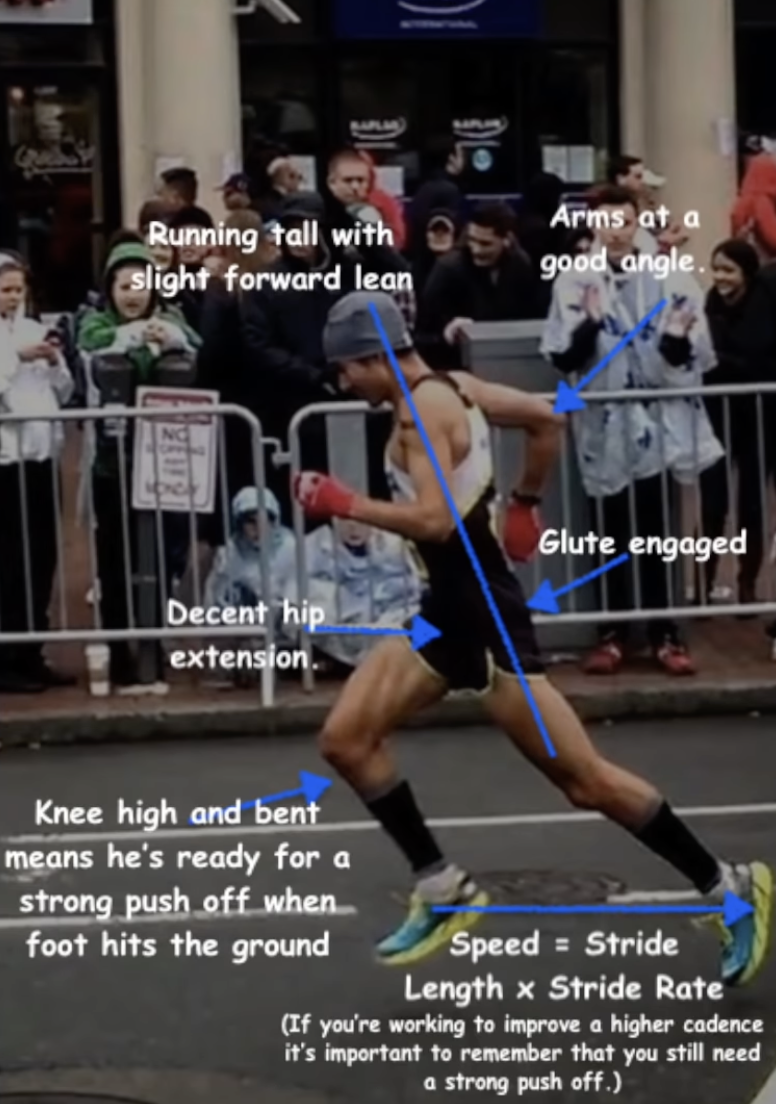
In the world of running, every athlete is a unique puzzle, each piece shaped by factors like genetics, training background, and personal quirks. But if you take a closer look at the best runners out there, you’ll notice something interesting: they all have a few things in common.
Two of the biggies are hip extension and thoracic mobility. These might sound fancy, but they’re basically about how your hips move and how your upper back twists while running. So, in this newsletter, Coach Sandi Nypaver is going to briefly break down why these things matter and how they can make any runner, from newbie to pro, better at their game:
Tip #1 – Hip Extension: The Hallmark of Elite Runners ️ If you’ve ever wondered what makes elite runners stand out, it’s their remarkable hip extension. This isn’t just about having mobile hip flexors; it’s also about having strong glutes. Hip flexors and glutes work in tandem, and powerful glutes are essential for achieving optimal hip extension. If your hip flexors are overly tight, they can hinder your glute strength, ultimately affecting your running form. If you find yourself feeling quad-dominant while running, it’s a sign that you may need to work on your hip extension. Focus on exercises that strengthen your glutes and stretches to improve hip flexor flexibility. Remember, proper hip extension can prevent lower back pain and keep your running mechanics on point.
Tip #2 – Thoracic Mobility: The Missing Piece Another element that often goes unnoticed but is crucial for top-notch running form is thoracic mobility. When your hips extend backward, your shoulders should counterbalance by extending in the opposite direction. If you lack mobility in your thoracic spine, your body might compensate by excessive movement in your lower back or hips, leading to inefficiencies and potential injuries.
To enhance thoracic mobility, incorporate exercises that target your upper back and shoulder areas. This will help you achieve a smoother and more balanced running form, reducing the risk of overloading other parts of your body. Remember, running form is not a one-size-fits-all concept. It’s about finding what works best for you while incorporating key principles. So, whether you’re looking to break personal records or simply enjoy your runs more, focusing on your running form could be a game-changer.
Until next time, keep running, keep improving, and we’ll be back in your inbox next week! **If you’re still struggling to figure out what “good” running form is, we hear you! That’s why we created our Higher Running Ultimate Running Course. Among many things, we teach you how to refine your running that works for you, but also incorporates tried-and-true running form techniques that’s used by the pros.
Welcome to our latest newsletter, where we delve into the world of trail running with a focus on perfecting your uphill and downhill form. Today, Coach Sandi Nypaver will be sharing her advice on how to optimize your technique for the best trail running experience running.
It’s a shorter one today, which may be the case for the remainder of the summer as we’re also out and about enjoying some amazing mountain adventures. We hope the advice is just as good as our longer ones. 😎
Uphill Running: Small Steps for Optimal Performance 📈
One of the most common mistakes in uphill trail running is taking big, powerful steps. Sandi emphasizes the importance of taking small steps and maintaining straight alignment, which not only helps with breathing but also prevents quick exhaustion. By keeping your back straight and your neck aligned, you ensure optimal airflow, even on technical trails. Remember, a few feet ahead is a better gaze point than looking down at the ground.
Efficiency on Steep Inclines: The Power Hike 🥾
When tackling extremely steep hills or feeling fatigued during an ultra marathon, I recommend the power hike as an efficient alternative. With this technique, you maintain a forward lean, take quick steps, and push down on your thighs with your hands. This motion allows you to conserve energy and tackle the uphill with confidence.
Downhill Running: Mastering Control and Technique ⚡️
Downhill running can be a rewarding and exhilarating experience, but it’s essential to do it correctly to avoid injuries. I advise landing on your midfoot or lightly on your heel while maintaining a neutral or slightly forward-leaning position. By taking smaller steps, you can easily regain control and reduce the stress on your knees and quads.
What Not to Do: Learning from Mistakes ❌
Leaning far back, landing on heels, and overstriding can lead to unnecessary stress on your body and diminish your overall performance. By analyzing your own form and avoiding these mistakes, you can enhance your downhill running experience.
We hope you found these tips on uphill and downhill trail running form beneficial. By incorporating her advice into your trail running routine, you can improve your performance, increase efficiency, and reduce the risk of injury.
Welcome to today’s newsletter, where we explore the crucial topic of post-race recovery. So, let’s delve into the key considerations regarding breaks and training after completing your A race:
The question at hand is: Do you advise any break from running, and if so, how long directly after an A race? To address this effectively, we’ll break it down into three essential factors:
1. Race Length and Surface:
The first factor to consider is the length of your race. If you’ve just completed an ultra marathon, such as a grueling 100-mile (160 kilometers) challenge, it likely served as your main focus race of the year. Such endurance endeavors necessitate a more extended recovery period due to the immense physical toll involved.
On the other hand, if your target was a fast 5K race on a pavement surface, your recovery time will generally be shorter. It’s important to recognize that the impact on your body varies depending on the race distance and the surface you ran on. Road marathons, with their hard asphalt or tarmac, tend to place greater stress on your muscles compared to trail races conducted on softer terrain. Courses with significant elevation changes can also affect recovery, as downhill segments can be particularly taxing.
2. Peak Weekly Mileage and Experience:
Your peak weekly mileage and running experience play a significant role in determining your recovery timeline. If you consistently run high mileage, typically exceeding 50 miles (80 kilometers) per week for an extended period, you’re likely to bounce back more quickly compared to those with lower mileage or less running experience. It’s worth mentioning that age can influence recovery time as well, with older runners typically requiring more time for recuperation. Conversely, younger runners should exercise caution and avoid rushing back into high mileage too soon to prevent injuries.
3. Individual Factors and Mental Reset:
The recovery process is highly individual and influenced by various factors. Genetics, injury history, and mental attitude all contribute to the duration and effectiveness of recovery. Taking a break after a demanding race is not solely about physical restoration but also about mental rejuvenation. Regardless of the race distance, if it was a significant goal race, allocating time for mental recovery is crucial. Mental fatigue can be just as challenging as physical exhaustion. Therefore, it’s recommended to take at least a couple of weeks off, with many athletes opting for several weeks of total rest. Introducing cross-training activities gradually during this period can help maintain fitness without pushing your body too hard.
It’s important to emphasize that rushing back into intense training immediately after a rest period can lead to injuries and mental burnout. Resisting the temptation to resume high-mileage training right away is vital. Allow your body and mind to fully recover to ensure sustainable progress in your running journey.
Instead, consider a phased approach, gradually reintroducing training by starting with a few weeks of base and easy mileage before diving into a structured training plan.
In summary, post-race recovery is a nuanced process influenced by race length, surface, peak weekly mileage, and individual factors.
While there are general guidelines, such as taking at least two weeks off after most distance races, it’s crucial to listen to your body, acknowledge mental fatigue, and avoid pushing yourself too hard too soon. By incorporating strategic recovery periods and adopting a balanced training approach, you can maintain consistency and continue striving towards your running goals.
“Make your easy days easy and your hard days hard.”
If you’ve been around the running community for a bit, you’ve probably heard this phrase before. But over the years, some have argued that it’s possible to run too easy, whereas others think that all miles have a purpose.
Whether you’re a seasoned marathoner, a trail enthusiast, or a casual jogger, understanding the significance of keeping your easy days easy and your hard days hard can revolutionize your training approach. It’s easy to fall into the trap of pushing yourself relentlessly, but finding the right balance is crucial for long-term success and injury prevention.
With that said, here’s what Coach Sage thinks about the concept of “junk miles” and the best way to approach training in general:
“I realize we’ve covered a variety of training approaches and running workouts over the course of our newsletter.
Why Easy Runs Are Essential 🙌
But today I wanted to specifically focus on easy day pace and easy running, because it truly is at the core of becoming a stronger runner.
Usually, we refer to easy days as days when you aim to cover mileage or spend time on your feet, essentially recovering from more demanding sessions like long runs, workouts, or races. For instance, an interval session on a track where you push the pace with speed work, or a tempo run that increases intensity. On average, about 80% of my weekly mileage is at an easy aerobic pace, often referred to as zone one or zone two.
The general rule of thumb is being able to carry on a conversation comfortably without experiencing significant pain or excessive breathlessness. The easy pace may vary depending on the day, whether you have two consecutive easy days or a day off preceding an easy day. Usually, it involves shorter and more relaxed runs with minimal elevation gain.
Personal Experience ✅
In my case, my goal pace for marathons usually sits around five minutes and 18 seconds per mile or three minutes and 17 seconds per kilometer.
For my easy days, however, I’m averaging around seven minutes and 30 seconds per mile or four minutes and 24 seconds per kilometer, give or take 30 seconds or a minute per kilometer slower than my marathon race pace. It could also be one and a half to two minutes per mile slower, depending on the terrain. Nevertheless, the emphasis remains on maintaining a conversation-friendly, relaxed pace to accumulate mileage.
Contrary to the notion of junk miles, I firmly believe that easy aerobic training provides significant benefits. It stimulates blood flow to the muscles, facilitates fat burning after 30 minutes, and triggers aerobic adaptations. This type of training operates at approximately 60-70% of your maximum heart rate. However, it’s important to note that running at an easy pace doesn’t equate to inefficient or worthless training. In fact, it allows for gradual mileage increase, reduces the risk of overtraining and injury, and promotes the strengthening of muscles and tendons.
Is TOO SLOW Even a Thing? 🧐
The question often arises: Can you go too slow on easy days, leading to meaningless mileage? The simple answer is no. Easy-paced training yields superior aerobic benefits and substantial gains compared to intense workout days. The key lies in balancing these easy-paced runs with consistent higher mileage. The focus should be on gradually building duration, aiming for 40 to 60 minutes of continuous running, where immense progress can be observed.
However, if you find yourself exhausted, limping due to soreness or injury, it’s advisable to opt for cross-training activities such as biking, swimming, or taking a complete rest day. It’s not worth risking injury for the sake of slow-paced running. Remember, easy days are meant for recovery and adaptation.
While prioritizing easy-paced runs, it’s equally important to reserve your hard efforts for specific workouts such as tempo runs or interval track sessions. Tempo runs typically involve a sustained effort for around 20 minutes, where carrying on a conversation becomes challenging due to higher heart rates. Likewise, hard interval track workouts push you to your limits, with limited speech capacity and intense effort. These demanding sessions should be sparingly incorporated into your training routine as you gradually increase your mileage.
Takeaways for Your Own Training ⚡️
When starting a training program, it’s recommended to focus predominantly on easy-paced runs, constituting around 90% of your weekly mileage. The pace variation may range from 30 seconds per kilometer to 40 seconds per mile, depending on the day and other factors.
The key aspect is being able to maintain a conversation while absorbing the training stimulus, consistently spending time on your feet, and achieving consistent mileage. Maintaining good form during easy runs is crucial, even if the pace is slower. Focus on shorter strides and aim for a stride rate of at least 165 to 170 steps per minute, while keeping your running form relaxed, light, and upright.
To reiterate, it’s essential to respect the principle of keeping your easy days easy. Prioritize recovery and injury prevention, particularly during the initial stages of mileage buildup or when recuperating from intense training sessions. On the other hand, don’t feel compelled to push hard every day. Reserve your intense efforts for specific workouts that target pace and intensity. Remember, the ultimate goal is to strike a balance between easy and hard days, allowing for effective adaptation, consistent mileage, and gradual improvement.”
Is there a newsletter topic you’d like to see for the future? Your feedback and engagement are invaluable to us! Let us know by emailing: support@higherrunning.com. We’ll see you next week!
Today, Coach Sage Canaday will be discussing a topic that is of great importance to runners participating in road marathons or half marathons: tackling hills. Whether you’re a seasoned runner or just starting out, understanding the ideal strategy for approaching hills can make a significant difference in your performance. Let’s dive right in!
So, what would be the ideal strategy for tackling a hill in a road marathon or half marathon?
Should you increase the effort and heart rate on the uphill and recover on the following downhill, or maintain a consistent effort and keep the heart rate up the hill? This is a great question that applies to both road and trail running. Keep reading for my full thoughts on these questions!
The Challenge of Hills:
While the focus of this discussion is on road running, it is worth noting that trail running introduces additional variables such as technical terrain and unpredictable weather conditions. However, whether it’s a hilly trail race or a flat road marathon, the fundamental principles of tackling hills remain relevant.
Monitoring Breathing and Perceived Exertion:
The question of whether to increase effort and heart rate on uphill sections or maintain a consistent effort throughout the course is a common dilemma for runners. In road marathon races such as Chicago, Berlin, or Rotterdam, the terrain tends to be predominantly flat and even, allowing for consistent pacing and easier performance monitoring. However, when hills are introduced into the mix, they bring a level of inefficiency to your running.
Rather than relying solely on heart rate data, it can be more effective to pay attention to breathing rate and perceived exertion when tackling hills. Heart rate monitors may not always provide accurate readings, so focusing on how your body feels can guide your effort level. Uphills will increase muscle tension, particularly in the calves and hamstrings, while downhill sections may stress the quads. Adapting your form accordingly can help maintain efficiency.
Running uphill naturally requires you to slow down, leading to an increase in heart rate, breathing rate, and energy expenditure. Unfortunately, the additional effort you put into climbing uphill doesn’t fully recover on the subsequent downhill sections. Unlike riding a bike downhill, where you can catch your breath and relax, running downhill still demands exertion and can put stress on your leg muscles. Thus, the advantage of downhill running doesn’t fully compensate for the time lost on the uphill sections.
Consider the Type of Hill (as well as your strengths and weaknesses):
Therefore, your approach to hills should take into consideration your strengths and weaknesses as a runner, and your training should aim to minimize weaknesses while enhancing your strengths. When facing hills, even if they are relatively small, pacing yourself becomes essential. Let’s take the example of the Boston Marathon, where the Newton Hills between miles 16 and 20 pose significant challenges.
It’s reasonable to expect that you will lose over a minute due to the uphill sections, and it’s unlikely that you will be able to regain all of that time on the subsequent downhills. However, it’s important to note that Boston is a net downhill race overall.
The amount by which you need to slow down on uphill sections depends on your climbing ability and the grade of the hill.
Steeper grades, such as 5% or more, will require a more significant decrease in pace, while a 3% grade might be noticeable but still manageable. In general, when running uphill, it’s advisable not to push your heart rate too high or experience excessive fatigue. Instead, focus on your breathing rate and perceived exertion, as heart rate monitors may not always provide accurate readings.
The Impact of Uphill and Downhill Running:
Running uphill can increase muscle tension in the calves, hamstrings, and quads, while downhill running may stress the quads more. It’s important to adjust your running form accordingly. Swing your arms more when tackling uphill sections to help with momentum, and relax your arms when running downhill. Maintain a slight forward lean from the ankles for both uphill and downhill running, which helps optimize your biomechanics.
Remember that conserving energy and pacing yourself on uphill sections is crucial to avoid depleting your glycogen stores or crossing your lactate threshold, as these can lead to muscle fatigue and cramping.
Especially in marathons, where you have a long distance to cover, hills that appear in the mid to late stages of the race can be particularly challenging.
However, there are exceptions to this general strategy.
If you find yourself at the very end of a race, such as a half marathon or a shorter distance, and encounter a small hill, you might consider sprinting up it. This can provide an advantage if you’re a strong climber or help you create a gap between you and other runners!
The Take Away:
To summarize, the ideal strategy for tackling hills in a road marathon or half marathon involves pacing yourself and consciously slowing down on uphill sections to conserve energy and avoid excessive fatigue. Adjust your effort based on your breathing rate and perceived exertion rather than solely relying on heart rate monitoring.
While you can gain back some time on the downhills, it’s important to acknowledge that hills make the overall course slower and less efficient than a perfectly flat one. Adapt your approach based on your individual strengths, weaknesses, and the specific characteristics of the race course.
I hope this information proves valuable in your training and racing endeavors. Remember, preparation is key, and understanding how to approach hills effectively can set you up for success.