Engaging your muscles fully and preventing constant tightness is essential to maximize your performance and reduce the risk of injury. Coach Sandi Nypaver will be sharing her expertise on the three key ingredients to an effective warm-up routine that will not only prepare your body for exercise but also improve your overall mobility and flexibility. So, whether you’re a seasoned athlete or just starting out, keep reading to learn how you can take your warm-up routine to the next level!
Step #1: Active Release and Foam Rolling
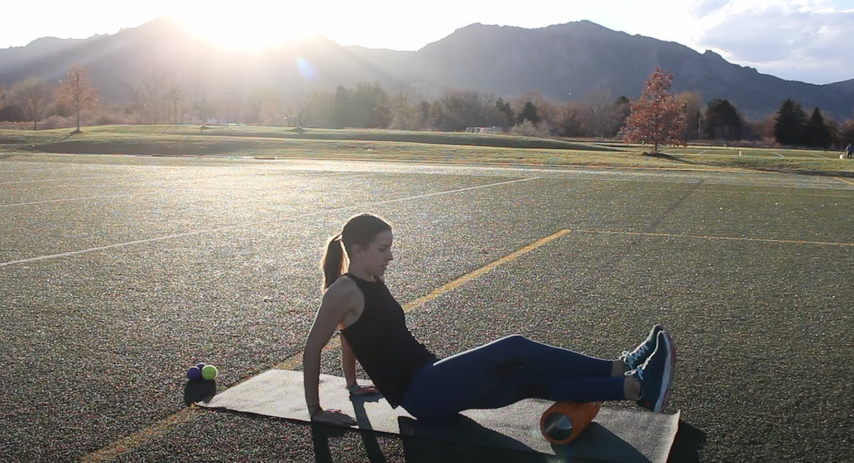
The first step to a proper warmup routine is foam rolling or doing some type of active release. This is often something athletes think they should do post-run, or just remember they can fit it in, but the benefits may be short-lived when done alone.
Current research has shown people can get lasting benefits if they foam roll right before mobility exercise. Think of it this way: if there’s a knot in a rope, you can pull the rope all you want, but it’s not going to reach its full length until the knot is removed. Foam rolling and active release aids in getting rid of the tight muscles and promotes good fascial movement so that you can get a better range of motion during your mobility exercises.
To be realistic, if you’re short on time and nothing feels tight, then I do believe it’s sometimes okay to jump right into mobility. However, I strongly believe in the benefits of consistent foam rolling and active release sessions to keep runners mobile and healthy. Many runners have no idea how tight certain muscles are until issues arise.
Step #2: Mobility
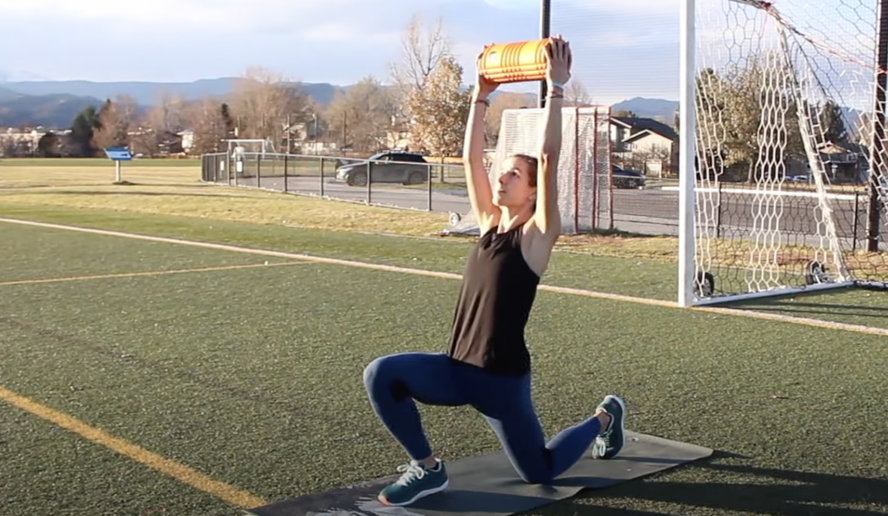
Let’s move on to the second key ingredient, mobility. Mobility is the joint’s ability to move through a range of motion. In other words, doing mobility before a strength session or a run reminds your body to move through its full range of motion instead of staying in a shortened state. Think of it this way, if you just sat at a desk all day, your hip flexors are used to being in a shortened state and your glutes are used to being turned off.
Doing hip mobility would remind your hip flexors on how to lengthen while waking up your glutes. The same goes for sitting in a hunched position for long hours. Doing a little thoracic mobility can open up your chest and allow for a proper counter rotation to your lower body as you run. When runners lose thoracic mobility, they may try to get the counter rotation from their low backs instead. Proper mobility as you run can help you better absorb impact forces while simultaneously allowing you to create more force or allowing you to get more power from your muscles.
Step #3: Activation
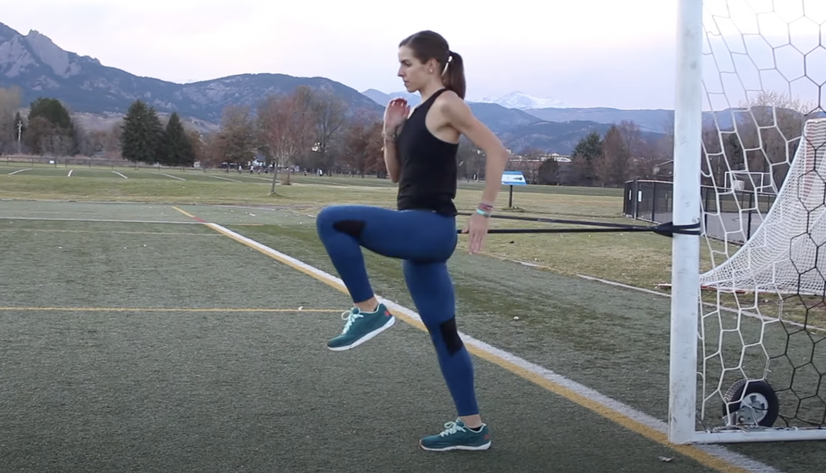
Now let’s tie an active release and mobility with a third key ingredient: activation. Since you took a couple of minutes of foam roll and did some mobility exercises, you can now get the full benefits of your activation exercises because you can fully access the muscles you’re targeting. In turn, this can help prevent chronic tightness. For example, if your hip flexors are chronically tight, when your glutes are engaged, your hip flexors will lengthen as you move. So, your hip flexors are no longer in a chronically shortened state which caused the chronic tight.
The crucial factor with any activation exercise is to make sure you are using the muscles you’re supposed to be using. That mind body connection is essential, especially as you start your run or strength workout. It is entirely possible to look like you’re doing a glute bridge, but not feel your glutes working at all.
That’s not what you want. If you can’t feel the right muscles working, you may need to do a little more active release and then start off with simpler exercises in smaller movements. Different people need to work on different things. But with my experiences as a running coach, my practical advice would be to spend the first couple minutes of your warmup routine, aiming to create good fascial movement and relax the tight muscles.
Next, do a hip thoracic spine and ankle mobility exercise. Lastly, pick a couple of activation exercises to target your different gluteal and hip muscles. Yes, there are exercises that double as both mobility and activation exercises, like a lunge with a side rotation.In conclusion, a proper warmup routine that includes foam rolling or active release, mobility exercises, and targeted muscle activation is critical for preventing injury and optimizing performance. By investing just a few minutes in a comprehensive warmup, you can effectively prepare your body for the physical demands of your workout or competition. So, take the time to engage your muscles fully, relax any tight areas, and prime your body for success. Incorporating these three key warmup ingredients into your routine can help you become a stronger and faster athlete.
Today, Coach Sage Canaday brings you his top FIVE ways of reducing your chance of a running injury. With the weather getting warmer, and races starting to pile on people’s calendars, there’s never a better time to stay injury free!
Although there are ways to get injured from certain “blunt force” type events (i.e., tripping and smashing your knee), we’ll mainly be focusing on the more preventable ways to stay injury-free. A lot of this type of injury risk can mainly stem from the miles that you put on your body. Here’s what Coach Sage has to say about all of this:
“Reducing your chance of getting injured is multi-faceted. There are things besides just your running that can help you stay injury free! For example, a lot of it has to do with being smart with your training. One has to recognize their own strengths and weakness while running with good form. Even though some of your injury risks could be partly due to genetics, there are still a lot of things within your control that I want you to focus on.
Tip #1: Optimize Your Lifestyle!
Optimizing your lifestyle in ways like a balanced diet, enough sleep, and overall taking care of yourself plays a huge role in preventing injury. Things like sleep are such a powerful tool we have at our disposal, and so often we tend to neglect it because “life” gets in the way. Don’t get me wrong – I totally get that it is not feasible for a lot of people to be sleeping 9+ hours a day. However, even choosing to go to bed 30 minutes earlier each night could have a dramatic impact on your overall recovery and injury risk. There are other small ways to take care of yourself, too:
Recovery tools like foam rollers or massage guns.
Focus on lowering your life stressors. Cortisol levels that you would get from lifestyle factors can affect the way your body responds to training.
Drinking enough water. This will not only help you during your runs but also has the ability to give you more energy throughout the day!
Tip #2: Very Gradually Introduce New Training Stress
You want to increase your weekly total volume slowly over time. You need to give your tendons and muscles time to adapt! The one thing I see far too often as a coach is people start to feel good, start running more than they should, run their easy days too hard, and hard days too easy, and it frequently ends in injury. Complete nearly 80% of your runs slow and relaxed – I promise it will reap huge benefits down the road! If you give your body time to get used to the pounding and give your lungs a chance to develop a strong aerobic engine, you’re doing yourself a favor in the long run. Things like speed work, quality long runs, and overall weekly volume should be built up slowly. For example, one week you run 20 miles(32k) and then the following week you run 25 miles (40km). This is the type of gradual progression I encourage.
Tip #3: Don’t go too fast on your easy days!
If you’ve been following me for a while, you’ve probably heard me say this before. But it’s true! Way too many runners, especially those new to the sport, take their easy days too hard. On my easy days, I should be running at a pace that I feel like I can run and have a conversation at all day long. I’m not having to pause to catch my breath, instead I’m talking to you like I would normally in a conversation, but only while running. When I go for my easy runs, I’m still thinking about good running form, but my mentality is to not force anything. Save your energy for when you need to do quality speed and track sessions!
Another thing I try to keep in mind for easy days is to still keep my cadence somewhere between 165 to no more than 190 steps per minute on flat ground on a road. If you have a stride rate that sits somewhere between that, it helps reduce impact stress (i.e., the force your body has to absorb when you strike the ground with each step). If you have a slower stride rate, you end up increasing the amount of impact stress per step. Poor form and injury risk could be a result of this.
Tip #4: Optimize Your Running Form
This plays well into what I was just talking about, because stride rate impacts your running form. However, there are other things to think about with running form as well. Although running form can vary from person-to-person, there are some key factors all runners should consider in order to stay injury free. Instead of diving into the specifics of what goes into a proper running form, you can find a bunch of FREE resources over on Higher Running’s website HERE.
Tip #5: Run on Softer Surfaces and Wear Proper Shoes!
We’re huge advocates for #AnySurfaceAnyDistance, and part of that reason is because running on different types of (soft) surfaces, will also help reduce your risk of getting injured. Generally speaking, trails are usually better than pavement. You can also switch things up by using a treadmill or running on the track. By no means do you always have to be on the lookout for only using softer surfaces, but switching things up with softer surfaces every once and awhile will help.
If you do run a lot on pavement, it’s worth the investment to get properly fitted shoes meant for running. If you have shoes with the correct type of foam, responsiveness, and durability, you’ll notice a huge difference in the “wear and tear” your body experiences. I realize that getting high quality running shoes is expensive, but I like to view it as an investment in myself. Better to spend the cash upfront on quality running shoes than to risk injury because I’m not in the proper footwear.
Hopefully these five tips serve as a starting point to having a long happy, healthy, and injury-free running career! Even if you do get injured, know that you are not alone. A lot of the time injuries is a part of this sport, and knowing how to handle them properly can be a whole other newsletter itself! We’ll see you again next week.
Here are five strategies to use when faced with a problem like the following:
“HELP! What’s the best way to adapt my workouts when [theoretically] I should be getting faster over time?”
We hear this every so often with some of our Higher Running athletes using one of our training plans. For today’s newsletter, Coach Sandi Nypaver thought it would be helpful to explain what to do in instances where you’re not sure about a workout pace. Or even knowing when to run faster paces for workouts because you’re improving over the course of your training cycle:
“It’s important to understand that fitness is a moving target. If you haven’t had a recent race performance to gauge what you should be running your workouts at, then yes, it will be a bit difficult for you to fully know what paces are achievable for you. But all hope is not lost! There are a couple of strategies for working around that.
Strategy #1: Keep a meticulous training log. Keeping a meticulous training log will enable you to look back at your training and understand what kind of paces you were once at, how you felt at the time, and what kind of event you were training for at the time. If you’ve never kept a training log to track all of these types of things, there’s never a bad time to start! Some people like to use online fitness apps like Strava, Garmin Connect, and Training Peaks. Any of these work great, but it’s most important for you to be able to use something that can be referred to years down the road.
If you are someone that’s kept a training log for a long time, look to see how you’ve improved over time. Is there heart rate data for you to compare with a 7:15 mile pace at week 2 versus a 7:15 mile pace at week 10? (Note: we definitely understand there’s a lot of variability and factors that go into heart rate, but this can still be used as a “general” guide). Did you training log note how you felt at certain paces? Again, these are all good things to start doing if you aren’t, and great things to refer back to if you’re someone who does have these data available.
Higher Running Training Plans also come with an Intensity Spectrum Pace Chart that you can use to see approximately how you should be feeling for different types of efforts. By the way – you can also get this for FREE by clicking THIS.We give this to athletes to help them understand how paces should feel, especially if they don’t have an extensive training log or racing history.
Strategy #2: Use a heart rate monitor I already kind of touched on this above, but I wanted to dive deeper into how you can use heart rate when training to your benefit. Again, we don’t want heart rate monitors to be the thing you swear by, because there is a lot of “fickleness” (is that even a word???) when using one during training (read more about that HERE). You can compare your “feel” or “perceived exertion” with your respective heart rate values. Over time, your fitness will improve and you’ll notice that your paces will get faster even at the same heart rate value. Strategy #3: Start off easy and increase the pace if you’re feeling good.If you’re just totally unsure where to start with regards to a “marathon type effort” or “10km type effort” for an interval, I would always caution my athletes to start off easy and then try to pick up the pace if it still feels too easy after the first couple of intervals. On the flip side, if you start to fall off the pace for the given rep, then you know you started off too hard. This may take a bit of trial and error, but over time, I’m confident that you’ll be able to find your flow at the correct paces.
Strategy #4: Be real with yourself when it comes to your goal finishing time. I’m all about setting huge goals and doing everything in your power to make them happen. However, it’s also important to be realistic with our desired finishing times in races to ensure your workouts help set you up for success. In all of our Higher Running Training Plans, we prescribe some workouts that are based off of your goal race pace. This “goal race pace” of yours may have been based off of a previous race finish time, or it may be what you feel like you can do in several months’ time. If it’s the latter, there are warning signs to know if you’ve chosen a goal race time that is too fast (or too slow).
Let’s say you’re at week 12 in your marathon training plan (and approaching taper time), and your workout of the day was 2 mile repeats, if you’re not hitting under race pace for these two mile repeats, your race pace is probably too fast. This same mentality can be applied towards any race distance. To reiterate, it’s best to be on the more conservative side because you can always get in the duration of the workout and increase the intensity later.
Strategy #5: Know when it’s time to increase your paces, and more importantly, when NOT to increase your paces. If you’re 2-3 weeks out from the race and you think you can run faster than what you’ve been doing, it’s best just to keep that in the bank. You don’t want to overdo it before a race, and the best course of action is for you to hit the paces you know you can. This still allows for a good training stimulus while saving yourself for race day.
Knowing race paces and when to increase paces can be confusing. We hope this provides a few suggestions that will help you better understand the best way to approach these unknowns. It may take some time for you to really feel in tune with your body and be able to feel these things out, but we’re confident that you can succeed in doing so over time.”
One of these days we’ll get around to devoting an entire newsletter to periodized training and why that’s important, but we wanted to dive into something a little more specific that we think you’ll find useful: How many hard or “quality” sessions should you do per week? Here’s what Coach Sage has to say:
“I wish there was an easy answer to this question. It sure would be nice if I could tell you to, “do three hard sessions per week in order to get fast!” But unfortunately, it’s a lot more complicated than that. Of course things like this somewhat depend on ability level, how long you’ve been running, and what you’re training for, but there are certain rules that I follow that can be applied to all runners. If I had to summarize it though, the complexity around this issue can be broken up into a few different components which I’ll touch on individually in a bit, and those are: Mental, Periodization, Crash Training, and Speed Training.
Component #1: Mental 🧠Mentally, you simply cannot push and give 100% of effort all of the time. Even longer breaks from hard training throughout the year are necessary in order to be in a healthy headspace. If you push, push, push all the time, there’s really two things that could happen. The first is that you simply get burnt out and you can’t peak for your “A” event you’re training for. Alternatively, you could peak too early because of all the intensity, underperform at your “A” event, and still end up burning out. All this to say, you don’t want to be doing something like 5 hard sessions per week, not even close. It’s also important to clarify that there’s a difference between completing a quality workout versus doing something like 4x100m strides with a full recovery in between. Doing a few strides like that could easily be done every day, but again, you want to be giving yourself a mental break from the hard efforts.If you’re looking for me to quantify the number of hard sessions I think you should be doing in a 7-day period, I would never go over three (3). Even with three quality sessions per week, this would be me at peak fitness when I know my body can handle the stress. In our Higher Running Training Plans, I rarely (if ever) prescribe more than two (2) hard workout days in a 7 day period. One of those sessions may even be a long run, because research shows that longer hard run efforts also have a great training stimulus. All in all, I generally like to aid on the side of caution and have my athletes be slightly undertrained rather than 1% overtrained.
Component #2: Periodization 📊Periodization does not necessitate that athletes follow a strict 7-day calendar cycle. When I’m giving my athletes a training plan that incorporates periodization, what I’m essentially doing is giving them workouts and runs that slowly change over time. I’m not thinking in terms of days and weeks, but rather, in terms of months! These months are viewed as “blocks,” where each block will have a different overall focus. If you’re using a well-designed training plan (such as any Higher Running Training Plan 😉) we will be giving you hard workouts based on where you are in the training block. This will also dictate how many you do and what type of hard workout it is. For example, if you’re in a base building phase (usually the first ~4 weeks of any of our 16 week training plans), we’ll give you a hard workout or two (max) per week that focuses on tempo runs or longer base-building type aerobic efforts.
Component #3: Crash Training 💥What is crash training, you ask? Well, it’s basically where someone would go hard five days in a row and then you take a few days off until you think you’re recovered. This is a perfect example of what NOT to do. I repeat, I do not recommend this method whatsoever. What should one do instead? While, as I already mentioned, focus on 2-3 “hard” days a week with at least 1-2 days of recovery in between each hard workout. This moderate approach will yield more success than something extreme, such as crash training.
Component #4: Speed Training 💨The last thing I wanted to touch on is that there are different types of speed training or “hard sessions.” I know I’ve already alluded to this in previous components, but there are variations of going “hard.” Simply running for as long and fast as you can each day won’t optimize your time spent training. I will just quickly go over the various types of workouts that we like to include in our training plans as the “hard” or “key” workouts. If you’re interested in learning more about these, we explain them in depth in our Training Guide, which is included when you purchase any of our Higher Running Training Plans. -Long Runs: This may sound straightforward, but we actually like to make the most out of our long runs. As opposed to just “slogging it out” to get the miles in, we will sometimes ask runners to speed up the second half of their long run, or to throw in a few sets of race-pace efforts. -Vo2Max: This is where your lungs are burning, and you’d wish the pain would stop. These are used to help refine the top end speed of yours. -Tempo: The “infamous” 20-minute tempo run is a favorite workout of ours. This effort would start off feeling comfortable but towards the end you’d wish you could be done.Fartlek: The “speed play” type workouts typically use variations of things like “2 minutes hard, 1 minute easy” that allow you to not focus so much on the mileage or pace.
We hope this gives you a little bit better of an idea of how often you should do hard sessions, when to incorporate them, and what the different types of hard workouts there are. If you’re interested in a training plan for #AnySurfaceAnyDistance, be sure to check out HigherRunning.com to browse from 20+ plans for any distance and any level of experience.
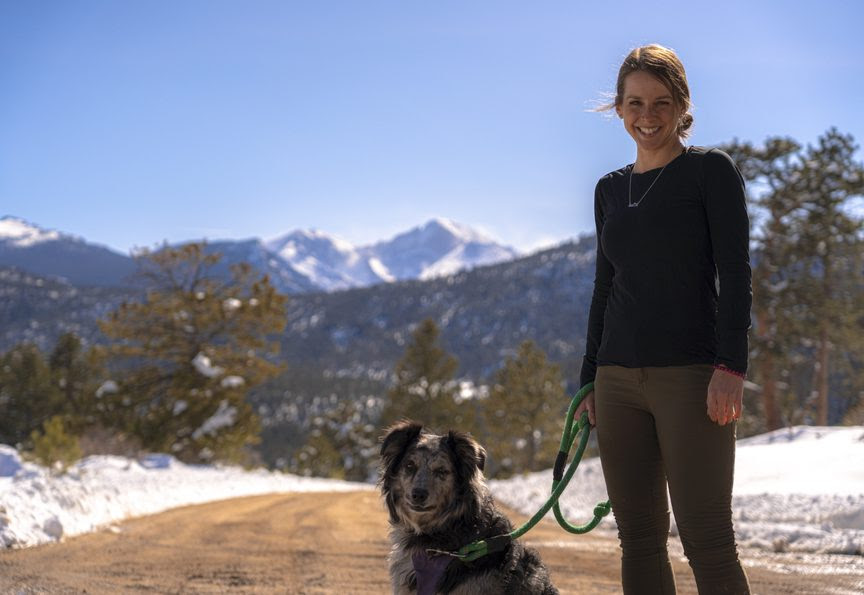
First, here’s a little bit more about who Coach Ray is: Coach Ray is a Lydiard II certified coach who has been part of the Higher Running team for 6 years. She has competed in numerous trail races, from 5 miles to 100 miles. Most notably, she came in 2nd at Burning River 100 in 2011, 1st place at Virgil Crest 100 in 2012, 1st place at Forget the Pr 50k in 2014, and 1st place at Leatherwood Ultra 50 Miler in 2015. In August of 2015, Ray thru-hiked the 500 mile Colorado Trail with her pup and adventure partner, Pacer (aka. Supergirl). In 2019, the pair completed their goal of summiting 40 of Colorado’s 14ers. At Higher Running, she enjoys coaching runners embarking on new adventures and who use running as a modality to discover more about themselves. Ray’s hobbies include reading, volunteering, Yoga, snowshoeing, rollerblading, and exploring new places with her daughter(dog).
Okay, let’s jump right in: “In my coaching experience, there are a few things that runners can do that almost always yield positive results for them and their running. First, I should explain that my passion for coaching falls in line with my mission of helping others reach their full potential in all aspects of life, and therefore, I carry a strong mind/body/spirit focus in my coaching. Of course, I know the importance of using the science when designing any of my athletes’ training plans. But when I’m coaching my athletes, I also have them focus on the following: Mindset I look at mindset as “everything.” Mindset is what informs us of what we can and can’t do as athletes. In terms of creativity, I recognize that my athletes are all dynamic and unique individuals. They all have different things going on in their life, their bodies adapt differently, they respond uniquely to various stimuli, so I’m constantly trying to figure out what’s the best thing for them at that specific time. What this means for other people reading this is that you have to recognize that mindset will be the determining factor of how you approach a certain training situation. What do you need in this current situation you’re in? Your mindset will help determine this. Listening to your body This is something I think a lot of people underestimate when trying to improve themselves as runners. If they notice a niggle (or some type of minor twitch), many people tend to ignore it because they treat it as something they can work through. I’m sure many of us have heard the quote that “pain is weakness leaving the body.” While there definitely is good pain to fight through, all-too-often people try to train through injuries. Our bodies hold so much wisdom and gifts for us, and they’re designed to heal. However, we have to listen to the messages our body is giving us in order to heal.
Listening to yourself To tag along on my previous point, we must be willing to listen to ourselves. A lot of the time, people know what they’re supposed to do and how they should respond if they take a moment to think about it. But the problem is, is that most people don’t take time to listen to their inner voice guiding them to do what’s best for their body. This is something I still work on myself! Just the other day, I took two days off of running, and I was so proud of myself because I knew that my achilles heel needed it. Listening to yourself can be so difficult because we live in a culture that doesn’t necessarily value our intuition or what our body is saying to us. As a result, our logical, rational mind overrides what our intuition and body is telling us. The point here is to lean into our body’s own natural wisdom.
Dealing with Bad Races / Performances I think it’s fair to say we’ve all had bad races. Or, even if you don’t like to race, we’ve gone out on a run and felt terrible because nothing went the way we planned for it to go. I remember one time when I was racing “Forget the PR 50km” in Mohican, OH, and I totally underperformed from what I thought I was capable of doing. I wanted at least top three, and I didn’t get it. At the end, I was sulking, didn’t talk to anybody, and crying at the end. To be clear, I think it’s totally okay to cry at the end of a race / performance that didn’t go accordingly to plan. However, because I sulked and shied away from people, that didn’t feel good. I had two people come up to me after the race and let me know that, “hey, it’s okay! It’s just a race, and this doesn’t define you.” This eventually helped me to realize what’s important to me in life. So even after a bad races, now I still like to hangout with people and connect with them.
At the end of the day, that’s really what it’s all about. I guess all this to say, is that after a “bad” (however you define that) performance, it’s okay to feel sad because I know you worked so hard for it. However, the flip side of that is there is still an opportunity to connect with the amazing humans around you. Don’t define yourself only as a runner, but I encourage my athletes to strive to be good athletes and good people to everybody at the end of the day. That’s all that I had for this week! There are so many more things that one can do to yield positive results in their running, but these were just a few things that first came to mind.”
As coaches, we often get asked, “I live nowhere close to mountains or even a hill that would take me longer than 30 seconds to run up. How am I supposed to train for a race with a bunch of vertical?”
We know a lot of people don’t have access (or the time) to find terrain that would match the mountainous race they want to train for. They may have a fast marathon time, but every time they’ve tried to translate that flat, road marathon speed into a mountainous race, it just never goes according to plan.
Long story short… YES, it is definitely possible to train for hilly and mountainous races despite not having readily available access to the terrain you’ll be racing on. For today’s newsletter, Coach @SandiNypaver will take you through her tips for training for a mountainous race if you consider yourself someone who is a “flatlander.”I’ll try to put you into one of my athlete’s shoes: they live and train in Denmark, and they’re currently signed up for Transvulcania, a 72km race with 4600m (~15,000 feet) of climbing. Needless to say, Denmark isn’t exactly known for its mountains and Transvulcania is known for being an extremely difficult Ultra Marathon. Here’s how I would tell them how to prepare:
Step 1: Do Your Research You may find yourself not being able to travel to the race early enough to get a true sense of the terrain. Or, it’s not feasible to take a separate trip out to scope the route. Something like Transvulcania is on an exotic island, so you may only have race day to really take in the actual landscape. Don’t sweat it! These days, there are plenty of information available on online forums, videos, and websites for almost every ultramarathon out there, with a few exceptions (looking at you, Barkley Marathon…). We encourage our athletes to try to get a sense of the terrain by Youtubing videos of other people doing the race. Add the location of the race to your weather app weeks in advance so you can try to see what could possibly happen throughout the course of the race. Use an app like Strava so you can look at people who have done the course before. This way, you can see the gradients some of the hills are.
Step 2: The Treadmill is Your Friend I’m sure this isn’t the answer you were looking for, but the treadmill can be an amazing tool for those needing to practice gaining some serious vertical. By no means am I saying that you need to run every run on this, but even if you can get a key workout in here and there on the treadmill and incorporate workouts with an incline that would mimic your race terrain, you’ll have a tremendous benefit from it. Even if you just use the treadmill to do an all uphill “power hike,” it will help you out tremendouslyNote: If you’re unsure how much vertical you should add to your training plan, or what good workouts are for ultra marathons, we explain our thoughts in detail in our Training Guide (included with all training plan purchases). Our Ultra Marathon Training Plan will give you even MORE tips and tricks for uphill and downhill efforts.
Step 3: Search far and wide for the longest hill in your area Yes, I realize this newsletter is for people who are not able to access hilly and mountainous terrain. But, I encourage you to try and find a hill or two somewhere that you could make work. Again, even if you can only get to it one day a week for a key workout, this will really help your climbing abilities. A staircase or bleachers can also substitute vertical gain. Once you’ve found your coveted hill, do hill repeats at an easy to moderate pace. On the flip side of this all, doing this will also help prepare your quads for the downhill. We often find that people underestimate the amount of stress your quads take on the downhill, and you don’t want them to give out halfway through the race!
Step 4: Before the race starts, mentally prepare yourself We offer a lot of mindset tips in our ALL IN Add On Training Guide, but to briefly touch on this topic: I know going into a race with a lot of unknowns can be super scary (such as running a mountain ultra-marathon when you’ve barely trained on mountains). Going into the race, and even during your training cycle, continually tell yourself things like: “I’m going to do the best I can.” “I’ll pay attention to where I can step.” “I’ll work and move with the terrain, and take things at my own pace.” These mantras and positive self-talk truly helps.
Step 5: When it comes to race day, start off even easier than normalOf course, you are there to race and push your body, but I want my athlete to start off quite easy, especially at a race like Transvulcania. Don’t worry what others are doing around you, but rather focus on yourself. You want to be feeling good for at least the first half of the race, otherwise you may be in for a long day. Most people take on the first climb of the race way too fast, way too hard, and way too early, and you will pay for it later on. If you start conservative at the base of the hill, you can better pace yourself all the way up. Furthermore, you can always speed up if you decide to go slow at the beginning of the hill. If you start too fast, well, you may be regretting it halfway through.
Even though it’s easier said than done, try to view running a mountainous ultra as a challenge if coming from little-to-no mountain experience. I know it’s uncomfortable, but I’ve grown the most in life with these types of situations. Going in with a positive mindset can be the difference of you walking and wanting to quit versus feel good and taking the hills at a good tempo.


 to use when faced with a problem like the following:


 I look at mindset as “everything.” Mindset is what informs us of what we can and can’t do as athletes. In terms of creativity, I recognize that my athletes are all dynamic and unique individuals. They all have different things going on in their life, their bodies adapt differently, they respond uniquely to various stimuli, so I’m constantly trying to figure out what’s the best thing for them at that specific time. What this means for other people reading this is that you have to recognize that mindset will be the determining factor of how you approach a certain training situation. What do you need in this current situation you’re in? Your mindset will help determine this.
 You may find yourself not being able to travel to the race early enough to get a true sense of the terrain. Or, it’s not feasible to take a separate trip out to scope the route. Something like Transvulcania is on an exotic island, so you may only have race day to really take in the actual landscape. Don’t sweat it! These days, there are plenty of information available on online forums, videos, and websites for almost every ultramarathon out there, with a few exceptions (looking at you, Barkley Marathon…). We encourage our athletes to try to get a sense of the terrain by Youtubing videos of other people doing the race. Add the location of the race to your weather app weeks in advance so you can try to see what could possibly happen throughout the course of the race. Use an app like Strava so you can look at people who have done the course before. This way, you can see the gradients some of the hills are.
 I’m sure this isn’t the answer you were looking for, but the treadmill can be an amazing tool for those needing to practice gaining some serious vertical. By no means am I saying that you need to run every run on this, but even if you can get a key workout in here and there on the treadmill and incorporate workouts with an incline that would mimic your race terrain, you’ll have a tremendous benefit from it. Even if you just use the treadmill to do an all uphill “power hike,” it will help you out tremendouslyNote: If you’re unsure how much vertical you should add to your training plan, or what good workouts are for ultra marathons, we explain our thoughts in detail in our Training Guide (included with all training plan purchases). Our Ultra Marathon Training Plan will give you even MORE tips and tricks for uphill and downhill efforts.
 Yes, I realize this newsletter is for people who are not able to access hilly and mountainous terrain. But, I encourage you to try and find a hill or two somewhere that you could make work. Again, even if you can only get to it one day a week for a key workout, this will really help your climbing abilities. A staircase or bleachers can also substitute vertical gain. Once you’ve found your coveted hill, do hill repeats at an easy to moderate pace. On the flip side of this all, doing this will also help prepare your quads for the downhill. We often find that people underestimate the amount of stress your quads take on the downhill, and you don’t want them to give out halfway through the race!