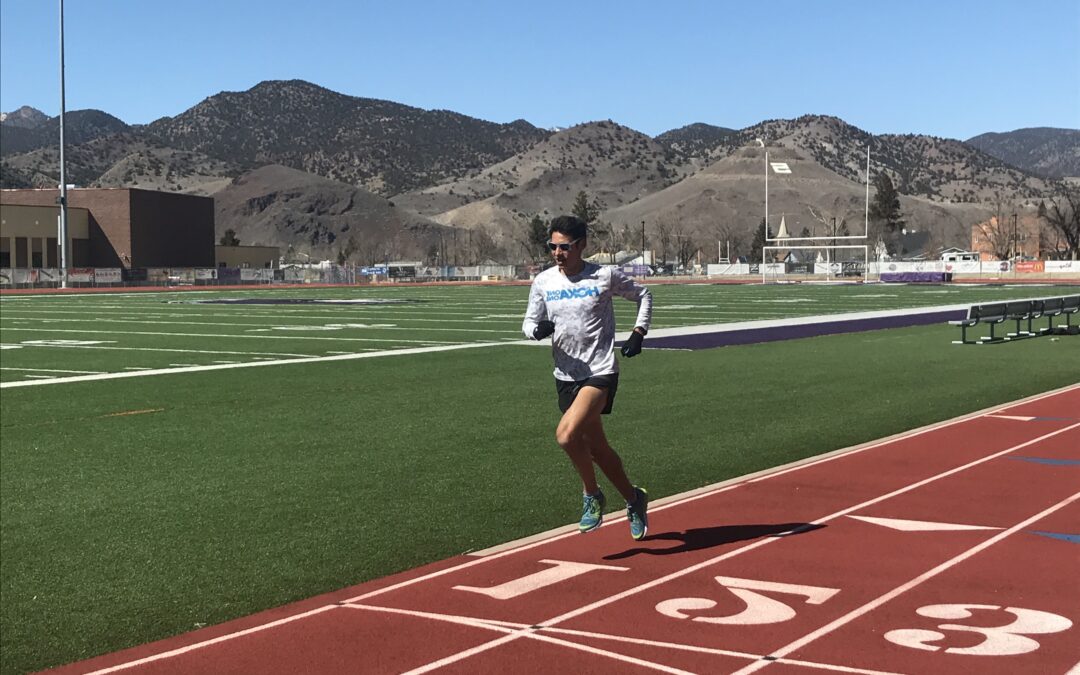
It’s okay to be a little tired. It’s not okay to be exhausted.
Feeling a little worn out is normal, especially when you’re training hard—but there’s a line between manageable fatigue and full-blown exhaustion.
When you’re tired you might want an extra cup of coffee, but you can still think clearly, get tasks done and generally feel okay.
When you’re exhausted, it’s harder to focus, you struggle to get things done, and your mood often declines. You may start to see your performance decline as well. Extra caffeine may mask your low energy a little, but you’ll still feel far from 100%. Being constantly exhausted from training can lead to illness, injuries or underperforming. More importantly, it can take the joy out of running.
Even during your peak training weeks, you should enjoy what you’re doing and feel pretty good, even if you’re a little tired some days. This is how you know your training smart and in a position to improve.
We can’t stress it enough: listen to your body. Here at Higher Running, we create running training plans that allow for flexibility, adaptability, and give you tips for when things don’t go the way you expected.
Coach Sage Canaday discusses the ‘fartlek’ workout. He’ll explain…
What a fartlek workout is
Why it’s one of his favorite types of workouts to do
A few workout examples to work with!
What Is a Fartlek Workout?
‘Fartlek’ is a Swedish word that translates to ‘speed play,’ which is fitting because it’s all about enjoying your running with unstructured intervals! A fartlek workout involves alternating between running fast and recovering at a slower pace, but without strict timing or structure. For example, you might sprint to the next lamppost or tree, then jog to catch your breath, and repeat this using various landmarks along your route. The sprint distance and recovery time can vary, making it a flexible, fun way to incorporate speed work. But overall, it’s a great way to add variety to your training while building speed and endurance.
Why The Fartlek Is a Favorite of Mine
Fartlek training doesn’t require a set pace, and there’s no need to check your GPS constantly. You run by feel and intuition, which is a key aspect of effective training—learning to read your body’s signals. You might choose to wear a heart rate monitor, or you might not. I personally love the fartlek workout because of how flexible you can make it: on an easy day, if you feel good, you might sprint on the uphills and jog the downhills, or vice versa. The intervals don’t have to be precise—whether it’s 30 seconds, 45 seconds, or a minute, what matters is that you’re getting a good heart rate spike.
In many of our Higher Running training plans for half marathons, marathons, and ultras, we incorporate fartlek workouts. You could even add a fartlek to a run spontaneously. For example, during a 20-mile or 18-mile long run, you might do some fartlek intervals in the second half.
Fartlek Workout #1
A structured example of a fartlek workout could involve six sets of three-minute hard efforts. For instance, you might run three minutes at your 10K race pace or effort, followed by a two-minute recovery jog. This workout consists of six sets of three minutes fast with two minutes easy between each, totaling 18 minutes of high-intensity work at around 85–90% of your maximum heart rate.
Including the recovery jogs, this 30-minute workout keeps your heart rate elevated for most of the session. If you check your heart rate data afterward, you’ll see spikes where your heart rate rises during the hard efforts and drops during the recovery jogs. This pattern also appears in your leg turnover, as you develop speed, stimulate fast-twitch muscle fibers, and improve running economy at your 10K pace. Furthermore, this type of workout helps improve stride rate, leg turnover, and reduce ground contact time.
Ultimately, this workout is a great way to keep your heart rate elevated over 75% of your maximum for 30 minutes with peaks over 90%. It’s an unstructured form of interval training that provides an excellent lactate threshold stimulus by helping clear lactate, similar to a tempo run.
I like to think of it as a ‘pre-VO2 max’ workout. It’s not excessively hard, and you can adjust the intensity on the fly. You don’t have to hit a strict 10K pace or specific speed; just go by feel. For example, if you’re tired from work or didn’t sleep well, you can reduce your effort instead, and this approach can be more manageable than facing tough splits on a track workout.
Fartlek Workout #2
It you are looking for a more structured, track-focused, fartlek session, you might run 400-meter repeats at 5K pace, followed by 200 meters at a “float” recovery pace. This means running 400 meters in about 90 seconds, then doing a lighter jog for 200 meters in about a minute. You could repeat this for a full 5K without stopping. Though more formal and measured, this workout follows the same principles, keeping your heart rate and speed oscillating, which provides similar benefits.
A continuous workout like this keeps you moving without stopping to catch your breath. You accelerate, ease off, and repeat, but it’s all fluid. That’s the beauty of fartlek training—you can do it on trails, up and down hills, using landmarks rather than constantly checking your watch. It’s a great lactate threshold workout that can even be added to the end of long runs.
In summary, fartleks are an excellent way to ease into more structured interval training while developing speed and running economy. They’re beneficial for any distance runner, whether training for a mile or 100 miles. Fartlek training provides a fun, low-pressure way to work on key aspects of your running fitness.
I hope this helps give you a better idea of what a fartlek workout is. Give it a try this week!
Coach Sage Canaday shares his KEY workouts and training tips to run a sub 22-minute 5k.
With cross country season and fall 5k/10ks right around the corner, I thought I would share some of the most popular workouts and training tips I give my athletes so that they can run their best 5k possible. This advice is best applied towards those looking to run a sub 22-minute 5k, but the principles can be applied to nearly any time goal!
Let’s get the math out of the way: In order to run a sub 22-minute 5k, you will need to be able to run 7 minute per mile pace, or about 4:24 per kilometer pace for 5 kilometers or 3.1 miles.
Consistency is Key
The first tip is something you’ve probably heard me say before, so I won’t harp on it too much. But it’s this: To improve in distance running for events from 5k and up is to increase your weekly mileage, volume, and consistency. If you’re only running three times a week, it’s much harder to improve your time compared to running four or five times a week.
This doesn’t mean you need to run hard every day or do specific workouts like track intervals daily. Instead, aim to run at least five kilometers, or up to ten kilometers, at an easy, conversational pace where you can talk without being out of breath. You may need to start with shorter runs and gradually build up, including occasional rest breaks. The key is to be consistent, run more frequently each week, and include distances of at least 5k in your training.
The Twenty Minute Tempo Run
For 5k racing, a key workout is a 20-minute tempo run, which you can do once a week or every other week. Start with a one- or two-kilometer warm-up jog to loosen up, followed by some strides.
Then, move into the 20-minute tempo run at about 80-85% effort. For example, if you’re aiming to break 22 minutes in a 5k, running at a 7-minute mile pace or 4:24 per kilometer, your tempo pace should be slower. For a 22-minute 5k runner, the tempo pace would be around 7:25 per mile or 4:35 per kilometer. This pace should feel comfortably hard but not all-out; it’s a steady effort designed to help you build consistency.
As you get in shape for your sub 22-minute goal, you’ll be able to race at a pace that’s about 25 seconds per mile or 16 to 20 seconds per kilometer faster than what you would do for this 20-minute tempo, assuming 100% effort.
Key INTERVAL Track Session: 6 x 1k Repeats
Another key workout to improve 5k fitness is a traditional track interval session, which you can do once a week or every 10 days. This involves running six 1,000-meter repeats (six times one kilometer) on a standard 400-meter outdoor track.
Start at the 200-meter mark, run two and a half laps, and finish at the start/finish line. Aim to run each kilometer in 4:20 to 4:15, with a three-minute rest between each repeat. During the rest, you can walk or jog lightly before starting the next repeat.
This workout totals 6 kilometers of running at a pace faster than your goal 5k race pace. The purpose of interval sessions like this is to help you develop speed, build muscle memory, and train your heart and lungs to deliver oxygen more efficiently. This is a crucial workout for improving your 5k fitness!
Key SPEED Session: 8 x 400m Repeats
The final key workout in any well-rounded distance running program for improving at the 5k is a traditional speed workout involving shorter repeats at a higher intensity. A typical session would be eight 400-meter repeats (one lap around a standard outdoor track), each run in 1:36 to 1:39. Aim for 2:30 of rest in between each interval. This totals two miles of high-intensity work at a fast pace, helping to improve your running economy, spike your heart rate, and make 5k race pace feel more comfortable.
This speed work complements the 20-minute tempo run and the 1,000-meter repeats, rounding out your training program. There is a lot of misinformation online about quick fixes or magic workouts that promise to shave minutes off your 5k or 10k time with minimal effort. However, reaching your potential in the 5k, 10k, or any distance running event requires a well-rounded training program that includes a variety of workouts at different speeds, along with building your easy base aerobic mileage. This balanced approach is what will lead to significant long-term gains!
Marathon training isn’t rocket science, but there’s a few things to keep in mind.
Today, Coach Sage Canaday is discussing key components for marathon training!
Aerobic Base:
I see significant improvements in athletes who start running 30-40 miles (50-60 km) per week and gradually increase to 50-60 miles (80-100 km) per week without injury. This involves mainly easy pace mileage, about 80%, which is manageable but depends on several factors such as age, training history, and background in the sport.
Consistent, gradual mileage increase, proper nutrition, and lifestyle balance are also crucial. Most people benefit from running more frequently, transitioning from four days a week to five or six, and sometimes even seven days a week or twice a day. However, running twice a day usually applies to those running over 70 miles per week.
More Isn’t Always Better
I ran a marathon in 2:16, with a PR of 2:16:52. One lesson I learned is that more training isn’t always better. I ran 130-140 miles a week for years, but sometimes I overtrained, which actually left me tired and slower! I ran several minutes faster with less mileage, more targeted workouts, and by not overextending myself.
Effective marathon training involves several key components. After building your aerobic base with consistent, high mileage over months, you need variations in your long run workouts. It’s not just about hitting mileage numbers like an 18-mile long run, but about incorporating different intensities.
In our Higher Running Boston Qualifying Marathon Plan or BQ plan, available at Higher Running, long run workouts include segments at marathon goal race pace or even faster in the second half. These runs teach you to speed up when tired, mimicking race conditions where you enter with tired legs and low glycogen stores, even on a high-carb diet. It also helps with adaptations in fat burning and practicing your hydration and nutrition strategy during the run. Long runs aren’t just to “get in the miles”, there are times when they become demanding workouts that involve speeding up or running steady paces close to your marathon race pace when tired to mimic race-day.
The 80/20 Rule:
An 80-20 split between easy and hard runs has been recommended by coaches for decades. While recovery runs and easy pace runs are essential, incorporating quality workouts is crucial to reaching your marathon potential. Additionally, having a good nutrition and hydration strategy during the race optimizes performance and speed.
Intensity should be included in small amounts. From my experience running professionally post-college and training with an Olympic development group, it’s clear that interval workouts and faster workouts than your goal marathon pace are necessary. Many runners come from 5k, 10k, and half marathon backgrounds, which helps in preparing for the marathon.
Workouts around 10k and 5k pace should be used sparingly. For example, if your marathon goal is to break three hours (6:52 per mile pace), you should do some workouts closer to six-minute mile pace or threshold workouts faster than half marathon pace. These can include 800-meter repeats, kilometer repeats, or mile repeats at around 6:20 per mile pace.
These high-intensity workouts improve mechanical efficiency, increase aerobic capacity (VO2 max), and make marathon pace feel easier. They should be incorporated mainly in the last eight weeks before the marathon but can also be included early in the training cycle. Our training plans at Higher Running follow this approach, starting with shorter intervals to build efficiency, improve running form, and enhance aerobic capacity.
Race Day (and a quick note on nutrition)
A final note on marathon success is the importance of race day pacing. Conservatively pace yourself in the first 10K, relax, and warm up into the race. The goal is to maintain a steady pace in the last 10K. The key to a successful marathon is not falling apart in the final stretch. If you can speed up significantly in the last 10K, you likely paced yourself too conservatively. Most runners struggle in the last 10K, so it’s crucial to reach the 20-mile mark (32 kilometers) and maintain your pace.
Even if you slow down by 10-15 seconds per mile (or 8-10 seconds per kilometer), you can still run a good marathon. The real issue arises when you slow down by 30-40 seconds per mile (or 20 seconds per kilometer) in the last 10K, leading to significant time loss. Effective pacing involves running at a manageable, consistent pace with even splits. If you’ve raced a half marathon, use it as a benchmark. For example, to break three hours in a marathon, you should ideally have a half marathon time of at least 1:25-1:26 to aim for two 1:30 splits.
Nutrition is also crucial. Taking in carbs every 8K or 5 miles, either in gel or liquid form, helps maintain energy levels. Relying solely on fat burning without consuming calories during the race can hinder your performance. Hydration and regular intake of carbs can prevent hitting the wall and ensure you run to your potential.
In summary, successful marathon running involves balanced pacing, effective nutrition, and hydration strategies. Learning from past experiences, both successes, and failures, helps in achieving better results! I hope you find this helpful. Be sure to forward this email to a friend who you think would find these tips interesting!