For runners, improving performance isn’t just about logging miles—it’s also about building strength in smart, strategic ways. One often-overlooked aspect of strength training is the type of muscle contractions we’re using. Incorporating different types of muscle contractions—concentric, eccentric, and isometric—can play a major role in boosting efficiency, reducing injury risk, and helping you feel stronger through every stride.
Let’s break down what each of these contraction types is, and how they benefit runners.
Concentric Contractions: Building Power and Propulsion
Concentric contractions happen when a muscle shortens while generating force. In running, this occurs when you push off the ground or drive your knee forward during a stride.
Why it matters for runners: These contractions help develop explosive strength and forward propulsion. Training concentrically can improve your speed, sprint ability, and uphill running power. Exercises like lunges, squats, and step-ups with an emphasis on the lifting phase are great examples.
Eccentric Contractions: Controlling Movement and Absorbing Impact
Eccentric contractions occur when a muscle lengthens under tension—like when you control your descent on a downhill or absorb the landing from a jump.
Why it matters for runners: Eccentric training improves your ability to absorb force and decelerate safely, which is especially important for preventing overuse injuries such as runner’s knee or hamstring strains. It also strengthens connective tissues and improves muscle resilience. Think slow, controlled lowering in strength exercises, downhill running drills, and Nordic hamstring curls.
Isometric Contractions: Stabilizing and Supporting
Isometric contractions involve generating force without changing the length of the muscle—like when holding a plank, balancing on one leg, or stabilizing yourself on uneven terrain.
Why it matters for runners: Isometric strength helps improve joint stability, posture control, and form during fatigue. This is especially critical for core, hip, and ankle stability on technical trails or during long efforts. Isometric holds, wall sits, and single-leg balance work are great additions to your routine.
Putting It All Together
Each contraction type plays a unique and essential role in running performance:
Concentric: Power and propulsion
Eccentric: Control and injury resistance
Isometric: Stability and posture
By intentionally training all three, runners can create a more balanced and durable body—one that’s more efficient, injury-resistant, and capable of handling the demands of both the road and the trail.
Today, Coach Sandi Nypaver is going to guide you through some strength tests that you can do at home to check whether your body is evenly balanced or if there’s anything you need to work on. Many of these tests are similar to what a physical therapist might have you do, but she’ll help you learn how to perform them yourself and understand what to look for.
At home, self-performed strength tests help to see if there’s anything you need to work on to keep your body functioning optimally. As a runner it’s important both sides of your body show up equally and this newsletter will help you do that. If you’re in pain it’s always good to go see a doctor and/or specialist, preferably one who is well trusted by runners. If there is something you need to work on (I certainly have a lot to work on!) don’t view it as a bad thing. It’s a good challenge and the process can be rewarding when you notice improvements.
Let’s get started:
🥇: The Bridge Test Alright, the first exercise is a simple glute bridge. Make sure your back is flat on the floor and keep your pelvis stable in this position. Raise your arms so they don’t assist you, and then lift your hips straight up.
What you’re checking for is whether you can maintain proper alignment of your pelvis. If you feel your pelvis drop, take note. Also, pay attention to where you feel the effort. Are you feeling it in your glutes or your hamstrings, or both? Ideally, you should feel it in your glutes, and even a little in your hamstrings. That’s a good sign.
a. Test Questions: What muscles do you feel working the most? Does your pelvis drop or can you keep it stable? Does one side feel different than the other? Do you need to work on strength and/or activation?
b. Goals: Work towards keeping your pelvis stable and having your glutes take on most of the load. It’s okay if you feel your hamstring working a little, but your hamstring should not take on more work than your glutes.
Bonus Tip: Keep your spine stable. You should not be feeling this in your lower back.
🥈: The Squat Test Now, let’s do a squat test. And note that I’m using a hiking pole here – you’ll want something similar. First, make sure your spine is neutral, and align your toes with the bar of the chair. From there, try to squat down.
What you’re checking for is whether your knees want to move forward, preventing you from going lower. If that happens, it’s a sign you’re relying too much on your quads. What you want is to get your butt back while keeping a neutral spine and maintaining a good hip hinge.
If you’re using your quads more than your glutes, you’ll struggle to go down. Instead, aim to engage your glutes and keep that hip hinge, which is important when you’re running as well.
a. Test Questions: If you place a chair or box in front of your toes, do you find it hard to squat/does it feel unnatural? What muscles do you feel working the most, your quads or glutes?
b. Goals: Get that booty back and working! You may feel your quads working, but you want to aim for a glute dominant squat. Get the hip-hinge pattern right, keeping the spine stable.
Bonus Tip: Our bodies like the neuromuscular patterns we already have formed. Some of you will be able to do this exercise without being able to apply to your running right away. Keep working at it. You’ll get there!
🥉: The Single Leg Squat This is a typical single-leg squat. The key here is to compare how each leg moves.
Now, what you want to avoid is your knee collapsing inward or moving too far out to the side. Try to keep everything aligned, engaging your glutes and even a bit of your knee as you come up.
Focus on your knee position and check if you’re using both legs in the same way. Again, you don’t want your knee to collapse inward as you squat down. Keep your legs straight and make sure you’re engaging your glutes on both the way up and down.
a. Test Questions: What muscles do you feel working the most? Does your foot/ankle feel stable (can you balance here)? Does your knee want to collapse in? Is there a difference between sides?
b. Goals:
i. You want good lateral hip stability, so your knee should aim in the direction of your toes, not inward. This motion is controlled by your hips.
ii. Feel stable in your feet and ankles, keeping your weight even distributed in your foot tripod. It should not feel like all your weight is in your heel or forefoot.
These are just a few simple strength tests you can do right at home, either with the help of a friend or family member watching you, or by videotaping yourself to see how you’re moving. As you do these exercises, make sure to pay attention to which muscles you’re engaging!
I hope these tests help you gauge your strengths and weaknesses. Happy running!
For today’s newsletter, Coach Sandi Nypaver gives you a few of her favorite active release techniques!
Ideally, these active release techniques should be the first part of your warm-up; whether you’re headed out for a run, about to do a strength session, or even just before you do some mobility or static stretching. If you jump right into mobility or stretching, you may not actually release your tight muscles. Doing active release first will loosen up your muscles so you can then fully benefit from mobility exercises and get the range of motion you need for your best running form!
I know this may just seem like another thing you should do but don’t really want to do. My advice is to make it a goal to do this for only a month and see if it helps! Notice if you feel better on your runs, especially that first mile. Sometimes one tight muscle can screw up your entire stride.
Also, know that a little is better than nothing. I think a longer, fully body active release session once a week is a good idea, but most days a couple of minutes is more than enough. Personally, I feel that listening to upbeat music and doing the active release is a great way to get both my mind and body ready for my run. Finally, for each exercise, there’s no “right” amount of time, but I usually find myself doing 30 seconds per exercise, per side. If you feel like you need to do a longer amount of time on a certain side or muscle, go for it. However, you shouldn’t go longer than a minute. If the muscle doesn’t release in a minute’s time, it probably won’t release today.
Before we start off, you’ll want to have on you a lacrosse ball, a tennis ball, and a chair. Or, you can also use a foam roller for any of these exercises. Alright, so here are a few of my favorite exercises:
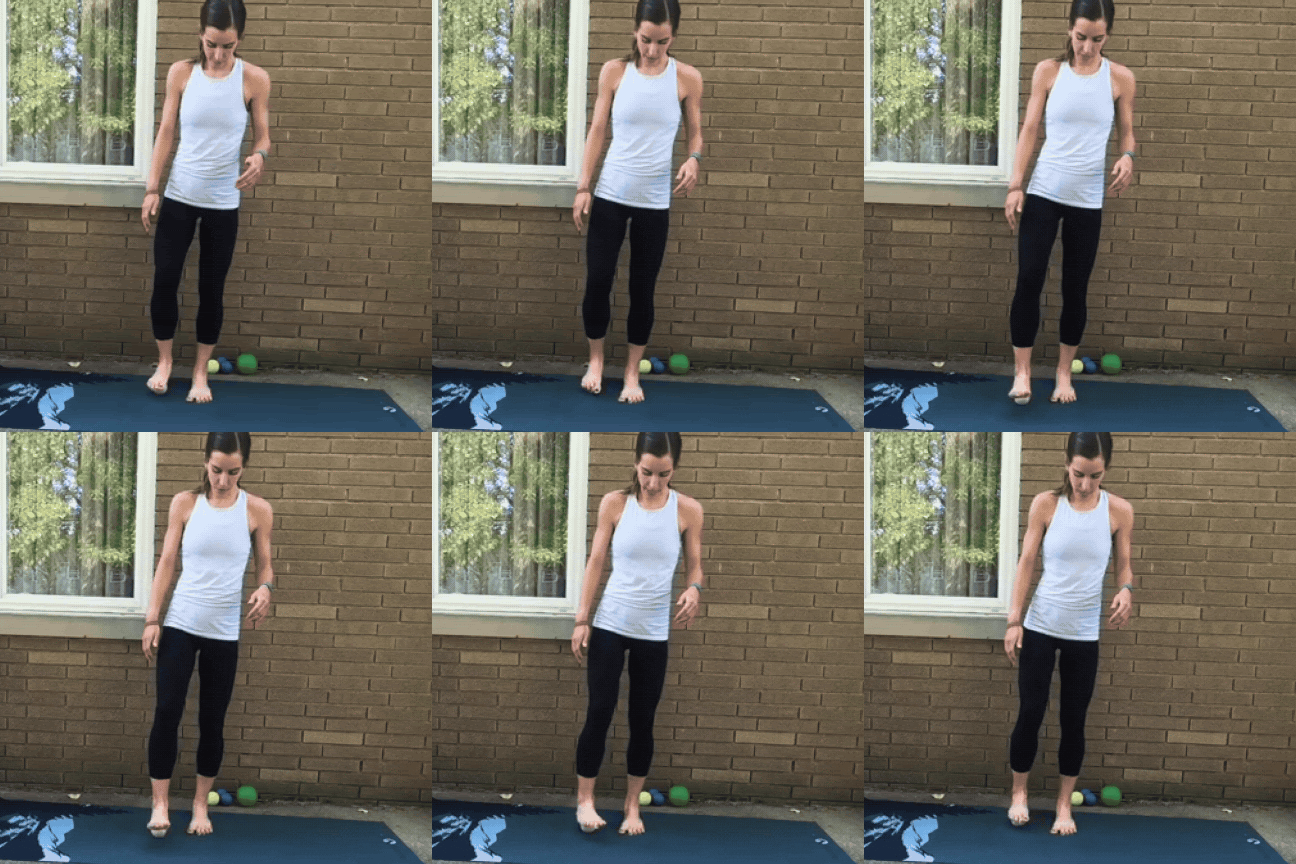
Exercise #1: Feet Active Release
I start by rolling around to check for any tight spots. If I find one, whether it be in the arch of my foot or near my big toe, I’ll focus on that area. The goal is to activate the muscles on the way up, then fully relax as I bring my foot back down. I’m just rolling gently here. You can use a tennis ball or lacrosse ball, or you could even use a golf ball if you prefer. Just remember to do both sides!
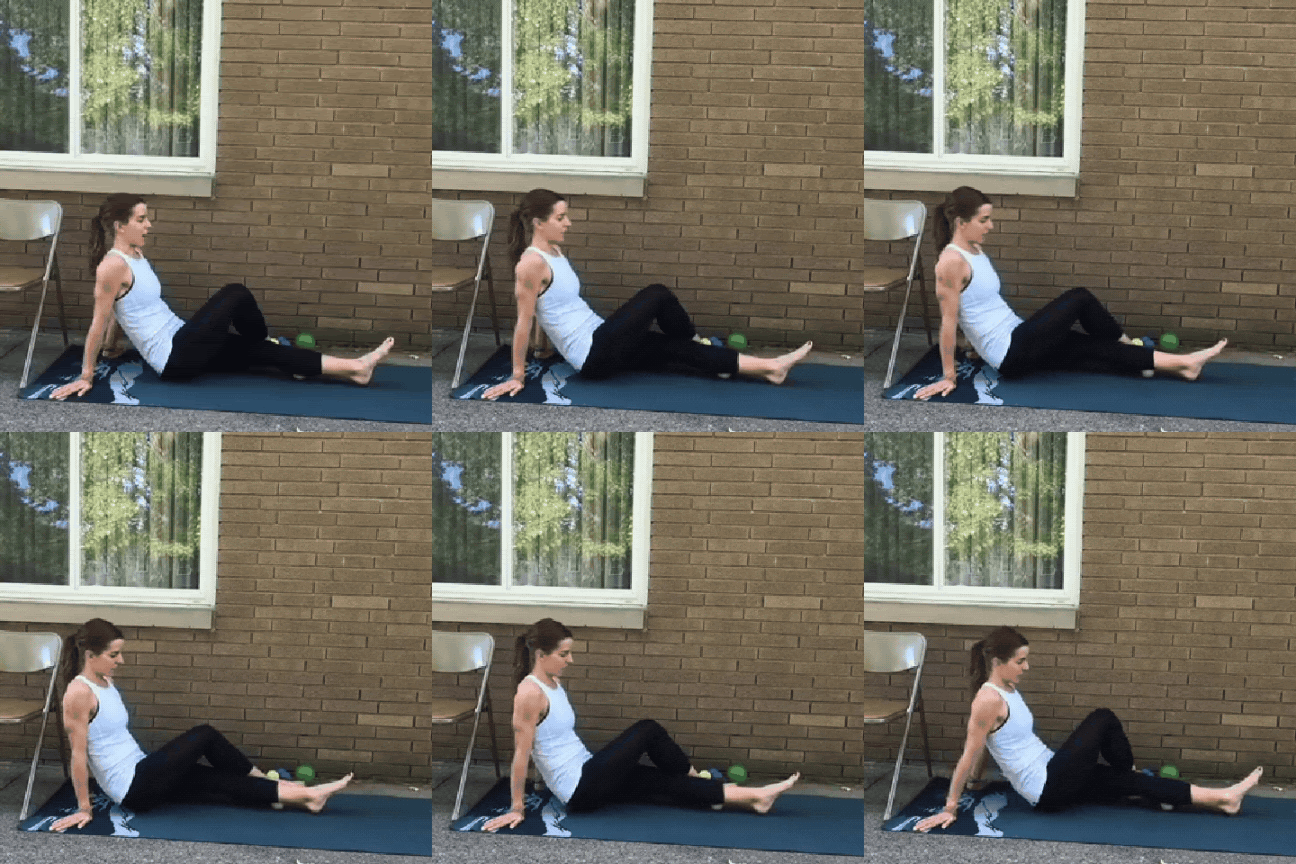
Exercise #2: Calf Active Release
When I focus on my calves, staying in one place and breathing through it might be enough, or you can move to the side-to-side to find another spot. You may feel tighter on the inside of your calf. The key is to make sure you can fully relax your muscle. If you’re using a lacrosse ball but can’t relax, try switching to a tennis ball.
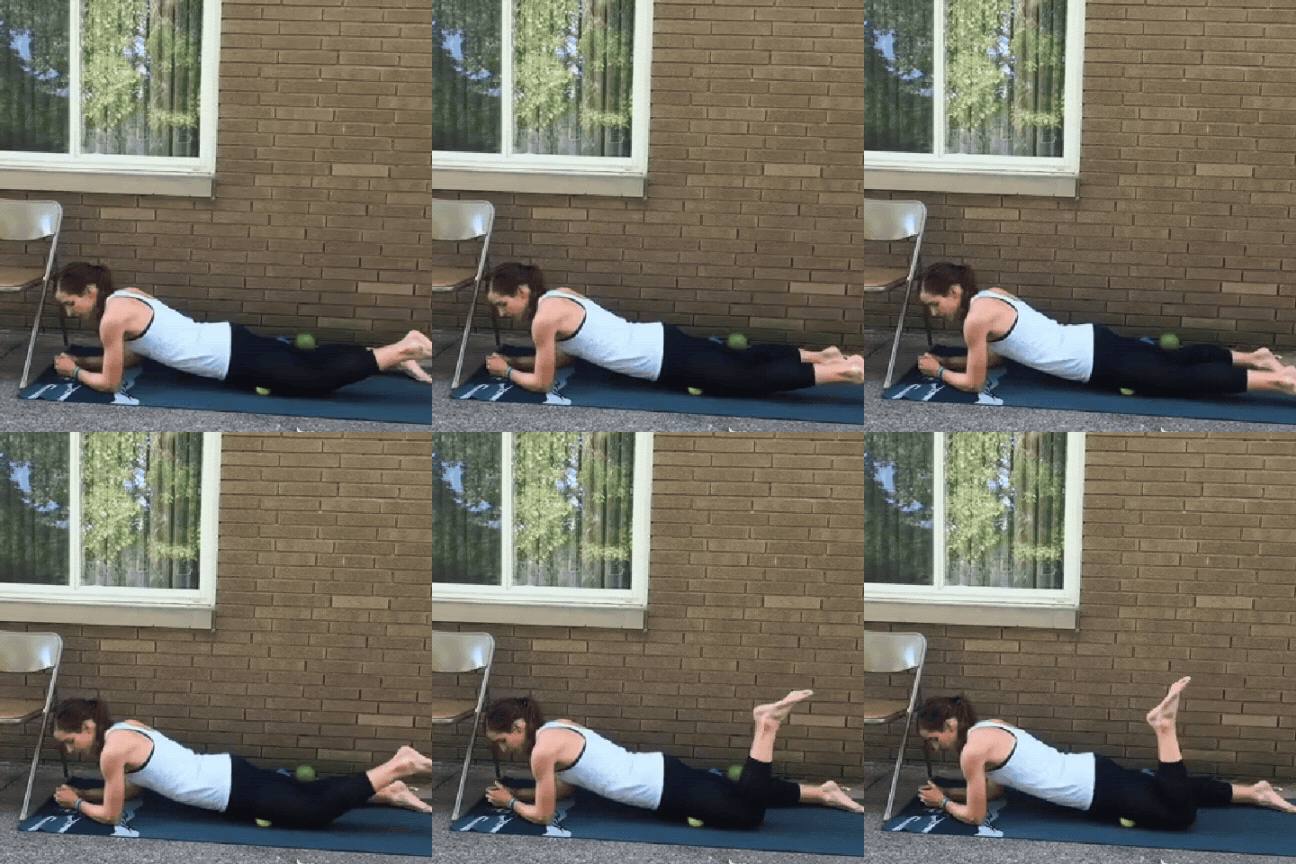
Exercise #3: Quadricep Active Release
This is a big one for a lot of runners — the quads. I’m starting right in the middle of my quad. You can move up, to the side, or to the inside if that’s where you feel tightness. Remember to take deep breaths and relax.
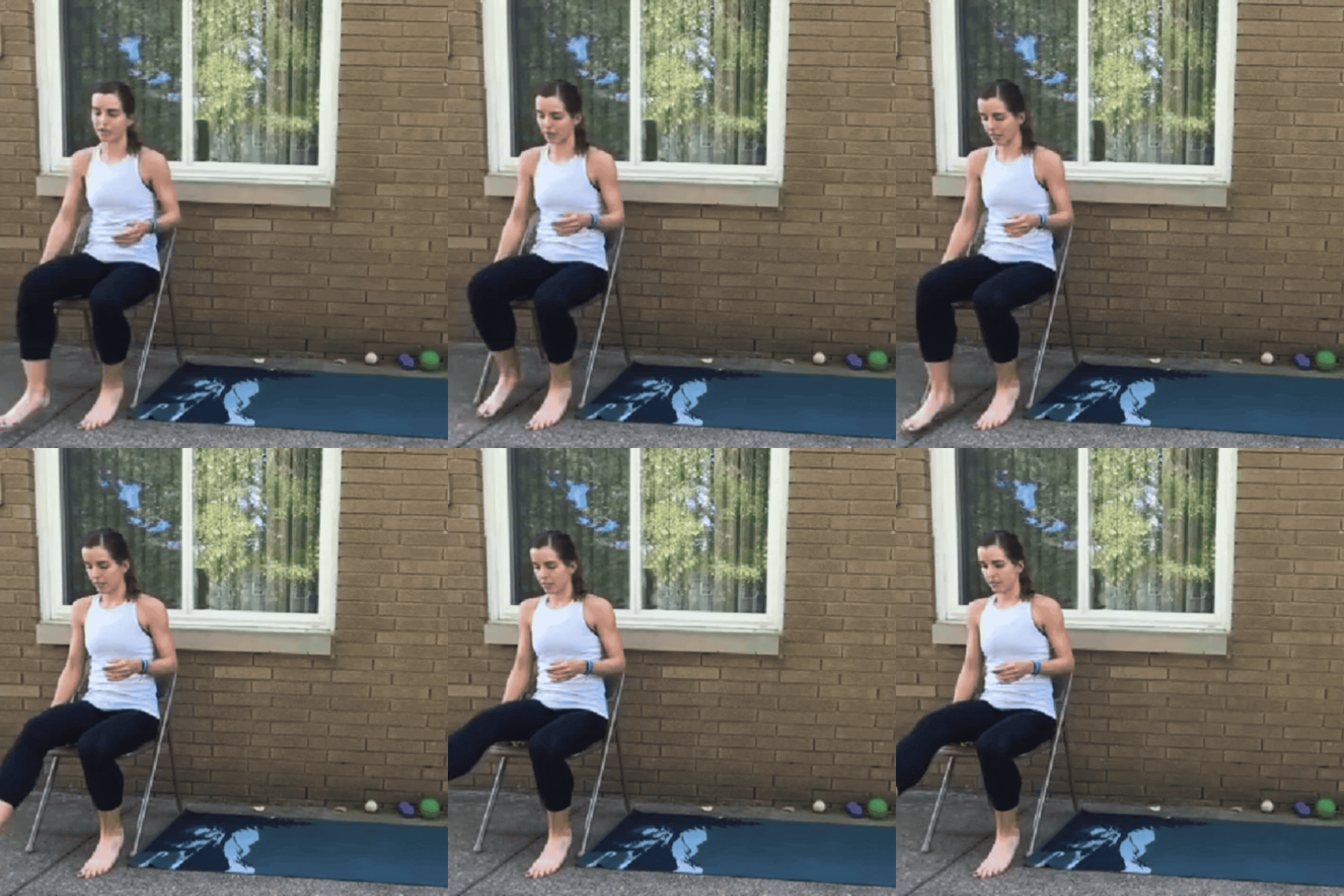
Exercise #4: Hamstring Active Release
For this exercise, you’ll need a chair. I take a tennis ball and sandwich it in between the seat of the chair and my hamstring. This might be too intense for some people, so you may want to start with a foam roller on the ground and ease into it. I don’t typically have tight hamstrings, so I can handle this, but for others, it might be a bit painful — and that’s not what we’re aiming for.
I hope this gives you a few ideas on ways to work on some tight muscles. There’s even more muscle groups and exercises I didn’t get into today, but starting with just a few of these is a great start!