Coach Sage discusses how to lengthen your stride to build speed and efficiency!
A common question I get is how someone can run a marathon at a pace of 5:12 per mile (or 3:12 per kilometer) without looking like they’re sprinting. The difference often comes down to stride length. For example, some runners might have a stride of 1.5 meters, while others take a 2-meter stride. At the starting line of the Boston Marathon, I’ve seen top international runners running at 4:40 per mile (or 2:55 per kilometer) with a long stride and a high cadence—often around 180 and up to 190 steps per minute. This combination of stride length and cadence makes their speed look effortless.
The key to running faster is opening up your stride. There’s a lot of misinformation online about how to do this effectively, so I want to share a few essential biomechanical tips to increase your stride length:
TIP 🥇
First, you need to get comfortable with running at high speeds. As a distance runner, whether for a 5K, 10K, marathon, or even an ultramarathon, you might not be used to doing explosive sprints. While exercises like bounding can help, they aren’t essential. Instead, try doing strides: after an easy run, once you’re warmed up, perform four sets of 80-100 meters (or 15-20 seconds each) at a fast pace—around 90-95% of your top speed.
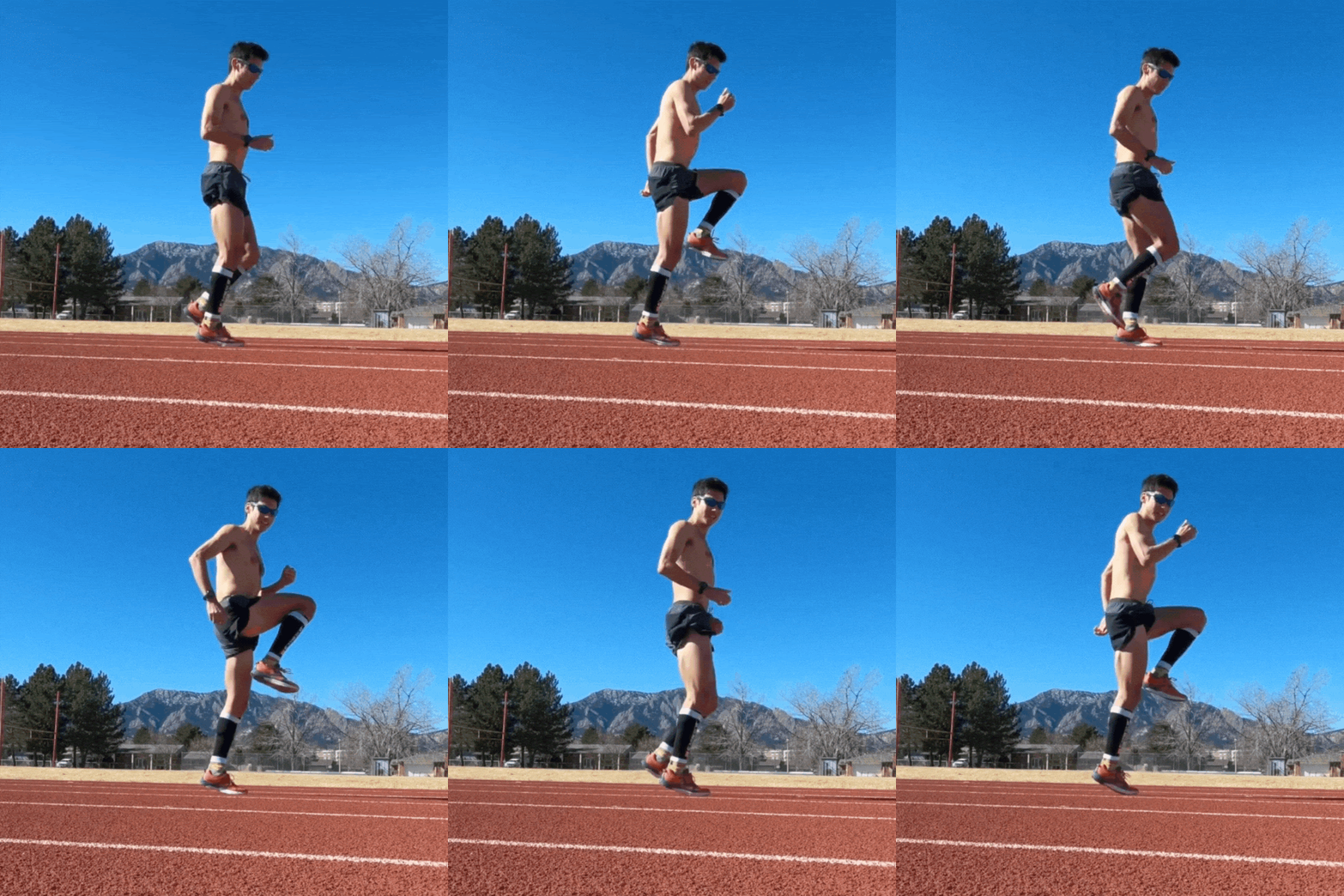
During these strides, you’ll likely hit over 200 steps per minute in cadence, with a high knee drive and strong back kick. This activates your fast-twitch muscle fibers and helps improve neuromuscular coordination, which can correct form flaws and make your running more efficient. Sprinting with good form is essential, and that form should carry over to your 5K, 10K, and marathon paces, making slower paces more efficient. It’s about training movement patterns at the neuromuscular level and building the muscle power and stride length to enhance efficiency across all distances.
A key point about strides is that they shouldn’t be intense anaerobic efforts. Between each 80-100 meter stride, take time to catch your breath and return to a relaxed, fast running pace. This approach will improve your speed, along with other speed workouts.
Ultimately, it’s about efficiency—getting comfortable with fast running while staying as relaxed as possible. We’ll also discuss the cardiovascular strength needed to support this speed at the end of the video.
TIP 🥈
Another key to increasing your stride length is developing specific biomechanical patterns, which can be achieved through drills and strides, focusing particularly on a high knee drive. The height of your knee lift largely determines your stride length. As your speed increases, think about raising your knee higher to open up more height and power in your stride.
TIP 🥉
Another essential aspect of increasing stride length is opening up the hips, particularly through hip flexion on the backswing. Rather than focusing too much on the backswing itself, emphasize lifting your heel and aiming for a high back kick. With greater speed, your back kick naturally becomes higher, helping to open up the hip flexion angle and extend your stride.
Exercises like lunges are excellent for building strength and hip mobility, along with basic hip stretches. Stretching the hip flexors, for example, helps you feel the extension at the back of the hips. Improved hip mobility is crucial for increasing stride length.
THE CAVEAT! 🚨
One important caveat: you can practice these drills and focus on form, but without strong cardiovascular fitness, it will be challenging to sustain the increased effort in a long-distance race like a half marathon or marathon.
Building cardiovascular fitness—developing heart, lung capacity, and blood flow—is essential for supporting this workload. Elite marathoners spend years building a high aerobic base to sustain a powerful, long stride over extended distances. Running with a large stride and high power output is hard to maintain beyond a few minutes without this endurance foundation.
In short, there’s no quick fix to running fast, but implementing these drills can help you run more efficiently and enjoy the process. With practice, you can make incremental improvements in your form and performance.
Today, Coach Sandi Nypaver is going to guide you through some strength tests that you can do at home to check whether your body is evenly balanced or if there’s anything you need to work on. Many of these tests are similar to what a physical therapist might have you do, but she’ll help you learn how to perform them yourself and understand what to look for.
At home, self-performed strength tests help to see if there’s anything you need to work on to keep your body functioning optimally. As a runner it’s important both sides of your body show up equally and this newsletter will help you do that. If you’re in pain it’s always good to go see a doctor and/or specialist, preferably one who is well trusted by runners. If there is something you need to work on (I certainly have a lot to work on!) don’t view it as a bad thing. It’s a good challenge and the process can be rewarding when you notice improvements.
Let’s get started:
🥇: The Bridge Test Alright, the first exercise is a simple glute bridge. Make sure your back is flat on the floor and keep your pelvis stable in this position. Raise your arms so they don’t assist you, and then lift your hips straight up.
What you’re checking for is whether you can maintain proper alignment of your pelvis. If you feel your pelvis drop, take note. Also, pay attention to where you feel the effort. Are you feeling it in your glutes or your hamstrings, or both? Ideally, you should feel it in your glutes, and even a little in your hamstrings. That’s a good sign.
a. Test Questions: What muscles do you feel working the most? Does your pelvis drop or can you keep it stable? Does one side feel different than the other? Do you need to work on strength and/or activation?
b. Goals: Work towards keeping your pelvis stable and having your glutes take on most of the load. It’s okay if you feel your hamstring working a little, but your hamstring should not take on more work than your glutes.
Bonus Tip: Keep your spine stable. You should not be feeling this in your lower back.
🥈: The Squat Test Now, let’s do a squat test. And note that I’m using a hiking pole here – you’ll want something similar. First, make sure your spine is neutral, and align your toes with the bar of the chair. From there, try to squat down.
What you’re checking for is whether your knees want to move forward, preventing you from going lower. If that happens, it’s a sign you’re relying too much on your quads. What you want is to get your butt back while keeping a neutral spine and maintaining a good hip hinge.
If you’re using your quads more than your glutes, you’ll struggle to go down. Instead, aim to engage your glutes and keep that hip hinge, which is important when you’re running as well.
a. Test Questions: If you place a chair or box in front of your toes, do you find it hard to squat/does it feel unnatural? What muscles do you feel working the most, your quads or glutes?
b. Goals: Get that booty back and working! You may feel your quads working, but you want to aim for a glute dominant squat. Get the hip-hinge pattern right, keeping the spine stable.
Bonus Tip: Our bodies like the neuromuscular patterns we already have formed. Some of you will be able to do this exercise without being able to apply to your running right away. Keep working at it. You’ll get there!
🥉: The Single Leg Squat This is a typical single-leg squat. The key here is to compare how each leg moves.
Now, what you want to avoid is your knee collapsing inward or moving too far out to the side. Try to keep everything aligned, engaging your glutes and even a bit of your knee as you come up.
Focus on your knee position and check if you’re using both legs in the same way. Again, you don’t want your knee to collapse inward as you squat down. Keep your legs straight and make sure you’re engaging your glutes on both the way up and down.
a. Test Questions: What muscles do you feel working the most? Does your foot/ankle feel stable (can you balance here)? Does your knee want to collapse in? Is there a difference between sides?
b. Goals:
i. You want good lateral hip stability, so your knee should aim in the direction of your toes, not inward. This motion is controlled by your hips.
ii. Feel stable in your feet and ankles, keeping your weight even distributed in your foot tripod. It should not feel like all your weight is in your heel or forefoot.
These are just a few simple strength tests you can do right at home, either with the help of a friend or family member watching you, or by videotaping yourself to see how you’re moving. As you do these exercises, make sure to pay attention to which muscles you’re engaging!
I hope these tests help you gauge your strengths and weaknesses. Happy running!
Form breakdown during long run efforts or races is inevitable.
But how do you know when you’re causing harm to yourself and should stop? Alternatively, when is it okay to push through and keep going? In today’s newsletter, Coach Sandi Nypaver gives you some of her tips to know the difference.
An athlete once approached me with the following question:
“When you (or any runner) start to feel your form fall apart, how do you know if you can keep going or if you should stop to avoid injury? I’m asking because in the few 50K races I’ve done, I’ve felt my form deteriorate between miles 20 and 22. If it were a shorter race, like a 50K, would you continue at that point? Fatigue seems inevitable in such long distances. I want to ensure I’m not causing damage by pushing through. Can you speak to the specifics of that?“
During an ultra or even a marathon, especially an ultra, there will be form breakdown. Expect it to happen! Often, at the end of these long ultras, you’re running quite differently than at the beginning due to muscle damage and form breakdown. If you’re running a 50K and feel your form starting to break down, it can be very normal and something you may want to push through, depending on the severity. If it’s primarily muscular fatigue rather than pain, it’s generally okay to continue.
There’s a difference between your legs feeling beat up and experiencing pain that might indicate an injury. Knowing what muscle fatigue versus pain feels like is crucial! You’ll have to listen to your body to know which one you’re experiencing, but here’s a good rule of thumb:
Fatigue
• More of a general, widespread sensation of tiredness and heaviness in the muscles.
Pain
• A sharp, stabbing sensation that will probably be more localized to a specific area in your body.
Ultimately, you’re going to have to listen to your body to know if you’re doing long-term damage or if you’ll need general rest and recovery from the big effort.
Understanding the importance of distinguishing between muscle fatigue and pain is just the first step towards maintaining your health. Equally crucial is knowing how to respond after completing a grueling race. Post-race recovery is not only about giving your muscles time to rest but also about ensuring that any form breakdown that occurred during the race doesn’t lead to long-term issues.
I emphasize the following to all of my athletes: after a race, yes, you want to recover, but in the next week or two, focus on technique work. What often happens after ultras is that people get injured a couple of weeks later because their form broke down, and they don’t take the time to ensure their stride returns to normal. They end up running with the poor patterns they picked up at the end of an ultra.
So, here’s a tip: in the week or two, or even three weeks, after an ultra or a marathon that really beat you up, take some time to focus on technique and form work. This way, you can avoid the “ultra shuffle” or any other weird changes to your stride. Spending a little time on technique after a race can go a long way! I have a variety of form-related videos on my YouTube Channel, or you can check out Higher Running’s resource webpage.
Remember, listening to your body and prioritizing both immediate recovery and long-term form maintenance is key to sustaining a successful and healthy running journey.
Today, Coach Sage Canaday is going to discuss the concept of “running tall,” and why this could make a huge difference in your running form. In short, it will align your whole body position to be able to run efficiently!
The idea with running tall is that we want to avoid the dreaded heel strike. This is when you land in front of your center of mass. When I see runner’s heel strike, it’s often accompanied by “wingy” elbows and their hips are really low to the ground, almost as if they are trying to perform a squat.
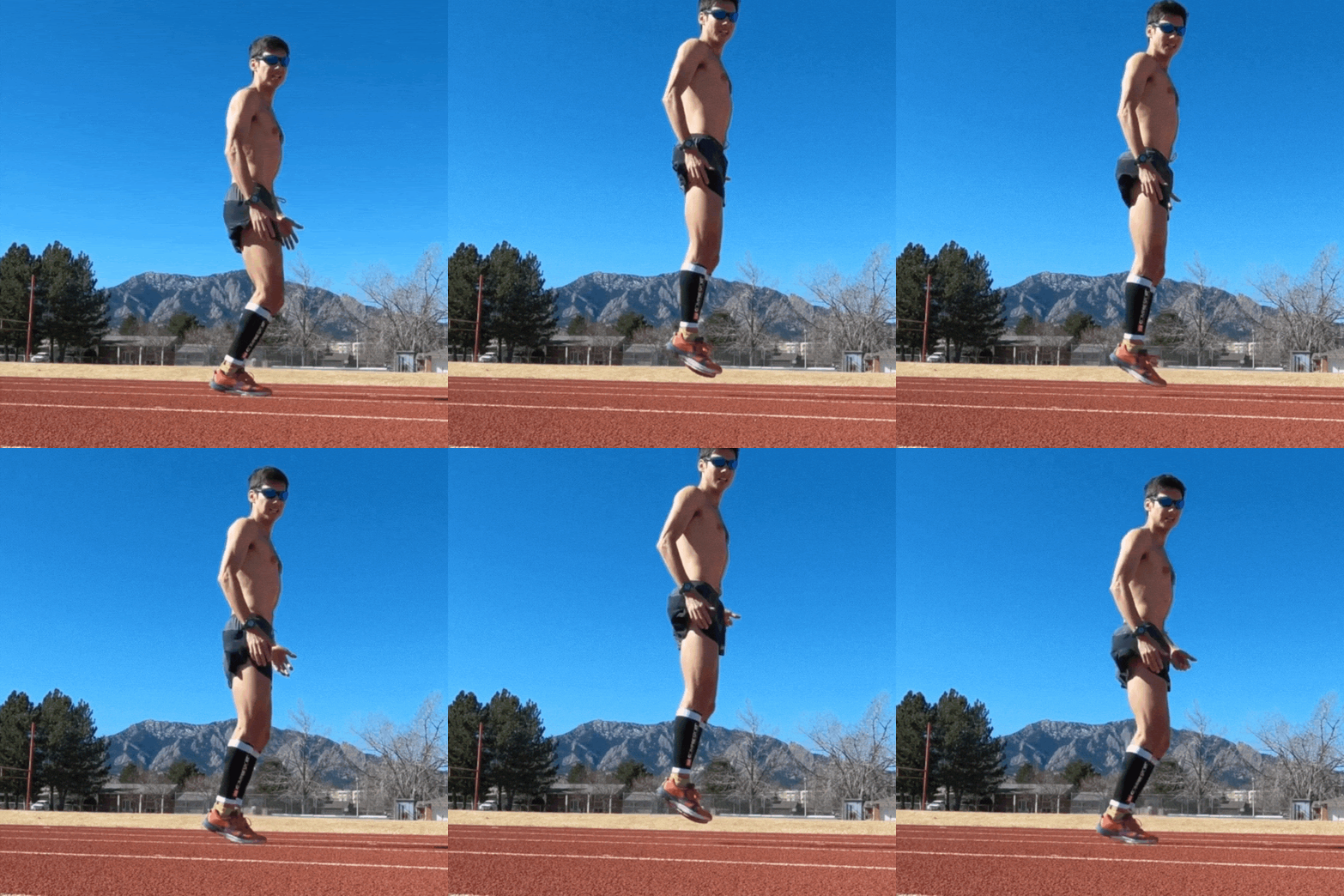
Instead, you want to focus on running tall. That’s the cue for straightening your spine, your whole upper body position, and bouncing off your feet and ankles. One drill that I do to help me with this motion is perform a “running man dance” type of exercise. You can get an idea of that below:
This motion is very exaggerated, but it’s showing the kind of ankle action and propulsion you get when you’re landing under your center of mass off the midfoot or the middle part of your foot (or, at least your whole foot hitting the ground as long as it’s not a heel strike out in front of your body). It’s just better physics; you’re getting more propulsion, more powerful push-off force, utilizing your calf muscles in the back of your legs to your glutes, and springing off the ground.
Another drill to practice is springing up and down, like the exercise you see below. The important thing to note is that I’m straightening the spine while realizing that the forward lean in running comes from the ankles and the feet hitting the ground, and the rest of your body is in line.
Other things to be cognizant of when doing this exercise is you want to be straightening your back and lifting your stomach and rib cage. It opens up your diaphragm so you can breathe better and be more efficient when you run.
So, what’s the point in doing all of these drills and paying close attention to our form?
It’s all about efficiency in running—efficiency to make you run faster but also to minimize the risk of injury from impact force and repetitive strain. There’s a lot of force coming down with each foot strike, two to three times your body weight. If it’s a braking heel strike in front of your body and your hips are too low and you’re running short, like even I kind of do sometimes, then it’s going to put a lot of strain. It could also strain your hip flexors and lower back, causing a lot of pain.
In conclusion, think “run tall” when you’re out running; try to be as tall as possible! It doesn’t mean you’re trying to spring up as much as possible. You still want to avoid too much vertical bounce or oscillation but keep your chest upright, maintain a straight line, and keep your hips under you and up high so you can open up your legs better.
I hope these running form tips and exercises help you a little bit in your running this week. Thanks for your support and happy running!