Coach Sage discusses how to lengthen your stride to build speed and efficiency!
A common question I get is how someone can run a marathon at a pace of 5:12 per mile (or 3:12 per kilometer) without looking like they’re sprinting. The difference often comes down to stride length. For example, some runners might have a stride of 1.5 meters, while others take a 2-meter stride. At the starting line of the Boston Marathon, I’ve seen top international runners running at 4:40 per mile (or 2:55 per kilometer) with a long stride and a high cadence—often around 180 and up to 190 steps per minute. This combination of stride length and cadence makes their speed look effortless.
The key to running faster is opening up your stride. There’s a lot of misinformation online about how to do this effectively, so I want to share a few essential biomechanical tips to increase your stride length:
TIP 🥇
First, you need to get comfortable with running at high speeds. As a distance runner, whether for a 5K, 10K, marathon, or even an ultramarathon, you might not be used to doing explosive sprints. While exercises like bounding can help, they aren’t essential. Instead, try doing strides: after an easy run, once you’re warmed up, perform four sets of 80-100 meters (or 15-20 seconds each) at a fast pace—around 90-95% of your top speed.
During these strides, you’ll likely hit over 200 steps per minute in cadence, with a high knee drive and strong back kick. This activates your fast-twitch muscle fibers and helps improve neuromuscular coordination, which can correct form flaws and make your running more efficient. Sprinting with good form is essential, and that form should carry over to your 5K, 10K, and marathon paces, making slower paces more efficient. It’s about training movement patterns at the neuromuscular level and building the muscle power and stride length to enhance efficiency across all distances.
A key point about strides is that they shouldn’t be intense anaerobic efforts. Between each 80-100 meter stride, take time to catch your breath and return to a relaxed, fast running pace. This approach will improve your speed, along with other speed workouts.
Ultimately, it’s about efficiency—getting comfortable with fast running while staying as relaxed as possible. We’ll also discuss the cardiovascular strength needed to support this speed at the end of the video.
TIP 🥈
Another key to increasing your stride length is developing specific biomechanical patterns, which can be achieved through drills and strides, focusing particularly on a high knee drive. The height of your knee lift largely determines your stride length. As your speed increases, think about raising your knee higher to open up more height and power in your stride.
TIP 🥉
Another essential aspect of increasing stride length is opening up the hips, particularly through hip flexion on the backswing. Rather than focusing too much on the backswing itself, emphasize lifting your heel and aiming for a high back kick. With greater speed, your back kick naturally becomes higher, helping to open up the hip flexion angle and extend your stride.
Exercises like lunges are excellent for building strength and hip mobility, along with basic hip stretches. Stretching the hip flexors, for example, helps you feel the extension at the back of the hips. Improved hip mobility is crucial for increasing stride length.
THE CAVEAT! 🚨
One important caveat: you can practice these drills and focus on form, but without strong cardiovascular fitness, it will be challenging to sustain the increased effort in a long-distance race like a half marathon or marathon.
Building cardiovascular fitness—developing heart, lung capacity, and blood flow—is essential for supporting this workload. Elite marathoners spend years building a high aerobic base to sustain a powerful, long stride over extended distances. Running with a large stride and high power output is hard to maintain beyond a few minutes without this endurance foundation.
In short, there’s no quick fix to running fast, but implementing these drills can help you run more efficiently and enjoy the process. With practice, you can make incremental improvements in your form and performance.
To run faster, you’re going to want to hone in on your single-leg squat form. A few weeks ago, Coach Sandi Nypaver wrote about some of her favorite strength assessment tests for runners. Today, she discusses in depth the single-leg squat — an exercise most people struggle to do incorrectly! This newsletter will cover: The common mistakes people make while doing the single-leg squat and other single-leg exercises. How to correct your single leg form. How to apply the strength and technique exercises to your weekly routine. Read for more!
As you run, you’re constantly in a single-leg squat position. This is why the single leg squat is one of the exercises in the movement assessment I give the athletes I coach. If someone is struggling with the single-leg squat exercises, I almost always see the same problem when they’re in the single-leg stance position as they’re running. This usually correlates to pain or tightness around the knee, low back, hips, and even the lower leg.
All of my athletes go through a strength and movement assessment, and there’s one exercise where many runners tend to struggle. Unsurprisingly, it’s also the movement most specific to running. The exercise inthe movement assessment that challenges many people is the single-leg squat, which is what I’ll be focusing on in today’s newsletter. Runners are frequently in a single-leg squat position while running, which is why training the correct movement pattern is so essential! So, what are the common mistakes I see when people perform a single-leg squat?
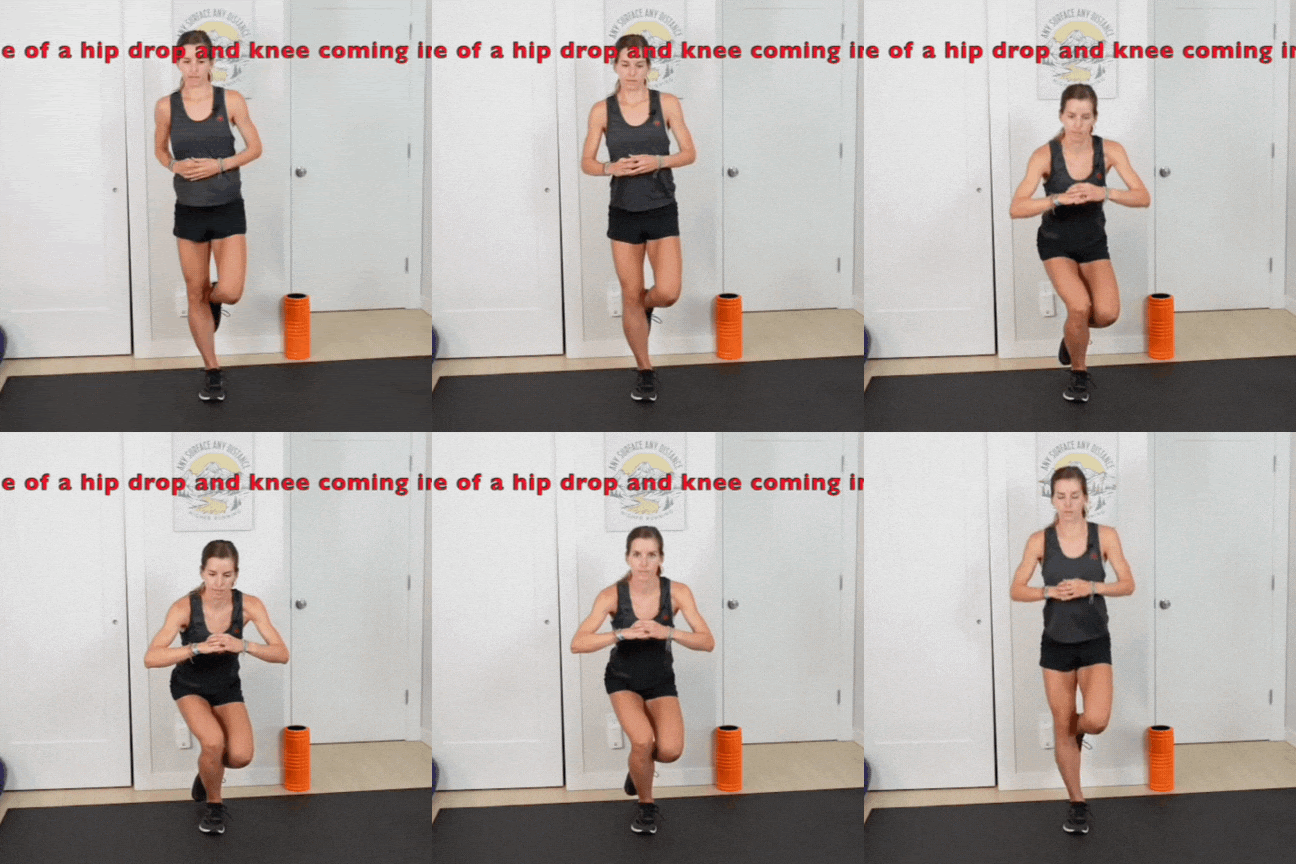
Mistake #1 A common mistake I see is when the hip drops down and the knee moves toward or even past the big toe.
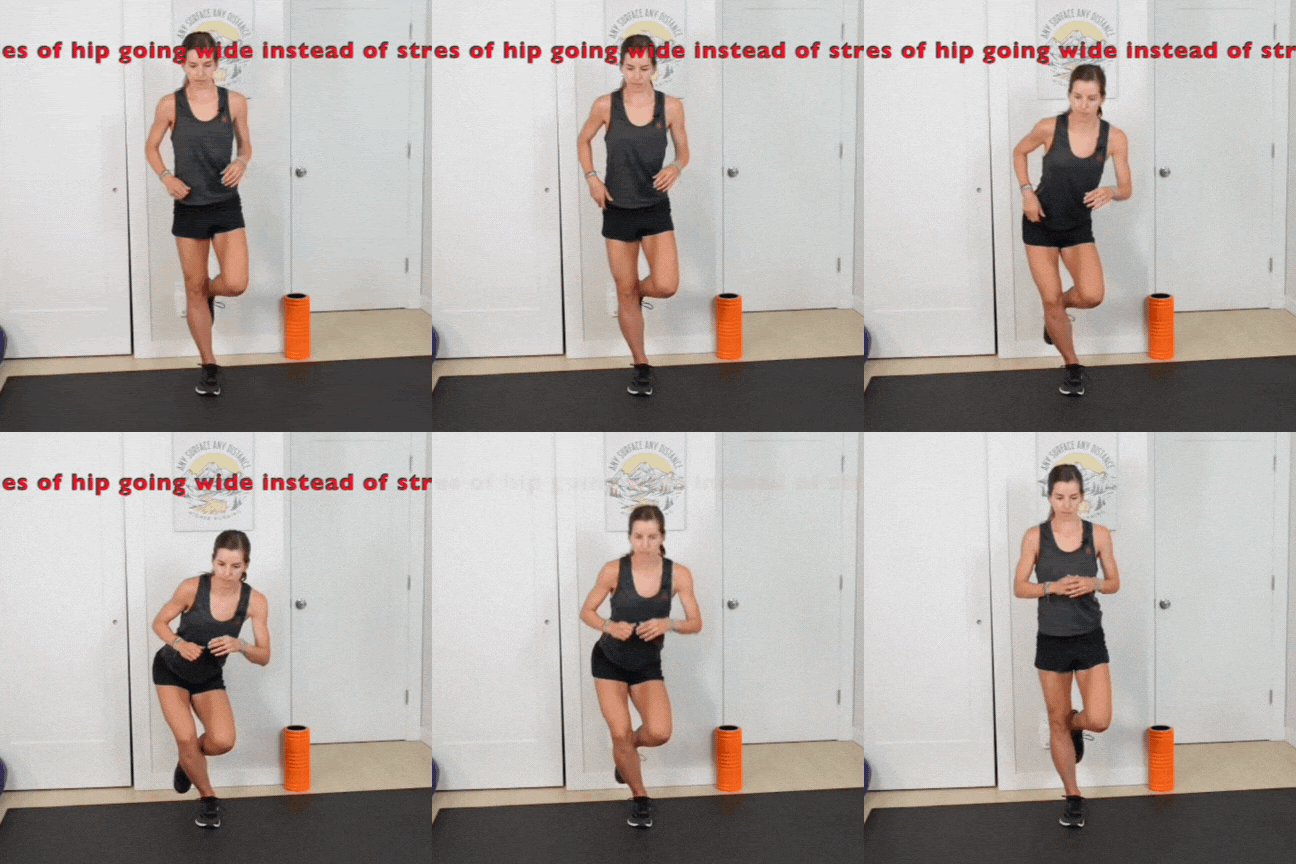
Mistake #2 Another mistake is swinging the hip out wide instead of simply bringing the glutes back.
Before moving on, remember it’s okay if you’ve been making these mistakes, even for a long time. Don’t dwell on it—the power to improve is in the present! Focus on what you can control now, and get excited about the potential improvements this can bring to your future performance. Now that you know what not to do, let’s work on correcting your single-leg squat form. I prefer to focus on solutions, so let’s dive into making your single-leg squat and running form stronger. Here are some key points to remember, which apply to all single-leg exercises: 1. Keep your hips as level as possible.2. When you bend your knee, direct it toward your second or third toe. Avoid letting the knee move inward or toward the big toe.
To help with this, try using a mirror while practicing single-leg exercises. For some people, just maintaining level hips and proper knee alignment (toward the second toe) will be enough. But if this isn’t quite working for you, don’t worry—I have more tips ahead. Here’s a setup technique that works well for those who tend to swing their hip out or experience hip drop during a single-leg squat. I developed this approach for some of my athletes, and it’s been effective:
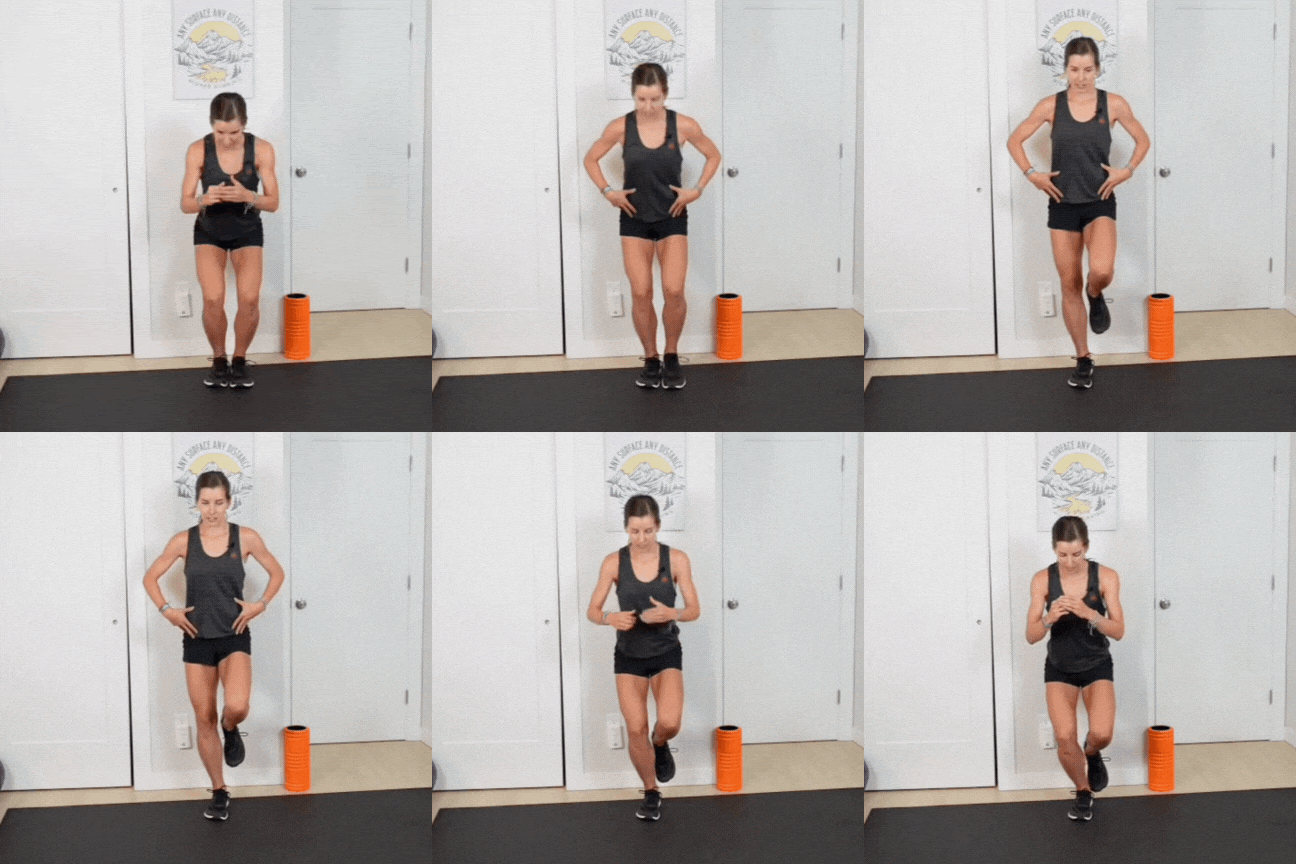
TIP #1 Start in a chair pose, squatting with both legs and going only as deep as you can while maintaining good form. Look in the mirror, keep your hips level, and ensure your knees point in the right direction. Once set, lift one leg and perform a single-leg squat, using the lifted leg briefly if you need to reset. Many people struggle with single-leg squats simply because they go too low, causing the hip to kick out or the knee to fall inward. Instead, work within your current range to maintain good form. As you get stronger, you’ll be able to go lower with control. Here’s what I mean:
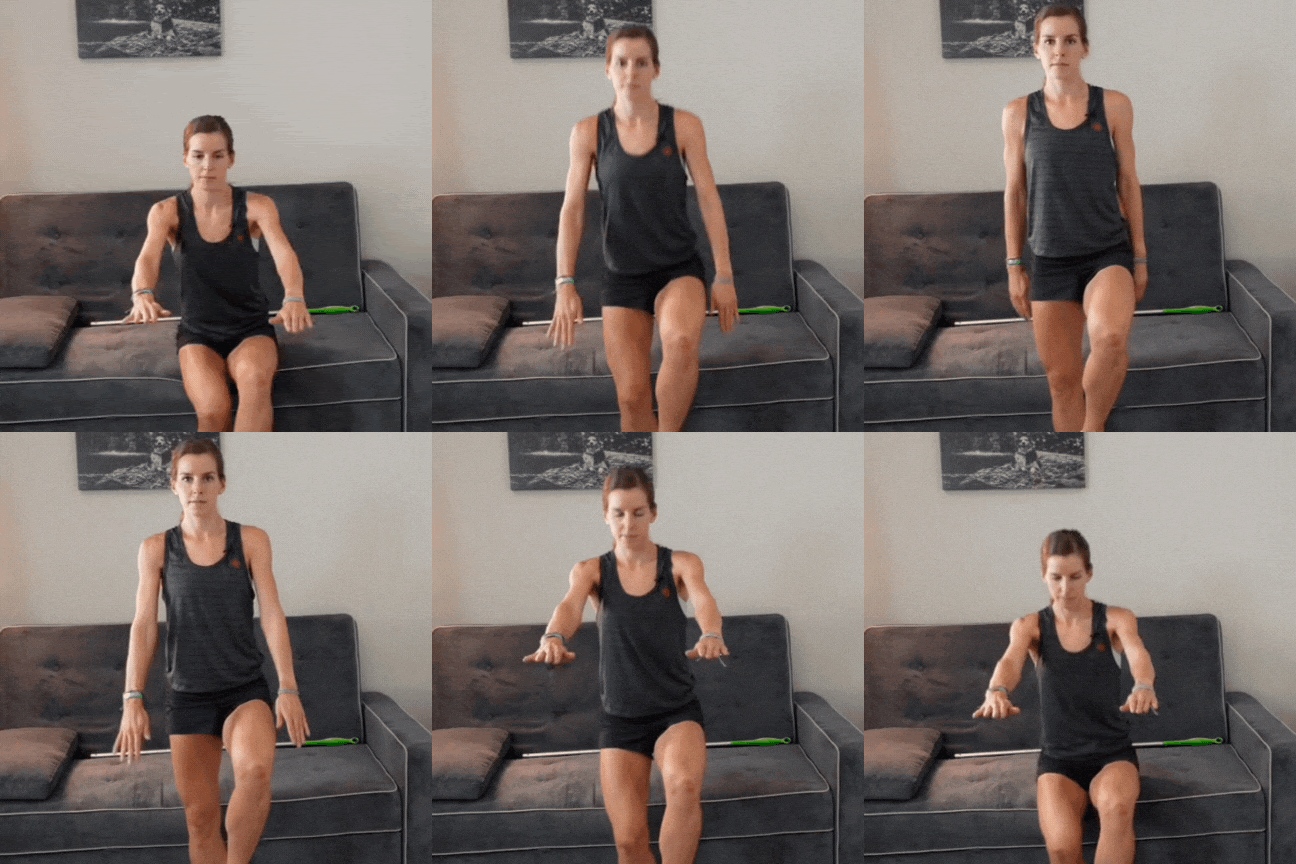
TIP #2 Another exercise I often do that can help with a single leg squat is a squat onto a couch—similar to sitting back until your glutes just touch the couch, then standing back up.
TIP #3 Another quick tip I have is for you to consider your footwear—or going barefoot—for single-leg squats. Thick shoes can increase instability, so if you’re comfortable and in a suitable space, try barefoot for better control.
Apply This Let’s put what you’ve learned into action. If you’re strength training with weights, aim to do these exercises two to three times per week, with 48 to 72 hours between leg sessions. This recovery time helps your muscles rebuild and prevents fatigue from holding back your progress.
For daily practice, try technique drills and activation exercises before runs. These will help you apply your strength gains to your running form, leading to improvements in form and pace over time. Remember, a slight hip drop during running can be normal. It’s the excessive drop—when the hip goes too far out and the knee turns inward—that we want to avoid. To catch and correct these patterns, do this movement assessment regularly.
This is just one of the exercises in my strength and movement assessment for athletes. For the full program, including tools and strategies to coach yourself, check out the Ultimate Running Course: Learn to Coach Yourself.
I hope this helps you in your running. Happy running! Coach Sandi

 The common mistakes people make while doing the single-leg squat and other single-leg exercises.