Learning From the Masters of Mountain Running

Learning From the Masters of Mountain Running

Learning From the Masters of Mountain Running

What you can apply to your training so you can run faster in the mountains too!

by Coach Sandi Nypaver
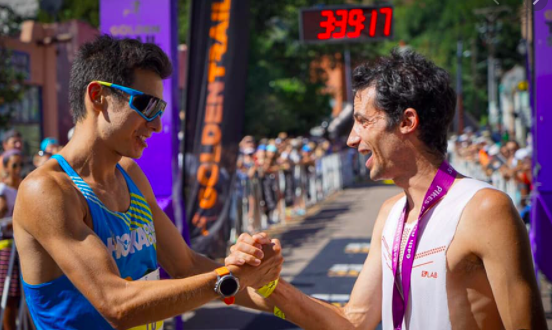
What’s their secret? What makes elite mountain runners so fast and how do they make it look like they’re gracefully dancing over technical terrain? Is it all good genes or are they doing something differently in training than everyone else?

(Spoiler alert: They’ve got some great genes, but their training plays a significant role as well.)

Part of my personal coaching philosophy is that there’s always more to learn. As soon as I don’t believe that or start thinking I know it all, I’ll no longer consider myself a good coach. With this in mind, when the opportunity came to talk to some of the 2019 Golden Trail Series finalists, I seized the opportunity to learn from those who have seemingly mastered the art of mountain running. Since I know many ultra runners will be reading this, I’ll also dive into mountain races of ultra distances as well. 

(Our Mountain Ultra Training Plan is designed specifically for those looking to excel in the mountains.)

Training Terrain:

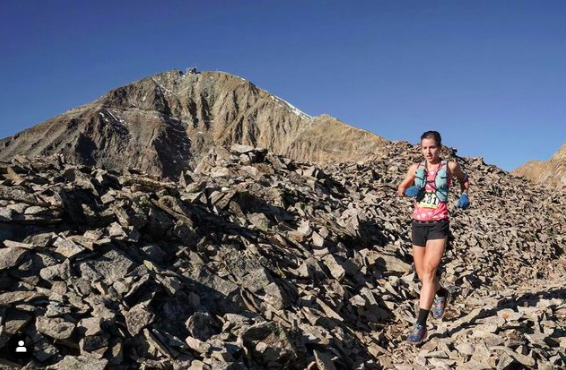
As the top mountain runners from around the world, some may expect that the majority of their training is done in the mountains. However, quite a few of the runners only ran in the mountains a couple of times a week, otherwise training on flat roads or rolling hills. What I believe should be emphasized is that when they do go to the mountains, they ensure that time is well used for race-specific training. To a bystander, the runners may appear to be nimbly and effortlessly flying down technical terrain, but in reality, the runners are training their minds to sustain a remarkable focus for miles of downhill running, allowing them to become more agile over rocks and roots. It’s this training that also prepares their legs to handle the impact of downhill running so that they can still run uphills or over flat terrain. While your legs can better adapt to running downhill, there’s always going to be additional stress on the legs from running long mountain descents. An educated assumption would be that the runners who only did 2-3 mountain focused runs per week were well adapted to the training since their legs were better able to recover. 
Mileage:

An additional subject matter is that these runners weren’t putting in many 100 mile weeks. Often the mileage was significantly lower than that, partly due to the demand of the series and partly due to the acknowledgment that it’s easy for your form and footwork to get sloppy if running endless hours in the mountains. Another factor is that 10 mountain miles take significantly longer than 10 flat miles. One of the upcoming stars of sub-ultra mountain running even mentioned the longest run of his life had only been about 12 miles until he began the series. This would leave most runners unprepared, but for him, fresh legs paid off big time! Perhaps the most common theme was that getting in high-quality workouts a couple of times a week was of high importance.  

Cycling:

While  I was expecting to hear different training approaches, even I was taken aback when one of the male runners said he did half or more of his training on his bike. He was convinced it aided his running. On the other hand, two of the top females who enjoy cycling weren’t convinced that their time on a bike was helpful unless it was after a race. They all might be right. If a runner spends some training time on a bike, that runner may be able to gain some additional fitness without putting a lot of additional stress on their body. It’s easy to point at professional triathletes who can run impressive marathon times even though they’re spending a significant amount of training time on a bike or in the pool. Would they run faster if they focused on running? Most likely the answer is yes, but that could increase their injury risk which is the main reason I might suggest an injury-prone runner spend time on the bike. Additionally, it has been theorized that mountain bikers are often better at running downhill on technical terrain. This is partly due to being trained to react quickly, good balance, and the ability to turn fear into focus. On the other hand, if too much time is spent cycling, runners may actually hurt their running performance. This could be an article in itself, but one of the big things is the difference in muscle groups each activity requires. Many runners become too quad dominant while on a bike and this can make a full hip extension by using your glutes difficult as you run, causing a runner’s stride to be less efficient. 

Skiing: 

Another form of mountain-running specific training for several of the 2019 Golden Trail Series Finalists worth mentioning is Skiing. Generally, this involves Ski Mountaineering specifically, although cross country skiing was also an activity that these top mountain runners seemed to have been involved in from time to time. From an aerobic base building stand-point (especially as an “off-season winter” sport/activity) these kinds of activities can provide a sustainable boost to the heart and lung power as well as aerobic enzyme development and capillary building/blood flow. Also due to the nature of huge vertical gain and the muscular demands on not only the legs but also the core muscles (and arms!) skiing can build tremendous strength as well and appears to be quite transferable to gains in running mountain running peak performance for the summer months. 

What about mountain runners doing ultra distances?

Up until now, I’ve focused on sub-ultra races, but it would be interesting to think about some of these ideas in regards to one of the world’s most famous 100 milers, UTMB. I recently listened to a podcast where someone stated that Americans don’t do well at UTMB because the trails are so different compared to the trails in the United States. Thankfully, someone immediately mentioned that more than a few American women have absolutely crushed that race. American men deserve some acknowledgment, as well as quite a few, have had top 10 performances. This isn’t really surprising because the trails of UTMB (with the exception of TDS) are actually quite easily mimicked in many mountain ranges in the United States. I’ve been lucky enough to tour the entire UTMB course and in many regards, the trails are less technical compared to some of my favorite mountain trails in Colorado. Perhaps the main difference is that it’s not always easy to get in 4500’ in one continuous climb or descent. 

This brings us to the question, why hasn’t an American man actually won UTMB? I won’t pretend I know the answer with absolute certainty, but I believe it’s possible that the obsession of tracking both mileage and elevation gain/loss in addition to the need to compare training has led to top contenders losing the race before it even began. I don’t think it’s a surprise that when it comes to a race like UMTB, the runners who are known to run the highest mileage and get in the most elevation gain often (but now always!) end up behind the runners who train a fair amount, but significantly less.

What does this mean for your own training?

With big goals looming on the race calendar we often find ourselves believing that more is always better, but more can sometimes lead to our bodies breaking down without receiving the intended adaptations. An important part of mountain running is feeling strong all around and accepting what needs to be done to avoid an injury. It can be a struggle to figure out how to balance getting in enough hills or mountains, mileage, and speed workouts in training, not to mention cross-training and strength sessions. Furthermore, we have to factor in how important it is to train our legs to handle the stress of fast downhills in addition to remembering the fact that it’s difficult to keep a low heart rate running uphill. All these things matter when it comes to mountain running and finding the right balance can be a daunting challenge. However, through some experimenting and a willingness to honestly listen to your own body, it is possible to figure out what works best for you. 

When I’m training for a mountain-ultra race compared to a flatter, more “runnable” ultra, I’ve personally found that I do best by reducing my mileage by 25% or more to still run well while adding in more climbing. This past year coach Sage, the only American male to be a top 10 finalist in the Golden Trail Series in both 2018 and 2019, found this worked for him as well in addition to placing a focus on high-intensity intervals. This was only after he established a mileage base that included tempo runs to support the intensity. One of my athletes had huge success by alternating their training focus every other week. One week the focus would be on short hill repeats and lots of elevation change while mileage would take a back seat. The next week, mileage would increase but the majority of the runs were flat and speed workouts would typically be closer to a tempo effort. For other athletes, having a more consistent schedule worked by focusing on race-specific mountain runs 1-3x per week, keeping other runs on the flatter side. Many athletes need more time to recover while adding in elevation change, either with more recovery days or even “recovery” weeks.  In some rare cases, getting in speed sessions with tons of mileage and high elevation change week after week worked for a certain period of time, but for the majority of trail runners that I’ve seen try that (including myself), that’s more likely a good way to pick up sloppy form habits and underperform on race day. 

As a coach, I’ve seen the benefits of having a well thought out plan to get in a certain amount of high-quality sessions, enough miles and enough elevations change. You don’t want to look back on your training and think “Wow! No wonder why my legs were destroyed halfway through!” However, any good plan needs to be flexible so a runner can experiment to find what combination of key factors (miles, elevation, speed, etc.) works best for the individual. The most important part of this is noticing how you feel and how your body is responding. This is why ALL runners should be tracking how they truly feel each day. (I say “truly feel” for a reason as runners have a bad tendency to downplay how tired or sore they are.)  If you feel like you’re constantly slogging up and down mountains or hilly trails, it’s probably time to take a step back. As I alluded to above, part of the reason some Europeans might be better at technical trails is that it’s easier to be focused and practice good footwork on legs that feel strong and fresh. The more elevation change in a race, the more important it is to stay away from the “more is a better” trap and realize that you finding your own right balance is the only way to reach your potential at that race that has been filling you with excitement.  

(Note for females: Around ovulation, there’s an increased risk for ligament damage. To avoid an injury descending on technical trails, make sure you are fully warmed up before running by doing some activation and stabilization exercises. As you run, put an emphasis on keeping good form and if jumping over rocks be mindful of how you’re landing. Paying extra attention to these things during ovulation can benefit you at all times throughout your cycle and training.)

Sources*:

https://journals.lww.com/nsca-jscr/Fulltext/2015/08000/High_Intensity_Cycling_Training__The_Effect_of.19.aspx

Millet, G. P., Vleck, V. E., & Bentley, D. J. (2009). Physiological differences between cycling and running. Sports Medicine, 39(3), 179-206.

https://www.ncbi.nlm.nih.gov/pmc/articles/PMC4523806/

https://www.ncbi.nlm.nih.gov/pmc/articles/PMC3575608/

*Most of these studies were done solely on men.

Learning From the Masters of Mountain Running

Sage Running Podcast EP. 29

We’re back for 2020! Coach Sandi and Sage sit-down to update you on what’s been going on with their running (from running form, injury and glute activation to the latest Tarawera 100km trip to New Zealand and improvements in sleeping mattress and work chair/desk ergonomic quality!). Also other coaching topics are discussed as well as talk about social media, perceptions, and communication challenges within the sport of mountain-ultra-trail running and road marathon running as well as current issues. Coach Sandi also touches on Women specific training considerations in regards to hormone cycles and periodization.

Subscribe on iTunes (and soon Spotify and more!)
Learning From the Masters of Mountain Running

The Balancing Act: Mountains, Miles, and Speed

To be a successful ultra runner you need to put in a lot of vertical, a lot of miles, and a lot of speed work, right? Well, kind of, but the answer is more complicated than a simple yes. Over the past few weeks, we’ve seen a couple articles mentions that ultra runners have three good years before things fall apart and their body has had enough. Honestly, that can be true if someone isn’t training or racing intelligently, but otherwise it’s something that can easily be avoided. There are a lot of runners that have already proved that they can make it at a very high level in ultra running for longer than three years.

The main reason why we’ve seen some ultra runners speed slip from them is because they tried to get in all the vertical, miles, and speed that they could all at once and may have tried to race too long and too frequently. Yes, there are a handful of superhuman runners that seem to get away with this, but most of us can’t and that’s okay. By understanding our limits in training, we can reach or even go past our perceived limits in racing.

So what’s the key to training for a successful ultra (especially one with a lot of vertical) and staying healthy in the long term?

Don’t do too much of everything all at once!

Maybe you’re training for the Speedgoat 50k or Grindstone 100, both races with a lot of vertical. To get ready, you’re trying to do some weeks with a lot of vertical. Well, maybe for those weeks you put in one key speed workout since your body will already be working hard from all the climbing. (Also, let’s face it, you can’t count running up a mountain as a recovery run.)  Still, maybe you do really want to get in some quality hill repeats and other speedwork as well. Then you could have weeks where you focus a little bit more on quality and put in less vertical and/or total miles. To sum it up, it can be beneficial to have weeks where your focus is changed so you don’t become exhausted and overtrained from trying to do everything at once. Don’t forget to take proper time off after racing (i.e. several weeks or even a month!) and to have time in the year where you cut back your training and mainly run easy miles. Most importantly, listen to your body. Your body will always let you know if you’re doing too much, but you have to be willing to listen.

We hope to see you racing strong for years to come!

Train Smart, Run Faster,
Coach Sandi & Sage

The Art of Feeling Based Training

The Art of Feeling Based Training

The Art of Feeling Based Training

by Sandi Nypaver (first published in 2015)

Perhaps “Feeling Based Training” sounds a little too cute and fuzzy for some of the hard core runners out there, but in reality, it’s something the best coaches in the world have used for decades. It doesn’t mean that you shouldn’t follow a training plan, it means that you know your body well enough to know exactly what it needs to do every day to help you reach your optimal performance. Learning your body’s signs can help you avoid overtraining, let you know how to balance recovery days with workouts, and give you a performance boost. Since this is such an important topic, we’re going to separate this post into 3 parts:

  1. What can interfere with learning your body’s signs?
  2. How to listen to your body’s signs.
  3. How to apply what you’ve learned to your training program.

Part I:

Are you low on energy because of running or is it other life factors?

Salad
A healthy lunch filled with vitamins, minerals, and phytochemicals!

-Food: If you’re not eating healthy and getting in the right recovery foods, you’re never going to feel healthy. Of course we’ve all heard of great athletes who ate fast food every day, but it’s much harder to find an example of a great athlete who ate junk food all the time and had long term success.

-Low in Vitamins/ Minerals: This may be food related, but not always. It’s never a bad idea to get things checked like iron, B12, vitamin D, magnesium, etc.

-Sleep: If you’re not getting an adequate amount of sleep, you’re not giving your body a proper chance to recover from your training. The power of sleep should never be underestimated.

-Coffee: Don’t worry, we’re not going to tell you not to drink it!  Well, not exactly anyway… If you’re drinking 5 cups of coffee a day to mask how tired you are, that’s not helping your running or overall health! Furthermore, if you have coffee before every single run, that nice little caffeine buzz could be making your recovery run a little faster than it should be. If you’re supposed to be running easy, try holding off on the coffee until after the run.

-Long term stress/poor habits: If you haven’t gotten enough sleep, eaten well, or overtrained for years and years, you might not even remember what truly feeling healthy feels like and so you don’t have a proper feel good baseline to compare too. If you think you fall in this category, it could take months of easy runs and living a healthy lifestyle to find what it really means to feel good.

-After reading the rest of the post, it might be helpful to think of other things that might be personally interfering with reading your own body’s signs.

2:11 Marathoner and US Olympic Team hopeful Nick Arcinigia once said:

“It’s only ‘overtraining’ if you are doing too much for what your body can handle at a certain time.” 

The key here is that all the stresses in your life add up and can push you over the edge.  Everyone is a little different in that regard. With the running/training stress what we hope and look for is positive adaptation that makes you stronger and able to handle higher mileage and intensity over time so you improve. But it’s all relative.

PART II:

Understanding your body’s signs:

Your body will always let you know if you’re doing too much, but you have to be willing to listen.

From our experiences with coaching athletes, we’ve discovered that the majority of athletes know what their bodies are telling them if they’re completely honest with themselves and set their egos aside. The next time you’re uncertain about what’s best for your body, try asking yourself this: “Being 100% honest with myself, what do I need to do today to run fast and strong when it counts?” or if you have nagging pain: “Being 100% honest with myself, will I do more harm than good if I run today?”.

While asking yourself those questions is a good place to start, we know that may not work for everyone all the time. Luckily, there are a number of ways to tell if your body is well rested or still needs some recovery time. Before we get into the different signs, it’s important to acknowledge that if you’re training to reach optimal performance, there are going to be plenty of days you feel a little tired on a scheduled hard workout day and that’s okay. If you’re a little tired from your training, you should still have the energy and motivation to get through your workout (although sometimes it is easier to hit goal pace than other days).

Okay, let’s look at some of the indicators that let you know you’re still recovering from a workout* or you’re overtrained:

Sleep
You shouldn’t feel like this all of the time!

-Exhaustion: Don’t confuse this with being tired! If you’re exhausted you may have trouble concentrating and motivation could be hard to come by. If you’ve reached this point it could mean that you have already overdone it, so you may need to cut back on miles and only run at an easy pace for a while.

-Mood: Feeling more like the Grinch or Eeyore than that happy runner you used to be? Unless something terrible happened or you have a history of mental illness, this is a classic sign of overtraining.

-Quality of sleep: This may seem contradictory, but if you’re constantly pushing too hard while your body needs rest, your quality of sleep may actually suffer. Sometimes it means you get insomnia and have trouble falling asleep at night despite feeling very tired all day.

-Weak immune system (you get sick more often and have trouble shaking minor colds)

-Increased cortisol levels (can get a blood test to confirm this)

-Elevated resting heart rate: In order to rely on your rest heart rate, you need to take your heart rate when you’re fully rested. This is preferably done first thing in the morning while you’re still laying in bed. Once you have that number, try checking your resting heart rate the morning after a challenging workout or a race. If you’re 10% above normal, you’re probably not recovered.

-Elevated blood pressure

-Change in body weight

-Appetite cravings or decreased appetite (this can be caused by a myriad of things though!)

-Injury: There’s a lot of factors that can lead to an injury and overtraining is one possible cause.

-No sex drive: You know what we mean…

-Decreased aerobic endurance: Is your usual long run distance starting to feel exceedingly hard?

-Menstrual irregularities in women

-Increased rating in perceived exertion/ decreased performance: While there’s no need to worry about one bad run, you should be concerned if your normal easy pace starts to feel hard or you can no longer hit your typical tempo pace.

-Constant muscle soreness or leg heaviness

PART III:

Putting it into Practice:

As 4-time Olympian Lorrain Moller would say, “Inner technology is better than anything you can get from a computer.”

If you currently feel like we just described you with every point from the list above, there’s a good chance you’re overtrained and need to take a step back in training. Depending on how many steps you took past that overtraining line, you’ll need to stop any challenging runs and cut back on miles for weeks or possibly months, and/or take some time totally off to recharge. During this time it’s important you take an honest look back and see what led you to this point. This is why you keep a training log! Once you start feeling like a normal person again, cautiously start adding in short tempo runs and easy paced mileage. If you’re worried about hitting a certain pace that first tempo workout back, you’d be better off leaving your watch at home.

Now let’s get to the really important stuff so you know how to apply everything you learned to a normal training cycle! Let’s say you have a Sage Running Training Plan and you have two workouts this week. You nail the first workout! A few days later, the morning before your next workout, you check your resting heart rate in bed and find it’s still higher than normal. You realize you may not be recovered from the last workout, but you’re stubborn and decided to try the workout anyway. You start the workout and within a couple of minutes you’re struggling way more than you should be and you know you won’t be able hold the pace, even though it’s a pace you normally hit. In this case, you’re better off stopping the workout right there and you just finish off with an easy run. From here you have two choices and you need to decide what’s the better option for yourself. Choice one is two try the workout again the next day. It’s very possible that your body just needed one extra day to recover. Your second choice is to skip the workout altogether. If you’ve been feeling crummy for a couple of days, this very well could be the better option. If you struggle during a workout, keep in mind in might not be from just the demands of running/training. Stress, lack of sleep, poor food choices, etc., may cause you have a bad run.

Knowing your body well should also mean that you can run a tempo or VO2max session without a watch (although we do endorse running the correct pace and tracking even splits for workouts). You can say you’re running at a certain tempo pace, but if you feel like you’re running a 20 minute race during your 20 minute tempo, than you’re not running at the right pace or getting the benefits of a tempo. Same with a VO2max session. If the pace feels a little too comfortable, than it probably is. Going at paces can be important to any training plan, but you need to know what certain workouts should feel like as well. Fartlek workouts ensure that you get to experience and challenge yourself by feel in harder workouts.  If you use a heart rate monitor, challenge yourself to get to know your body so well that you can know your heart rate before even looking at what the bpm on your monitor actually reads. You’ll find over time that certain HR correspond almost exactly with certain paces and a certain feel of fatigue.

Every single run, take a few minutes to check in with your body. Are you running a little too fast on your recovery run and delaying your body getting stronger from your last workout? Can you really count that run up a mountain as your recovery run? Are you cheating yourself on that uncomfortably comfortable tempo and running a little too comfortably? Should you be doing strengthening exercises to get rid of that hip pain? Listening to your body, and we mean truly hearing it out, can be the difference between feeling strong in the second half of that goal race or feeling tired before the race even starts. Listen to your body, it may not tell you what you want to know, but it will tell you exactly what you need to know.

Train Smart, Run Faster,

Coach Sandi & Sage

*When we use the word workout, it means a long run, tempo, track session, etc. It does not mean an easy run.